Photo credit: The Avid Outdoorsman
A hunter said he found someone else’s hunting setup on land that belonged to him, and it did not look like a casual mistake.
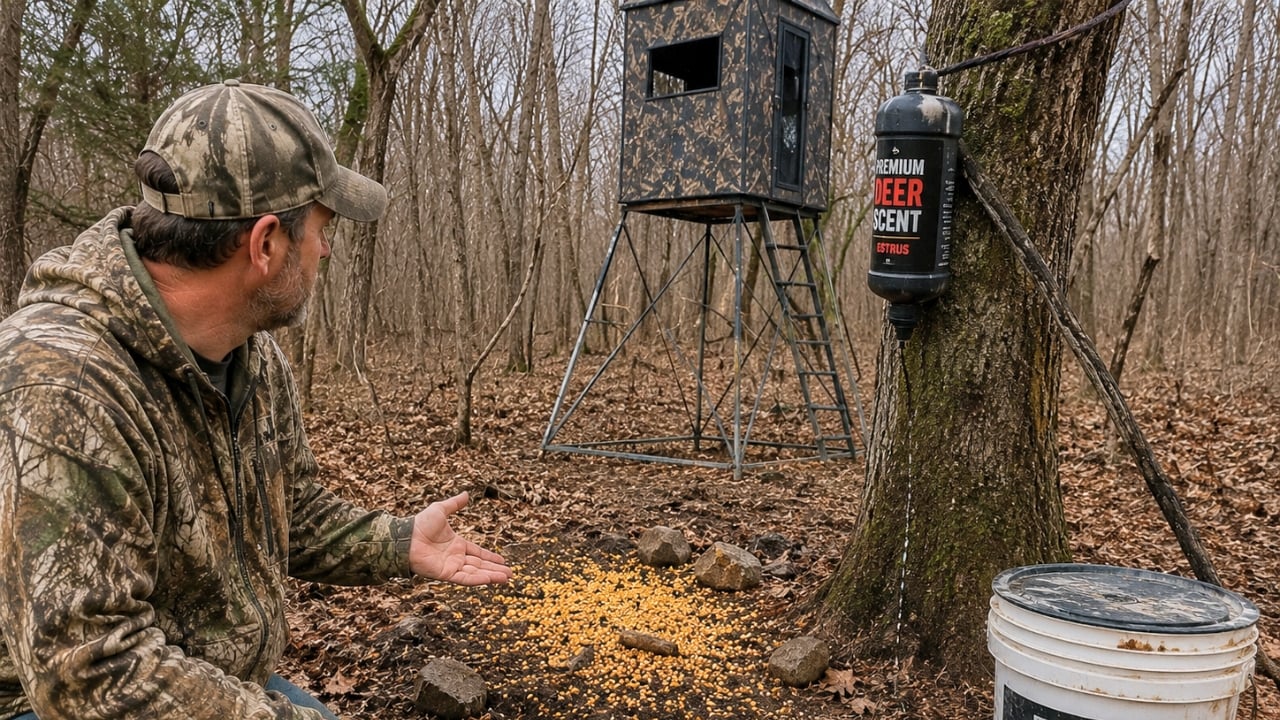
According to the Reddit post, the man found a stand on his land along with a salt lick, scent drip, and flagging tape. That combination made the situation feel much more deliberate than someone simply wandering across a property line.
A person had not just stepped onto the land. Someone appeared to have scouted it, marked it, placed attractants, and set up to hunt there.
The hunter explained the situation in a Reddit thread and asked what others thought he should do: https://www.reddit.com/r/Hunting/comments/yth9n7/what_does_reddit_think_i_should_do_my_land_not_my/
The setup looked planned
A stand by itself is already frustrating for a landowner.
But the rest of the setup made it worse. A salt lick and scent drip suggest someone was trying to attract deer or hold them in the area. Flagging tape suggests the person may have marked a route to the stand or marked the location so they could find it again.
That is not the same as a hiker accidentally crossing a boundary.
It looked like someone had picked the property as a hunting spot and invested time into setting it up. For a landowner who hunts his own ground, that can feel like someone stealing both access and opportunity.
Commenters said the bait was the biggest issue
The salt lick changed the tone of the discussion.
Many states have strict rules about baiting deer, and salt or mineral licks can create legal problems depending on the location, timing, species, and state law. Commenters immediately focused on that because illegal bait can bring consequences beyond ordinary trespassing.
The hunter did not just find someone else’s stand. He found a setup that may have been illegal to hunt over.
That matters because the landowner did not want to be connected to it. If a game warden later found bait on the property, the owner would want a record showing he discovered and reported it rather than ignored it.
The game warden became the obvious call
A lot of commenters told the hunter to call the game warden.
That was the cleanest advice because the issue involved hunting equipment, possible illegal bait, and unauthorized access. A game warden can decide whether the salt lick or scent setup violates local law and what to do with the stand.
This was not just a property-line argument. It involved hunting regulations.
If someone was hunting over bait on land they did not own, that is exactly the kind of thing wildlife officers handle.
Calling the warden also protects the landowner. It creates a record that he was not the person who placed the bait and that he was trying to deal with it properly.
Confronting the hunter could be risky
Some people might want to wait in the woods and confront whoever comes back.
That is usually a bad idea.
The person returning to that stand may be armed. They may be defensive, embarrassed, angry, or convinced they had permission from someone else. A surprise confrontation in the woods can turn dangerous fast.
Commenters often suggest avoiding face-to-face encounters when guns, trespassing, and hunting violations are involved.
The better move is to document the setup, call the game warden, and let the right authority handle it. If the person comes back while the owner is there, the safest choice is usually to call it in rather than escalate.
Trail cameras could identify the person
Several commenters suggested using trail cameras.
A camera near the stand or along the access route could capture whoever is using it. That could show a face, vehicle, license plate, time, and whether the person is carrying a weapon or actively hunting.
That kind of evidence can make a big difference.
A landowner saying “someone put a stand on my property” may get a response. A landowner with photos of the person climbing into the stand or carrying bait gets a much stronger case.
The camera also lets the owner avoid direct confrontation while still gathering proof.
The owner needed to document everything before moving it
Before removing anything, the hunter needed photos.
Pictures of the stand, salt lick, scent drip, flagging tape, property markers, nearby signs, and the exact location could all matter. If the bait was illegal, the game warden may want to see it in place.
Moving or destroying evidence too soon can make the situation harder to prove.
That does not mean the landowner has to leave someone else’s setup forever. It means he should document it carefully and ask the proper authority what to do next.
That is especially true when bait is involved.
The stand itself may still belong to someone else
Even if the stand was placed illegally, destroying it could create another problem.
Commenters in these situations usually warn landowners not to smash or keep someone else’s equipment without thinking it through. The stand may have been placed on private property without permission, but it is still property.
The landowner may be allowed to remove it in some situations, but the safest route is to ask the game warden or local law enforcement how they want it handled.
That keeps the owner from turning a trespassing complaint into a fight over damaged gear.
Property signs could help remove excuses
If the land was not already posted, this was the time to make it obvious.
No-trespassing and no-hunting signs at access points, trails, fence lines, and property corners make it harder for anyone to claim confusion. If the land was already posted, the owner should photograph the signs too.
That matters because hunters sometimes claim they did not know where the line was or that they thought they had permission.
Clear signs do not stop determined trespassers, but they make enforcement easier.
If someone walks past posted signs to hunt over bait, the story becomes much harder for them to explain.
The scent and flagging showed intent
The stand was one piece of evidence.
The salt lick, scent drip, and flagging made the setup look more organized. Someone appeared to be trying to improve the spot, draw deer in, and return to it repeatedly.
That is why the thread stood out. It was not just “I found a random stand.” It was “I found an entire hunting setup on my land.”
For landowners who manage deer or hunt their own property, that feels like more than trespassing. It feels like someone hijacked a spot they had no right to use.
The safest path was official and documented
The practical answer was not dramatic.
Take photos. Do not destroy anything in anger. Call the game warden. Report the possible baiting. Put up cameras if needed. Mark and post the property clearly. Avoid confronting an armed trespasser in the woods.
That may feel slower than dragging the stand out and throwing the bait away, but it gives the landowner a cleaner record.
When someone sets up a stand, salt lick, scent drip, and markers on land they do not own, the landowner does not need a shouting match. He needs proof, a game warden, and a clear line that the property is not open to anyone who feels like hunting it.
Like The Avid Outdoorsman’s content? Subscribe to our newsletter so you never miss an article.
Here’s more from us: