Photo credit: The Avid Outdoorsman
A landowner said a hunting-access problem did not end after he removed a treestand facing his property.
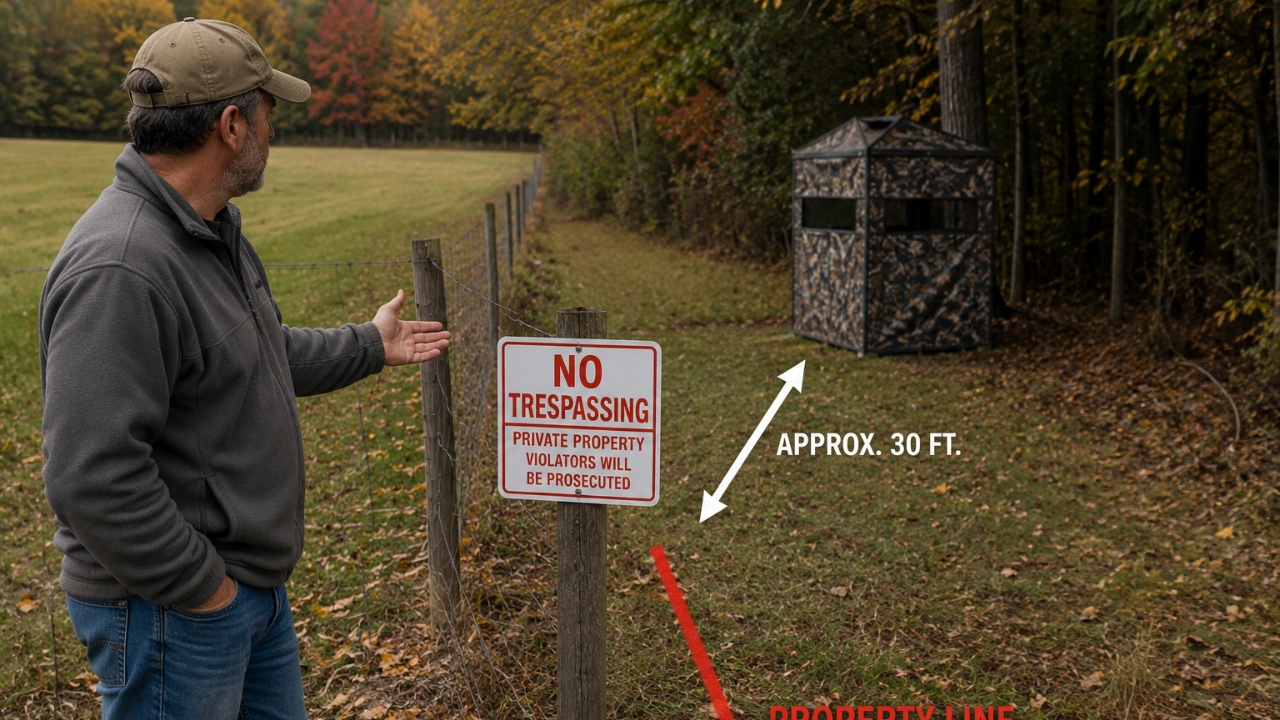
According to the Reddit post, earlier in the year the landowner found a treestand set up in a way that appeared to face onto his land. He removed it. But later, a new problem appeared: a hunting blind reportedly showed up about 30 feet from the property line.
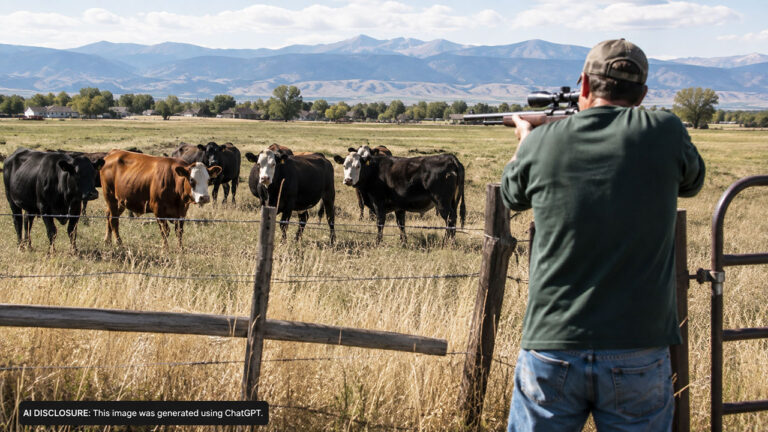
That made the landowner wonder what he could actually do. A person may be allowed to hunt on their own property, but if the setup is aimed toward someone else’s land, close to the boundary, or being used to shoot across the line, the situation gets much messier.
The landowner explained the situation in a Reddit thread and asked for advice: https://www.reddit.com/r/legaladvice/comments/k0u2jz/earlier_in_the_year_l_found_a_hunting_treestand/
The first stand already raised a red flag
A treestand near a property line can be innocent in some cases.
A hunter might be watching a trail that runs along the edge. They might be hunting their own side of the boundary. They might have a safe shooting lane that stays fully on their property.
But from a neighboring landowner’s perspective, a stand facing onto their land can look like someone is planning to shoot deer that cross where they are not allowed to hunt.
That was the concern here.
The landowner had already dealt with one stand. When another hunting setup appeared later, it made the whole thing feel like a pattern instead of a one-time mistake.
The blind was close enough to make the owner nervous
The hunting blind reportedly appeared about 30 feet from the property line.
That distance matters because it is close enough for a landowner to wonder where the hunter is actually aiming, where bullets or arrows could travel, and whether the hunter is trying to take advantage of deer movement across the boundary.
Being near the line is not automatically illegal everywhere. Hunters often set up near property edges, especially when deer trails run that way.
But close does not mean careless is acceptable. A hunter still needs to know exactly where the line is, where every shot is going, and whether any projectile will cross onto land where they have no permission.
Commenters focused on whether shots crossed the line
The big legal question was not just whether the blind existed.
It was whether the hunter was shooting across the property line or entering the landowner’s property to retrieve game, set equipment, bait, or track deer.
If the blind is on the hunter’s own land and all shots stay on that land, the neighboring owner may have limited options. But if the hunter shoots across the boundary, places equipment across the line, or retrieves deer without permission, that becomes a different issue.
That distinction frustrated some landowners, but it is important.
A blind that feels suspicious may not be enough by itself. Evidence of trespassing or shooting across the line is much stronger.
The owner needed to document the setup
As usual with rural property disputes, documentation mattered.
The landowner needed photos of the blind, the property line, any posted signs, and the direction the blind appeared to face. If there were tracks, cut brush, bait, flagging tape, shell casings, or evidence that someone had crossed onto the property, that should be documented too.
The goal was not to spy on a legal hunter. It was to preserve evidence if the setup was being used to hunt the landowner’s property without permission.
A photo showing a blind near the line is useful. A photo showing a trail from the blind onto the landowner’s property, bait on the wrong side, or a shooting lane cut across the boundary is much stronger.
A survey or marked boundary could make all the difference
Property-line disputes get messy when nobody can prove where the line is.
If the landowner already had a survey, pins, fence, paint, or posted signs, that would help. If the line was vague, the first step might be confirming it before accusing the neighbor of crossing it.
Hunters sometimes rely on old fences, tree lines, creeks, or assumptions that do not match the legal boundary.
That does not excuse trespassing, but it does mean the landowner’s case becomes much stronger when the line is clearly marked.
If the blind is 30 feet from a clearly marked and posted boundary, the hunter cannot easily claim confusion if he crosses it.
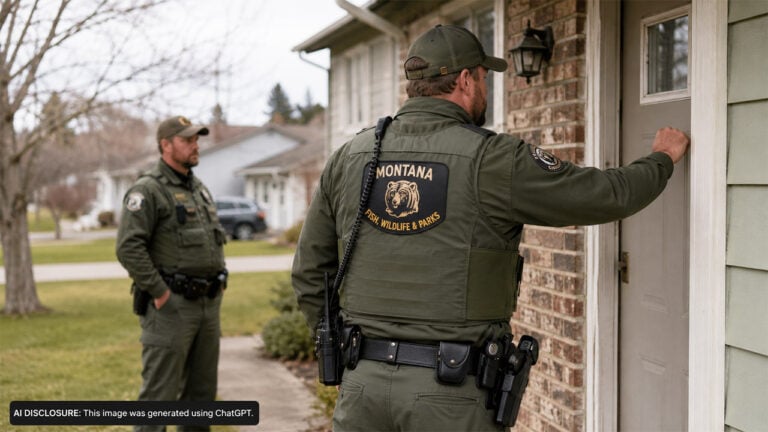
The game warden was a better call than a confrontation
Several commenters in these kinds of threads usually point to the game warden or conservation officer.
That makes sense. If the concern is hunting across a property line, illegal retrieval, baiting, unsafe shots, or trespass during hunting season, wildlife officers are more likely to understand the problem than someone handling a general neighbor complaint.
A game warden can explain what is legal in that state, whether the blind’s location matters, and what evidence would be needed to act.
That is better than the landowner walking over during hunting season and starting an argument with someone who may be armed.
Retrieval rights can become a flashpoint
One of the common problems with stands or blinds near a property line is what happens after a deer is hit.
If the hunter shoots a deer on his own property and the deer runs across the line, can he retrieve it? Does he need permission? Can the landowner say no? Does state law give any access rights?
The answer depends heavily on the state.
That is why the landowner needed local guidance. In some places, hunters need permission to retrieve game from private property. In others, rules may be more complicated.
Either way, a neighbor setting up right on the line can make retrieval disputes almost inevitable.
The earlier treestand made the blind look suspicious
If this had been the first hunting setup near the line, the landowner might have been more willing to assume it was harmless.
But the earlier treestand mattered. The owner had already found and removed one setup that appeared to face his property. Then another setup showed up nearby.
That sequence made the blind feel intentional.
It suggested someone was determined to hunt that edge, whether or not the neighboring landowner was comfortable with it.
A pattern like that is exactly why documentation is important. One photo may look like a misunderstanding. Multiple incidents across a season can tell a different story.
Posting the property clearly was still important
The landowner’s property needed to be posted if it was not already.
No-trespassing and no-hunting signs along the boundary remove excuses and make it clear that nobody has permission to cross over, retrieve game, set cameras, place stands, or shoot onto the land.
Signs should be visible from likely access points and along the line near the hunting setup.
If the hunter is careful and lawful, the signs should not affect him. If he planned to use the neighbor’s property, the signs make enforcement easier.
That is why posting is not just symbolic. It helps define the boundary before there is a bigger dispute.
Trail cameras could help prove crossing
A camera placed on the landowner’s side of the line could help show whether the hunter ever steps onto the property.
That is often the missing piece. A blind near the line may look suspicious, but a camera showing the hunter crossing onto the land, dragging deer, placing bait, or cutting brush gives the owner much stronger evidence.
The camera should be placed legally and carefully, not aimed to harass someone on their own property.
The goal is to monitor the owner’s land and document trespass, not create a new neighbor fight.
The best approach was firm but careful
The landowner’s frustration made sense.
Nobody wants to feel like a neighbor is setting up right on the boundary to take advantage of deer moving through their land. The earlier treestand and later blind made the situation feel deliberate.
But the safest path was not tearing down everything nearby or confronting the hunter mid-season.
The stronger move was to confirm the property line, post it clearly, photograph the blind and boundary, use cameras on the owner’s side, call the game warden for guidance, and report any actual trespass or shots crossing the line.
A blind 30 feet from the property line may not be enough by itself. But if the person using it crosses that line, shoots across it, or treats the neighboring land like part of his setup, the landowner needs proof ready before the next argument starts.
Like The Avid Outdoorsman’s content? Subscribe to our newsletter so you never miss an article.
Here’s more from us: