Photo credit: AI-generated image created using ChatGPT. Illustrative only
Most anglers know the drill: punch your tag, mark your catch, and keep moving. Miss a step, even by a little, and the day can go sideways fast—especially in states that take tagging seriously.
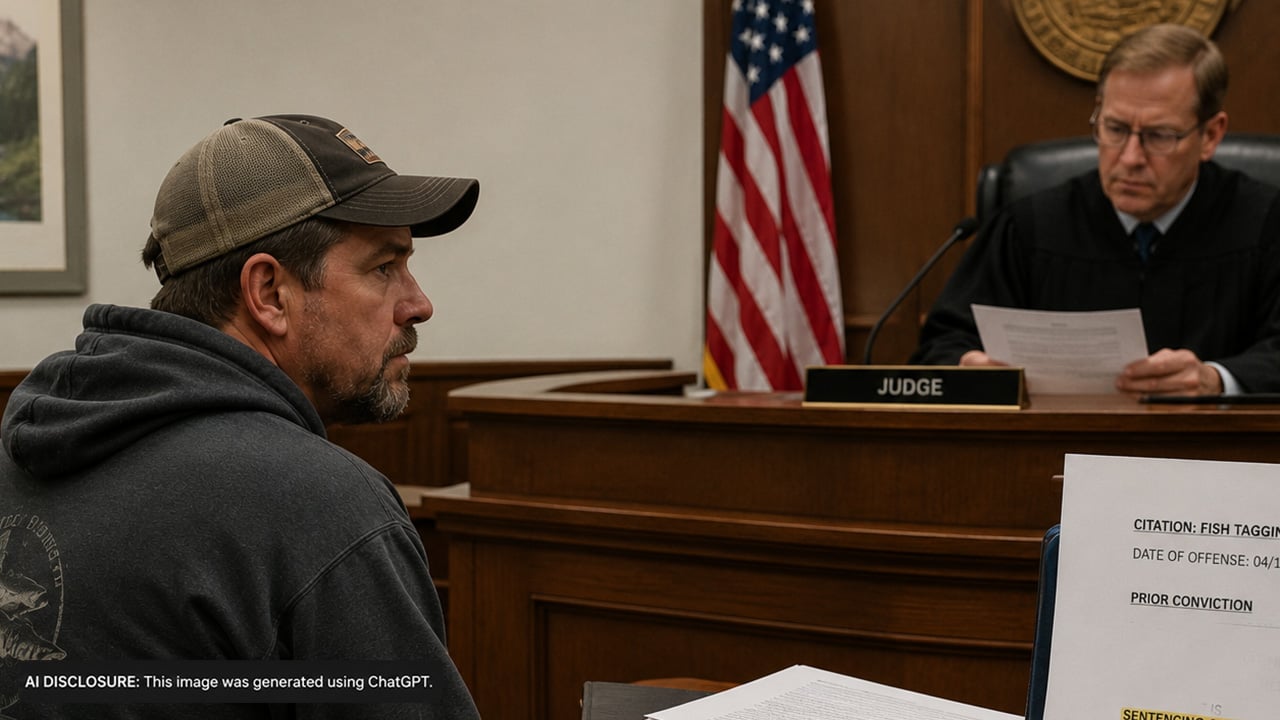
That’s what one Oregon family says happened to their dad after he was cited for not tagging a fish on time. In the original post, the writer says the violation ended with a three-year fishing license suspension, and the judge cited much older incidents from 1999 and 2000 when deciding the penalty.
A routine tagging mistake turned into a major penalty
According to the account, the citation was for “not tagging his fish on time.” That’s the kind of mistake that can happen when you’re managing a net, a fish that won’t settle down, and whatever the weather is doing—especially if you’re used to a certain rhythm and get interrupted.
But the outcome described wasn’t a warning or a small fine. The writer says their dad’s fishing license was suspended for three years. For somebody who “all he does is fish,” that isn’t just a slap on the wrist—it’s a hard stop on the thing that fills his calendar and probably a big chunk of his identity.
Old baggage from 1999 and 2000 came back into the room
The part that hit the family the hardest is what the judge allegedly leaned on to justify the decision. The writer says the court used a disorderly conduct charge from 1999 and a DUI from 2000 as part of the reasoning for the suspension.
Whether those old issues were convictions, how they were resolved, and how they were introduced in court isn’t laid out in the post. But from a common-sense outdoorsman’s perspective, it’s easy to see why the family felt blindsided: a fish-tagging issue in the present suddenly getting weighed down by decades-old trouble.
The no-contest plea is what kept nagging at the family
The writer says their dad pled “no contest” in the “heat/shock of the moment,” and that detail matters. A lot of folks who’ve never dealt with court walk in thinking they’ll explain what happened, pay something reasonable, and be done by lunchtime.
Instead, the plea becomes the pivot point. The family’s worry wasn’t just the suspension itself—it was the feeling that he agreed to something without fully understanding the consequences, and now the door might be shut on fixing it.
Why a tagging ticket can snowball when you least expect it
Most anglers view tagging as a paperwork chore you knock out so you can get back to fishing. But tagging rules exist to protect seasons and numbers, and enforcement tends to treat them like bright-line rules. When an officer or the court frames it as compliance—did you tag it when required, yes or no—there isn’t much room for “I meant to.”
And once you’re in front of a judge, the case stops being “just fishing.” It becomes about your record, your credibility, and how the court wants to deter similar behavior. The writer’s description suggests that’s where the old charge and old DUI became part of the story the court told about him, fair or not.
The practical lesson for anglers: treat court like the serious thing it is
This is the part outdoorsmen don’t like to hear, but it’s real: even a minor wildlife violation can carry penalties that affect your whole season—or several seasons. If you’re staring at a plea in the moment, it’s worth slowing down and understanding what that plea means for your license and your future, not just today’s ticket.
The post doesn’t provide details about what options existed afterward, but it does show the emotional reality of these cases. People plead quickly because they’re rattled, embarrassed, or trying to be cooperative. Then they find out later that “cooperative” can still cost you years of time on the water.
A three-year suspension hits harder than most people realize
If you don’t fish much, a suspension sounds like an inconvenience. If you’re the kind of guy who measures his year by openers, tides, flows, and weekends at the ramp, it’s different. It’s lost trips, lost traditions, and a big hole where stress relief used to live.
The writer describes seeing their dad hurt by it, and that’s believable. Fishing isn’t just recreation for a lot of people—it’s how they keep their head straight. When a court takes that away for years over a tagging issue, it changes the tone of daily life in a hurry.
On the outdoors side, the takeaway is simple: treat tagging like tying your knot—do it immediately and do it the same way every time. And if you ever do end up in front of a judge over a wildlife ticket, don’t assume it will be handled like a quick transaction. For better or worse, it can reach back into your past and reach forward into the seasons you thought you still had.
Like The Avid Outdoorsman’s content? Be sure to follow us.
Here’s more from us: