Photo credit: The Avid Outdoorsman
A hunter said a mistake near private property turned into a tense run-in with an angry landowner, a camera phone, and the kind of game warden call that makes every hunter wish he had double-checked the boundary sooner.
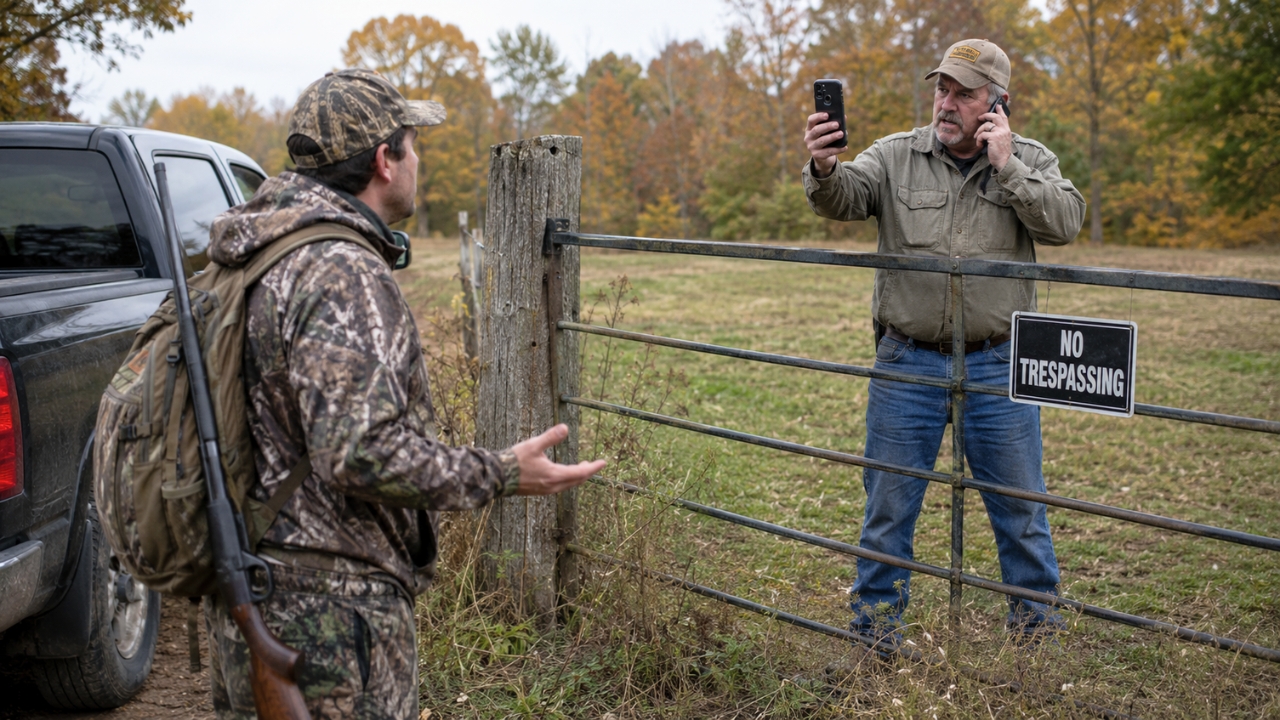
The hunter shared the situation in a post on r/Hunting titled “Private landowner rage”. He described an encounter where a private landowner became furious after believing the hunter had crossed onto land where he did not have permission to be. The landowner took photos and made it clear the situation was not going to be shrugged off as a harmless mistake.
That is the part that makes these property-line situations so tense. A hunter may see it as an honest error. A landowner may see it as one more stranger treating private land like public access. Both people can feel justified in the moment, but only one of them owns the ground.
The hunter’s post turned into a reminder that boundary mistakes do not always stay quiet. A line that looks vague on a map can feel very real to the person paying taxes on that land. Once a landowner thinks someone has crossed it, especially during hunting season, the mood can change fast.
The poster seemed rattled by how quickly the situation escalated. He was dealing with an angry landowner who was taking pictures, and the possibility of a game warden getting involved hung over the whole thing. That is enough to turn a hunting trip from relaxing to miserable in a hurry.
Property Lines Feel Different When You’re the One Holding the Deed
Hunters often think about land in terms of access. Can I hunt here? Is this public? Did I get permission? Am I on the right side of the line?
Landowners think about it differently. To them, the land is not an abstract boundary on an app. It is their field, woods, driveway, crop edge, family property, livestock area, or hunting ground. They may have dealt with trespassers before. They may have had people leave trash, cut fences, steal cameras, shoot too close to a house, or track deer without asking.
So when a hunter shows up where he should not be, the landowner may not see a simple mistake. He may see a pattern starting again.
That is why these encounters can get heated even when nobody meant harm. The hunter may be trying to explain what happened. The landowner may already be past the point of wanting an explanation.
In this case, the landowner’s decision to take photos showed he was thinking about proof. He did not merely want to yell. He wanted documentation, and that usually means the person believes the incident may need to go further.
For hunters, that is a warning. If a landowner starts taking pictures, the conversation is no longer casual. It is time to stay calm, avoid arguing, and make sure everything you say and do is something you can stand behind later.
Reddit Told Him the Boundary Was His Responsibility
Commenters did not give the hunter much room to blame the landowner for being angry.
A lot of the response came down to one basic point: it is the hunter’s job to know where he is. If you are hunting near private property, guessing is not enough. A map app helps, but apps can be off. Fences help, but fences are not always on the exact legal line. Old trails, field edges, and creek beds can all make land feel more open than it really is.
That is why written permission and clear boundaries matter. If a hunter has permission on one piece of land, he still needs to know where that permission ends. A deer trail crossing a line does not extend permission. A shot opportunity does not extend permission. A “looks like nobody uses this” patch of woods does not extend permission.
Some commenters likely understood that honest mistakes happen. But the tone in threads like this usually turns firm because hunters know one person crossing the line makes all hunters look bad. Landowners remember the incident, not the excuse.
The safest approach is to know the parcel before the hunt starts. Check multiple maps. Talk to the landowner. Mark boundaries. Drop pins. And if there is any doubt, stay farther inside the property than you think you need to.
That extra cushion can save a hunter from a miserable conversation.
The Game Warden Angle Made It More Serious
A game warden getting involved changes the stakes.
A landowner can be angry, but a warden can ask harder questions. Where were you hunting? Did you have permission? Did you cross a posted line? Were you carrying a firearm or bow? Were you pursuing game? Did you shoot anything? Did you know you were on private property?
Those questions matter because hunting-related trespass is not always treated like a simple walk across a field. If a person is actively hunting where he does not have permission, the consequences can be heavier than a warning from a neighbor.
That is why the poster’s situation got attention. Once photos were taken and a game warden was mentioned, the hunter had to think beyond embarrassment. He had to think about whether he could clearly explain his location, his permission, and his intent.
Commenters in these situations often recommend cooperating fully. Do not argue with the landowner. Do not get defensive with the warden. Do not make excuses that sound like you are trying to dodge responsibility. If it was a mistake, say that clearly, apologize, and be prepared to show where you thought the line was.
That does not guarantee the landowner will calm down. But it keeps the hunter from making the situation worse.
Map Apps Help, But They Don’t Replace Common Sense
Many hunters rely on mapping apps to stay legal, and for good reason. Apps can show parcel lines, ownership information, public boundaries, access points, and saved stand locations. They are useful tools.
But they are not perfect.
Property lines can be slightly off. Ownership data may lag behind. GPS accuracy can drift under trees, around hills, or in poor signal. A hunter standing near a boundary may think he is on one side when the app shows him a little differently a few minutes later.
That is why seasoned hunters treat map apps like a guide, not a shield. If the boundary matters, give it space. If you are close enough that a few yards of GPS error could put you in trouble, you are probably too close.
This is especially true when hunting around private land you do not own. The landowner does not have to accept “my app said I was fine” as an excuse. The app is a tool you chose to use. The responsibility is still yours.
The best practice is to walk the property with the owner when possible, mark the boundaries ahead of season, and avoid hunting directly on the edge unless everyone involved knows exactly where the line sits.
That may sound like extra work, but it beats trying to explain yourself while someone is taking photos and calling the warden.
What Commenters Said
Commenters mostly treated the encounter as a hard lesson in property-line responsibility.
Many said the hunter needed to know exactly where he was before hunting near private land. Even if the mistake was honest, it was still his responsibility to avoid crossing onto property where he did not have permission. Several likely pointed out that landowners are often angry because they have dealt with repeat trespassing, not because they enjoy yelling at strangers.
Others focused on staying calm during the encounter. If a landowner is taking photos and threatening to call a game warden, arguing will not help. The better move is to apologize, explain clearly, leave if asked, and cooperate if an officer gets involved.
Some commenters probably had sympathy for the hunter if the boundary was confusing, but the overall message was still firm: hunting near private land requires more care than “I thought I was okay.” A deer, a trail, or a good stand location is not worth getting into a trespass dispute.
The practical advice was to use mapping apps, but not trust them blindly. Mark boundaries, get written permission, leave a safety buffer, and when in doubt, stay farther from the line.
For the hunter, the incident was embarrassing and stressful. For the landowner, it may have looked like one more person crossing a line that should have been respected. Reddit’s answer was that even when a mistake is not malicious, private property is still private property — and during hunting season, that line matters more than ever.