Photo credit: The Avid Outdoorsman
A bowhunter in Central Ontario said he had already lost one trail camera the previous December. Then, after setting up a new October bow stand on hunting property, his replacement camera disappeared within a couple of days too.
The hunter shared the frustration in a post on r/Hunting titled “How many of you have had a trail cam stolen/broken?” He said the first camera was stolen while he was set up for a December bow hunt on a friend’s farm. The second one vanished after he put up a new stand on their hunting property in Central Ontario.
By the time he posted, he was not only mad about losing the gear. He was wondering if this was normal.
He joked that maybe he was an idiot for not learning the first time, but the question underneath it was one a lot of hunters have asked after finding an empty strap on a tree: is trail camera theft really this common, or is he just having terrible luck?
The thread turned into a rough little support group for hunters who had lost cameras, had them broken by animals, watched poachers move through private land, or learned the hard way that a camera at eye level is easy to spot and easy to steal.
It also showed how quickly a hunting camera stops being only a deer tool. Once one disappears, the next camera has to scout deer and people.
Two Stolen Cameras Made Him Question the Whole Setup
The poster’s frustration made sense because both cameras disappeared around active bow setups.
The first one was tied to a December bow hunt on a friend’s farm. The second was set near a new October bow stand and vanished within days. That timing matters because a camera near a stand is not random gear. It is part of the whole plan.
A hunter uses those photos to decide when to sit, what trails are active, what deer are moving, and whether a stand placement is worth the time. Losing the camera means losing the money, but it also means losing information.
That is the hidden cost of trail camera theft. A thief may only see a small box strapped to a tree. The hunter sees weeks of patterning, a season plan, and proof of what is happening when he is not there.
By the second theft, the poster was clearly ready to change how he handled cameras. He asked what he could do to prevent it from happening again, and commenters came back with the same advice many hunters eventually learn: place them higher, lock them, hide them better, and assume someone may notice them if they are easy to see.
That may sound paranoid, but anyone who has lost a camera twice starts thinking differently.
Hunters Said Public Land Makes Cameras Risky
One commenter said he did not even own trail cameras because he hunted public land and could not imagine them not being stolen.
That line captured one of the main divides in the thread. Some hunters feel comfortable putting cameras on private ground, especially if access is controlled and they know who is around. Public land is a different story. More hunters, hikers, dog walkers, shed hunters, and curious people may pass through. Even honest people can notice a camera. Dishonest people may take it.
The advice from that commenter was practical. Put cameras around 12 feet up a tree, use a lock cable, and angle them down with a piece of wood so they still capture the right area. If the goal is to catch a thief, they suggested putting a camera like that on a broken decoy camera at ground level.
That is the kind of advice that only makes sense after you have accepted the reality of theft. The visible camera becomes bait. The hidden camera becomes the real security.
Other commenters agreed that locks help, but only to a point. A cable lock can slow down casual thieves, but it will not stop someone who shows up with tools. Still, making the camera harder to grab can be enough to stop the person who was only going to steal it because it looked easy.
For public land, that may be the best a hunter can do: make the camera harder to see, harder to reach, and less worth the effort.
Some Said Cheap Cameras Are the Better Bet
The thread also turned into a discussion about whether expensive wireless cameras are worth the risk.
One commenter pointed out that wireless cameras can be costly, especially when the camera itself is expensive and the user has to pay a monthly service fee. Another said they preferred cheaper cameras because if one gets stolen, at least the loss does not hurt as badly.
That is a pretty common calculation. A high-end camera can send photos to your phone, save trips to the woods, and help monitor faraway hunting land. But if someone steals it, the owner may be out far more money than with a basic camera. And unless the camera transmits a clear photo before it disappears, the thief may still get away.
The poster was trying to figure out prevention, but the comments made clear that prevention often becomes risk management. Some hunters lock expensive cameras down and hide them carefully. Others buy cheaper cameras and accept that one may walk off now and then.
Neither approach feels great. A cheap camera still costs money. An expensive camera still can be stolen. The difference is how much it stings when you find the tree empty.
The thread did not settle that debate, but it made one thing clear: the more public or accessible the land is, the harder it is to justify leaving expensive gear where anyone can find it.
Poaching Stories Made the Theft Feel Bigger
One commenter said they had two cameras stolen from private land and had also found several gut piles after arriving for a weekend. They believed someone had been poaching on the property.
That story pushed the conversation beyond simple gear theft. The missing cameras were bad enough, but the gut piles suggested people may have been killing deer there too. The commenter said they eventually put wire fences across entrances and set cameras up in trees. They later got poor nighttime photos of the people and found a tree stand on the property.
According to that commenter, even with photos and initials on the stand, the game warden said there was little chance of catching the person. The commenter also said the warden’s advice boiled down to not getting shot and using judgment.
That is the kind of story that makes landowners and hunters feel helpless. It is one thing to lose a camera. It is another to believe people are coming onto private land, poaching deer, placing stands, and stealing cameras without much chance of enforcement.
The original poster responded that it was disheartening how little could be done about poachers in his area, especially with locals reportedly shooting deer from the road.
Another commenter pushed back on blaming wardens, pointing out that there are usually very few of them and that they work hard with limited resources. That was a fair reminder. A game warden cannot be everywhere, and most of these problems happen when nobody is watching.
That is why cameras matter in the first place. But when the cameras get stolen too, hunters feel like they are losing their only set of eyes.
Not Every Broken Camera Was Stolen
The thread was not only about thieves.
One commenter said they had never had a camera stolen, but they had one broken by cattle. The ranch they hunted also had cows, and according to the commenter, the cattle did not like the infrared lights. They knocked the camera off the tree and trampled it.
Another commenter said bears are known for hating trail cameras and that they had heard about more cameras being destroyed by bears than stolen by people. That added a little humor to the thread, but it also made a useful point. A broken camera does not always mean a human did it.
Trail cameras sit outside in rough places. They deal with weather, animals, livestock, curious bears, falling limbs, straps wearing out, and people who either do not notice them or notice them too much. Sometimes a camera disappears because someone stole it. Sometimes it fails because the woods are hard on gear.
Still, the original poster was dealing with stolen cameras, not a cow or bear problem. For him, the practical advice stayed focused on hiding and protecting them.
One commenter suggested taping leaves to the camera to break up the straight lines and make it harder for the human eye to spot. That simple idea stood out to the poster, who said he had never thought about it.
What Commenters Said
Commenters made it clear that trail camera theft is common enough that many hunters plan around it.
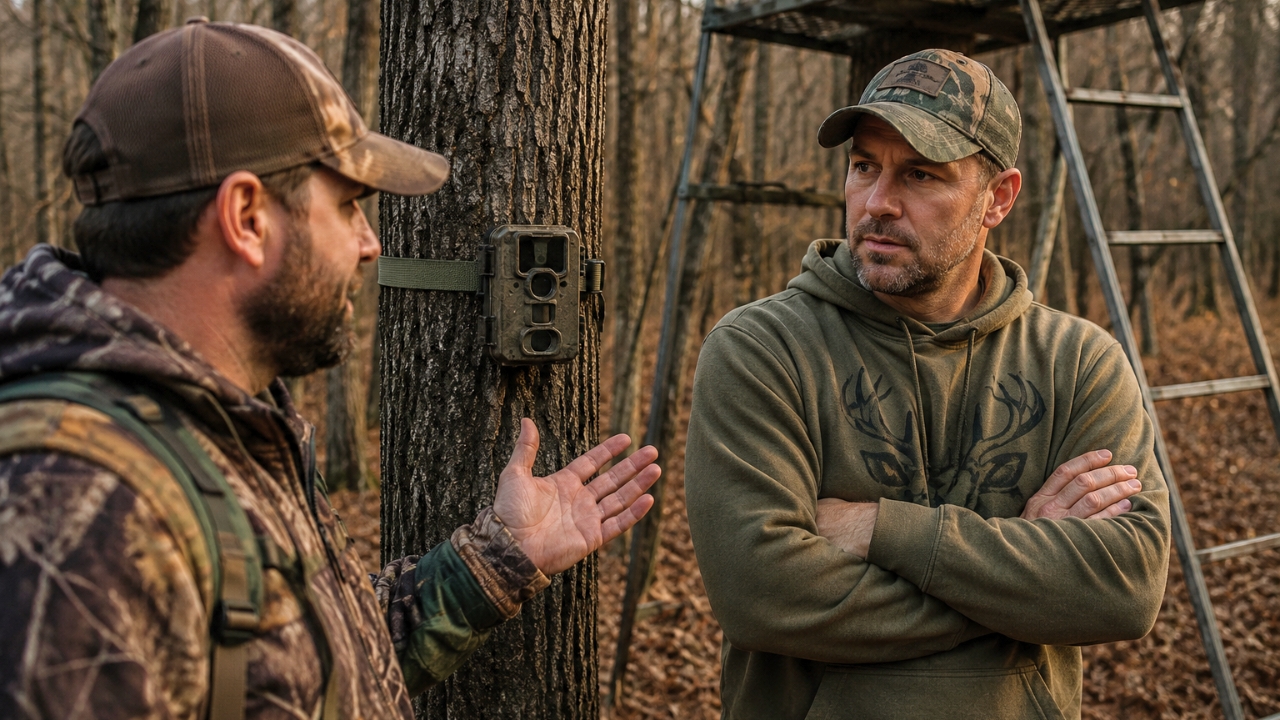
Some said to mount cameras high in trees, around 12 feet up, and angle them down. Others recommended cable locks, lock boxes, and camouflage tricks like taping leaves to the camera so it does not stand out as a hard-edged object in the woods.
Several hunters suggested using decoy cameras. A broken or cheap camera can sit at eye level where a thief might notice it, while the real camera is hidden higher up and aimed at the decoy. If someone tries to steal the obvious one, the hidden camera may catch them.
Others talked about wireless cameras, GPS, and cell service, but many warned that expensive cameras are a bigger loss if they disappear. Some said they would rather risk a cheaper camera than leave a high-dollar unit in a spot where people might find it.
The thread also showed that not every loss is theft. Cattle, bears, and other animals can break cameras too. But when cameras vanish near hunting stands within days, most hunters start assuming people are the problem.
For the Ontario bowhunter, the answer was not especially comforting. His luck may have been bad, but he was not alone. Other hunters had lost cameras, stands, and even evidence of poaching. The best advice was to stop treating a trail camera like it only needs to watch deer. If it is going to survive, it also needs to be hidden from the kind of people who make hunters lock up gear in the first place.