Photo credit: Halil Can/Pexels.com
The hunter was out with his wife, and they were doing what a lot of people do on public land: trying to enjoy the space without getting in anyone else’s way.
That is supposed to be the beauty of public ground. You can hike, hunt, scout, glass, sit, move, and use land you do not have to own. It gives regular people access to places they would never afford privately. But public land also comes with a problem nobody can fully control.
Other people.
In a Reddit thread, hunters were talking about the most nerve-racking experiences they had ever had in the field. One story involved a hunter and his wife being below in a valley when another man fired across it.
That is one of those moments where the danger becomes clear after the shot has already happened.
A valley can make people feel far apart when they are not. A shooter may be standing on one side, looking across at game or terrain, thinking he has a clear lane. But if he does not know what is below, beyond, or hidden in the low ground, that shot can become dangerous fast. Sound travels strangely. Land rolls. People can be tucked into dips, brush, timber, or shadow where they are not obvious from above.
And bullets do not care that a place is public.
For the hunter and his wife below, the situation must have been infuriating and scary at the same time. You can do everything right on your end and still end up relying on a stranger’s judgment. You can wear orange, pick your route carefully, stay aware, and avoid crowding anyone. But if someone fires across terrain without knowing who is downrange, all that carefulness only goes so far.
That is the ugly side of shared land.
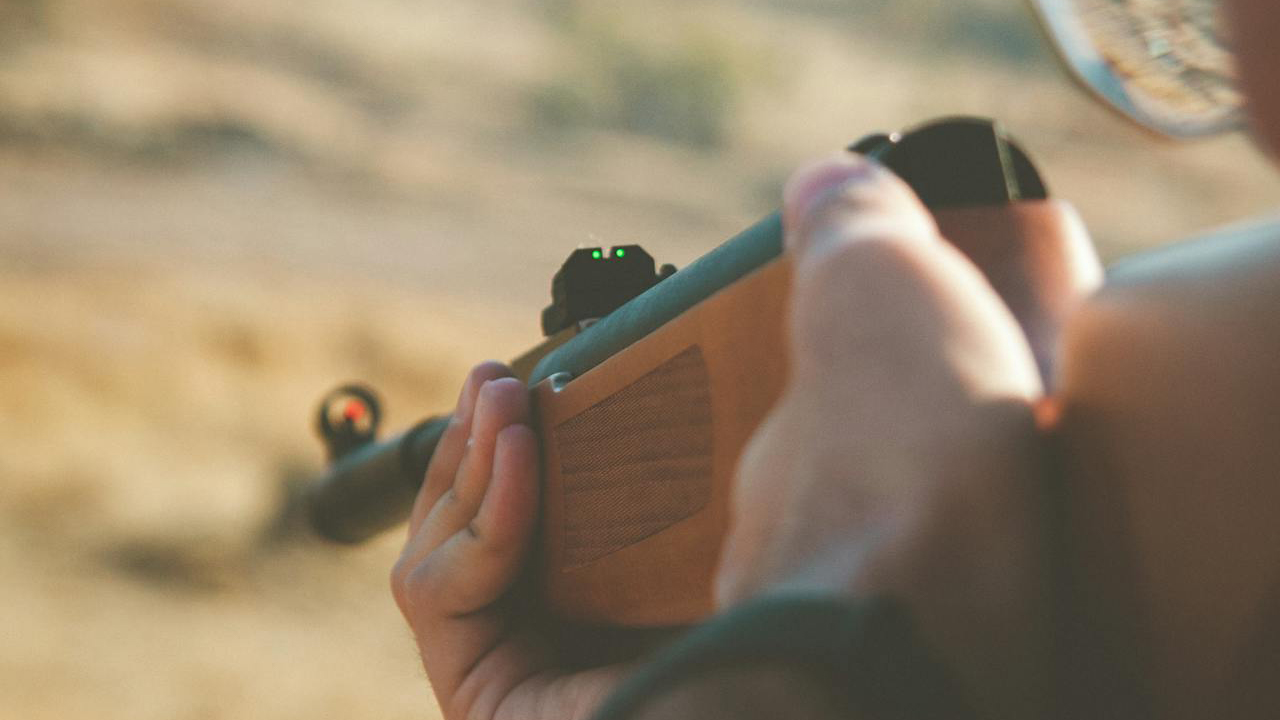
Most hunters know the rule by heart: know your target and what is beyond it. It gets repeated so often that some people stop hearing it. But this is exactly why the rule exists. “Beyond it” does not mean the first 20 yards past the animal. It means everything in the direction that bullet could travel, including a valley bottom where people might be moving, sitting, or glassing.
When you are the person below, you do not get to debate the shooter’s reasoning before the trigger breaks. You just hear the shot and realize someone above you may not have known or cared where you were.
That changes the whole feel of the day.
Public land can feel wide open on a map, but in the field, people stack into the same ridges, saddles, draws, glassing points, water sources, and access routes. Hunters naturally end up where animals move. That means two groups can be much closer than either realizes, especially in country with elevation changes. One person’s “empty valley” may be another person’s walking route.
The hunter’s wife being there likely made it feel even worse. It is one thing to accept risk for yourself. It is another thing to look over at someone you brought with you and realize they were also put in danger by a stranger’s shot. That kind of moment can make a person rethink where, when, and how they use public ground.
Nobody wants to spend a hunt wondering if the next ridge has someone careless behind a rifle.
And that is the real consequence. The land did not physically change. It was still public. It was still open. It still belonged to everyone. But after a shot comes across a valley where you and your wife are below, it does not feel as open anymore. It feels exposed. It feels like a place where your safety depends partly on people you have never met making good choices.
Most do. That needs saying. Most hunters are careful, and most public-land users are not trying to endanger anyone. But “most” is not much comfort when you are sitting in the valley and the wrong person fires across it.
The story is a reminder that public land safety is not just about where you stand. It is about where everyone else might be standing too. If you are shooting across open country, you have to think harder than “I can see the animal.” You have to think about what you cannot see. Low spots. Brush pockets. Trails. Other hunters. Roads. Camps. People who got there before you and never made a sound.
For this hunter, the shot across the valley was enough to stick. Not because it turned into a long confrontation, but because it showed how quickly someone else’s decision can turn a normal day outside into a memory you replay for years.
Commenters in the thread understood why the story belonged in a “most butt-puckering” discussion.
A lot of hunters said shots from other people are scarier than most animal encounters because they are harder to predict. An animal may charge, bluff, run, or hide, but it is still acting like an animal. A careless shooter can create danger from hundreds of yards away without ever knowing you are there.
Several people focused on the backstop issue. Shooting across valleys, roads, flat ground, or open country can be risky if the shooter does not have a true backstop and a clear understanding of what is beyond the target. Just because a shot looks open does not mean it is safe.
Others said this is exactly why they avoid busy public land during rifle season or choose areas where terrain gives them more protection. Some hunters prefer thick cover, steeper backstops, or spots far from obvious access because they do not want to be anywhere near people taking long shots across open terrain.
A few commenters also pointed out that hunters need to assume others are nearby, even when they cannot see them. Public land is shared. Someone may be walking below a ridge, tucked into a draw, or sitting behind brush. If you cannot be absolutely sure of the lane and the backstop, the shot is not worth it.
The practical takeaway was blunt: public land works only when every hunter thinks beyond his own tag. The animal in the scope is not the whole picture. The land behind it, below it, and beyond it matters just as much.