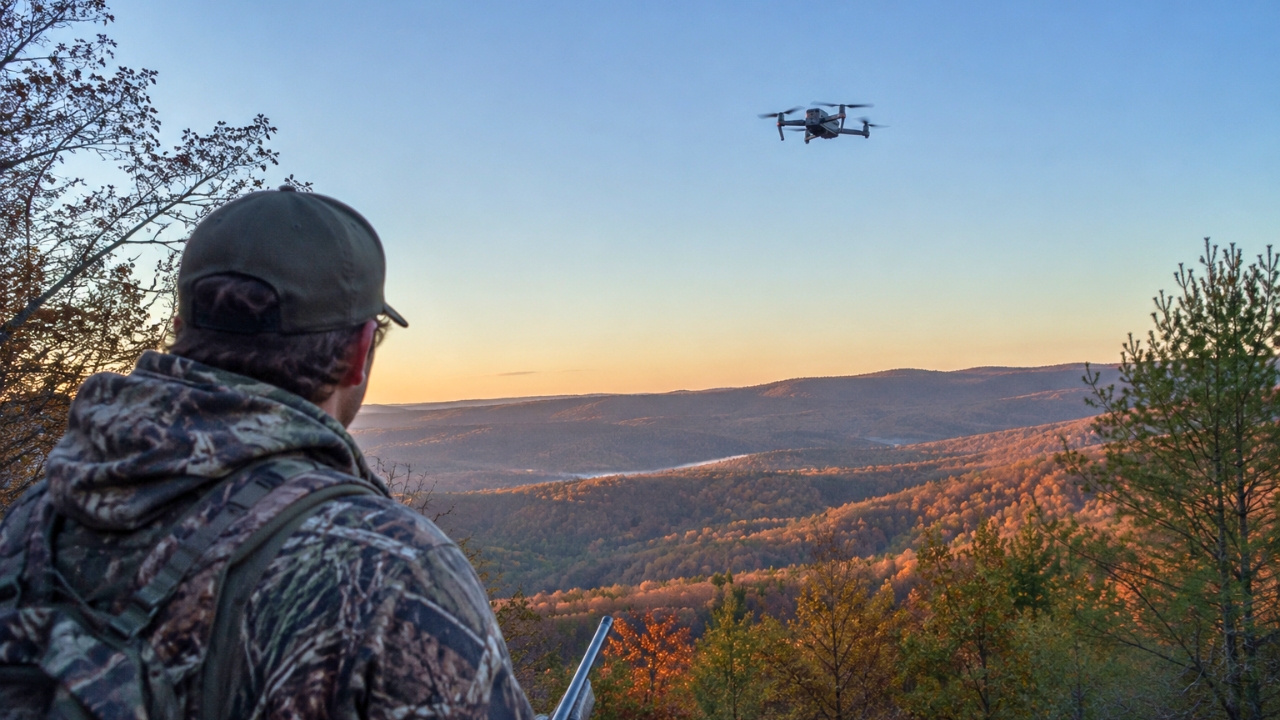
Photo credit: The Avid Outdoorsman
The hunter was not mad about technology existing.
That part matters. Drones are everywhere now. People use them for photography, scouting land, checking fences, looking at roofs, filming trips, and getting the kind of views you used to need a helicopter to see. Most outdoorsmen can live with that.
But there is a big difference between a drone flying somewhere in the distance and one buzzing through the valley you are actively hunting.
In a Reddit post, a hunter asked about drones after one came through and disturbed the area where he was hunting. From his side, the problem was not just annoyance. The drone blew through the valley, made noise, disrupted the hunt, and likely pushed game out of the area.
That is where a gadget becomes a real conflict.
A hunt is built on quiet. You pick the wind, get into position, settle down, and try to let the woods act like you are not there. Every sound matters. Footsteps matter. A cough matters. A truck door slamming half a mile away can make you cringe. So when a drone comes whining through the valley, it does not feel like a minor interruption.
It feels like somebody just drove a lawn mower through your setup.
And unlike a hiker or another hunter who may accidentally cross through, a drone can feel more invasive because the person flying it may be nowhere near you. You cannot easily talk to them. You may not know where they are standing. You may not know if they are filming you, scouting game, messing with hunters on purpose, or just clueless about how badly they are disrupting things below.
That uncertainty is what makes hunters angry.
If the drone was flown by someone who knew hunters were in the area and wanted to disturb them, that starts sounding like hunter harassment. If it was flown by someone trying to locate animals during a season, that could raise other legal questions depending on the state. If it was simply a recreational flyer who did not realize a valley was being hunted, it may have been thoughtless rather than malicious.
But the result for the hunter was the same: the spot was ruined.
Game animals do not need much reason to leave. Deer, elk, turkeys, and other animals may react to unfamiliar buzzing, shadows overhead, or repeated passes. Even if they do not sprint out of the county, their pattern can shift enough to wreck the morning. A hunter who spent hours or days planning a setup can lose the whole sit because someone wanted aerial footage.
That is the part non-hunters may not understand. It is not only a few seconds of noise. It can undo the entire reason the hunter is there.
The post triggered the obvious legal and practical question: what can a hunter actually do about it?
The emotional answer is usually not the smart one. Plenty of hunters have probably imagined knocking a drone out of the sky when one buzzes too close. But shooting at a drone is generally a very bad idea and can create far worse problems than the drone itself. A bullet or shot has to come down somewhere. The drone belongs to someone. There may be federal aviation rules involved. And suddenly the hunter who was bothered first becomes the person explaining why he fired into the air.
That is not the position anyone wants.
The better move is boring but safer: document it if possible. Get video. Note the time, location, and direction. Try to identify where the operator is if you can do that legally and calmly. If it looks intentional or repeated, contact the game warden or local law enforcement. If it is on managed public land, contact the agency that handles that area.
That may not feel satisfying in the moment, especially after the hunt is already blown. But it gives the hunter something more useful than anger.
The story also points to a bigger issue that is only going to get more common. Drones add a new kind of pressure to public and private land. They can reach places people would not walk. They can disturb animals without the operator ever stepping into the woods. They can create access conflicts from the air, which feels strange because the hunter on the ground may not even know where the problem is coming from.
For hunters, that means the definition of “other people ruining the hunt” has expanded.
It is not just someone walking under your stand anymore. It can be somebody standing on a road, a ridge, or a parking area, flying a buzzing camera through the exact valley you are trying to keep quiet.
The hunter in the post seemed to understand that this was not a simple etiquette complaint. The drone changed the hunt. It disrupted the valley. And depending on why it was there, it may have crossed from annoying into something officials needed to hear about.
Because when a drone pushes through a hunting area and blows out game, the person flying it may not be holding a rifle, but he can still ruin the hunt just fine.
Commenters mostly agreed that the hunter had reason to be annoyed, but they warned against doing anything reckless.
Several people said not to shoot the drone. That came up fast because it is the first angry thought a lot of hunters have, but it is also the one that can get them in trouble. Shooting into the air, damaging someone else’s property, or creating an aviation-related issue can turn the hunter into the person facing consequences.
Others said the key question was intent. If the drone pilot was knowingly disrupting hunters, that could fall under hunter harassment laws in some places. If the pilot was using the drone to locate or pressure game, that could also violate hunting regulations depending on the state. But if it was just a clueless recreational flight, the legal side might be harder to prove.
A lot of commenters told the hunter to call a game warden if it happened again or if he could document it. Wardens would know the state-specific rules on drones, scouting, harassment, and hunting-season interference.
Some people pointed out that drones are becoming a real issue in outdoor spaces because the operator may not understand how much noise and movement they create on the ground. What feels like harmless flying to one person can wreck another person’s hunt.
The practical advice was simple: record the drone if possible, do not shoot it, report repeated or intentional interference, and know the local laws before reacting. A drone buzzing through your valley may be infuriating, but a bad response can cause more trouble than the drone did.