Photo credit: The Avid Outdoorsman
A Connecticut bowhunter said he tried to get ahead of a problem before deer season by asking a neighbor for permission to recover a deer if one crossed the property line. Instead of a simple yes or no, the conversation left him frustrated and wondering how hunters are supposed to handle neighbors who make recovery permission difficult.
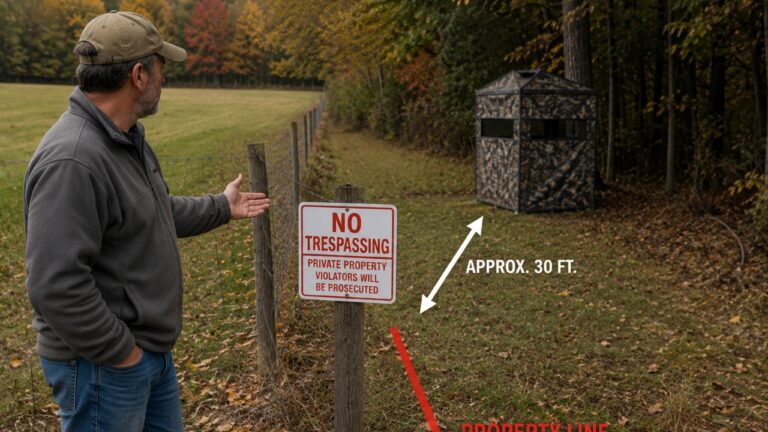
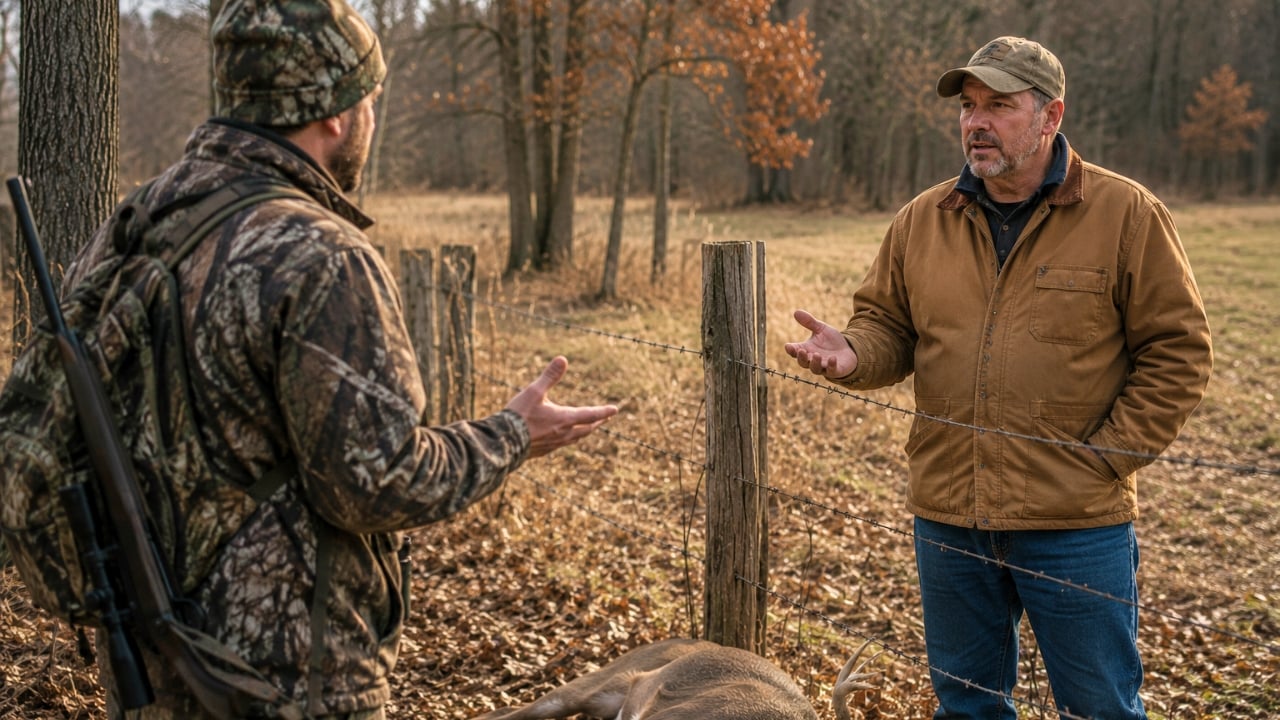
The hunter shared the situation in a post on r/Hunting titled “Retrieval Permission”. He said everyone in his neighborhood has 5-acre lots, and he asked a diagonal neighbor whether he would be okay with him recovering a deer on his land that fall.
The request was not about hunting the neighbor’s property. It was only about retrieval. If the hunter shot a whitetail on his own land and the deer ran onto the neighbor’s place, he wanted to know ahead of time whether he could go get it.
According to the poster, the neighbor did not give him an easy answer. He said the neighbor went into what felt like a power trip and told him he would think about it. That left the hunter annoyed because a deer that runs after the shot is not always predictable, especially with a bow or crossbow. Even a good shot can leave an animal running 50, 75, or 100 yards before it drops.
That is where the small-lot setup became a real problem. Five acres can feel like plenty for a house and some woods, but it is tight when a deer can cross multiple property lines in seconds. The hunter said this was for whitetail bowhunting in Connecticut, which made recovery permission more than a polite detail. It could decide whether an animal is recovered legally or left to rot.
The Neighbor Had All the Leverage
A lot of commenters were quick to point out something the poster did not seem thrilled to hear: it was the neighbor’s land.
Even if the neighbor was being difficult, he still had the legal right to say no, delay, or put restrictions on access. That rubbed the hunter the wrong way, but several commenters said that is exactly how private property works. If you want to cross someone else’s ground, you may have to accept their terms, even if they feel unreasonable.
One commenter told him his phrasing sounded entitled. Their point was not that the neighbor was friendly or helpful. It was that asking permission means the other person has the power to grant or deny it. Calling it “kissing the ring” may have been how the hunter felt, but if that attitude came through in the conversation, it may have made the neighbor less likely to say yes.
That advice was blunt, but useful. Permission conversations are partly about relationship management. A neighbor who feels respected may be more willing to help. A neighbor who feels pressured may dig in harder.
The hunter pushed back in the thread and explained that the area was steep, unmaintained forest where several properties meet. He seemed to feel like the neighbor was making a big deal over land that was not being used. Commenters did not let that argument go far. Unused land is still private land.
That was the hard truth running through the discussion: the woods may look wild, but the deed still matters.
Some Told Him Not to Hunt So Close to the Line
Another major piece of advice was simple: if you cannot recover across that line, do not hunt in a way that depends on it.
Several commenters said it is not ethical to shoot an animal when you reasonably believe it may run somewhere you cannot legally retrieve it. They understood that no hunter can control exactly where a deer goes after the shot. But on 5-acre lots, the odds of crossing into someone else’s property are much higher than they would be on a large farm or lease.
One commenter said they would hunt as far from that property line as possible. Another told him to be a great shot or find a bigger area to hunt. That may sound harsh, but the point was practical. If the neighbor is already making recovery permission difficult before the season starts, then hunting right near that boundary creates a predictable problem.
The poster later asked whether a faster crossbow would be more lethal and reduce the risk of a deer running. Commenters pushed back on that too. A higher-speed bow does not guarantee an animal drops instantly. Deer can travel even after strong hits, and bowhunting almost always requires a recovery plan.
Other hunters explained that shot placement, distance judgment, arrow or bolt setup, and broadhead choice matter, but none of them make a deer fall exactly where it stood every time. The safest plan is not betting on instant results. It is hunting where you have room to recover.
On small lots, that may mean setting up carefully, choosing shot angles conservatively, and passing deer that are too close to a bad boundary.
Calling the Warden Came Up, But It Was Not a Magic Fix
A few commenters suggested that if a deer did cross the line and the neighbor refused access, the hunter should call the game warden or Connecticut DEEP.
That advice made sense as a next step, but the thread also made clear that a warden may not be able to force the neighbor to allow access. One commenter said DEEP cannot require a landowner to grant permission or retrieve the deer for the hunter. Another said a badge may make some landowners more willing to cooperate, even if it does not legally compel them.
The poster believed that if the neighbor touched an untagged deer, that could create a poaching issue. He also said his game warden had told him wardens are advised to tell landowners no if needed to help the hunter in that kind of situation. But the thread did not produce one clean, guaranteed answer, and several commenters noted that recovery laws vary by state.
That uncertainty is exactly why it is better to sort it out before the shot.
If the hunter waits until a deer is dead across the line, emotions can run hotter. The hunter wants to recover the animal before the meat spoils. The neighbor may feel cornered or annoyed. The warden may be busy. The situation can go from awkward to bitter fast.
A pre-season conversation is smart. But if the answer is “maybe” or “I’ll think about it,” the hunter has to plan as if permission may not be there when he needs it.
Some Suggested Goodwill Instead of Pressure
Several commenters suggested a softer approach.
One person said to offer the neighbor some venison, while making clear it is not payment. Another commenter said he had to talk with neighbors before urban archery hunting and eventually built enough goodwill that they would text him when deer were in the yard. He admitted he had to “kiss the ring” at first, but the relationship improved.
That kind of advice is not glamorous, but it works. Neighbors who do not hunt may view deer differently. They may see them as yard animals, pets, or part of the neighborhood. They may also worry about arrows, wounded deer, gut piles, property damage, or strangers walking behind their house.
A hunter who wants recovery access has to address those concerns patiently. That may mean explaining exactly what retrieval would involve, promising to call before entering, agreeing to avoid certain areas, offering to remove the animal quickly, and reassuring the neighbor that hunting will not happen on his land.
The goal is to make the neighbor feel in control, not pressured. If the neighbor already senses that the hunter thinks the request should be automatic, he may be less likely to cooperate.
That was one of the clearest lessons in the thread. You may need the neighbor more than the neighbor needs you. Handle the conversation accordingly.
What Commenters Said
Commenters split between sympathy for the hunter’s frustration and a firm reminder that private property is private property.
Some said the neighbor sounded difficult and that it would be irritating to have a legally shot deer go to waste because someone refused retrieval. A few suggested waiting until the situation actually happens and calling DEEP or a game warden if the neighbor gives him trouble.
Others were much more direct. They said the hunter should not shoot deer near a property line where he does not have recovery permission. In their view, it is irresponsible to take a shot when you know the animal may run onto land you cannot enter.
Several commenters focused on relationship building. They suggested giving the neighbor time, keeping the tone respectful, offering venison, and avoiding language that makes the neighbor feel like he is being unreasonable for controlling access to his own land.
There was also a lot of discussion about how deer can still run after a good shot, especially with archery equipment. Commenters warned the hunter not to rely on a faster crossbow or more energy as a guaranteed fix. Good shot placement matters, but bowhunting still requires a recovery plan.
For the Connecticut hunter, the problem was not that he failed to think ahead. He actually did the right thing by asking before the season. The hard part was hearing that asking does not guarantee permission. If a neighbor says maybe, stalls, or refuses, the hunter has to change his plan — because once a deer crosses that line, the property owner has the power to make recovery simple or miserable.