Photo credit: The Avid Outdoorsman
The bowhunter got the kind of chance that should have been simple.
A doe was close. He had his bow. The moment was there.
Then somehow, the bow became the projectile.
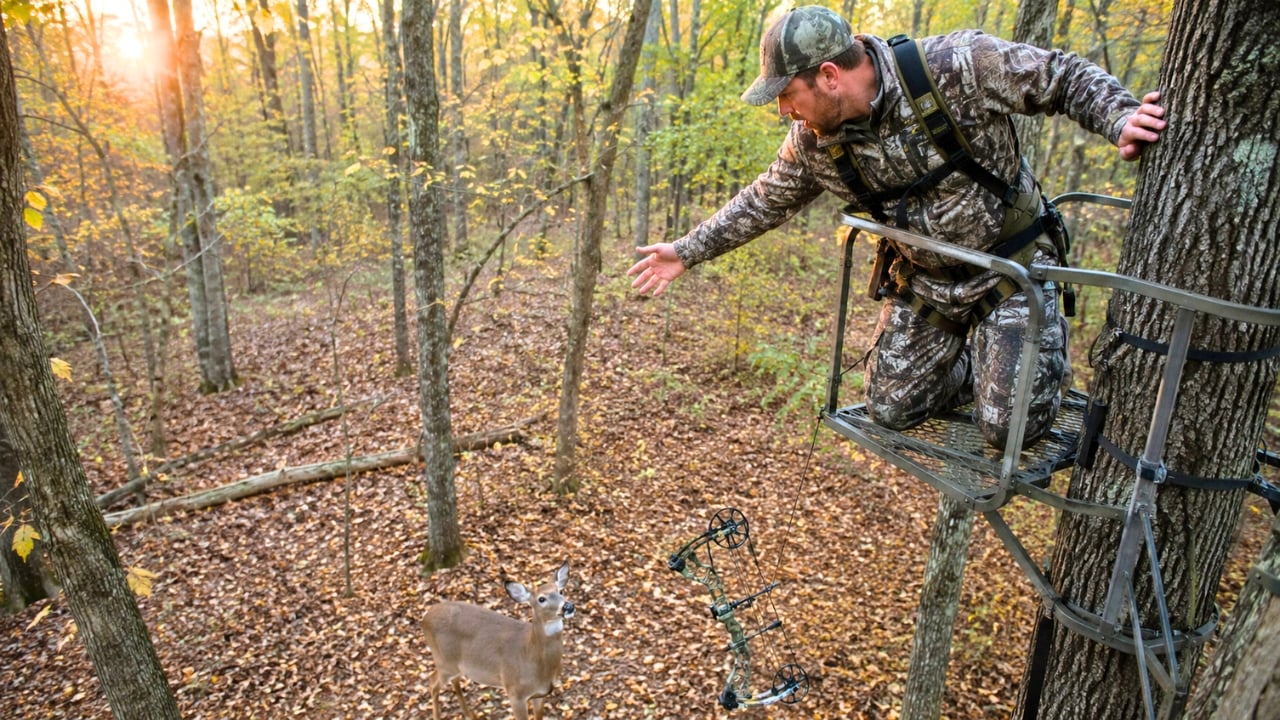
In a Reddit post, a hunter shared one of those stories that sits somewhere between painful, funny, and impossible to explain without sounding like you made it up. He had a deer in range, got ready for the shot, and ended up launching the bow toward the doe instead of sending the arrow.
That is the kind of mistake that makes the whole woods pause.
Bowhunting already has enough moving parts. You have to keep calm, draw smoothly, anchor right, settle the pin, watch the deer’s body angle, control your breathing, and make the shot without letting nerves take over. All of that is hard enough when things go normally.
But when the bow leaves your hands, the plan is pretty much over.
You can imagine the split second after it happened. The bow moves forward in a way it absolutely was not supposed to. The hunter realizes he is no longer holding the thing he needs to shoot with. The deer is still standing there, probably trying to decide what kind of strange forest behavior she just witnessed.
And the hunter is left with nothing but embarrassment.
The doe’s reaction is what makes the story. She did not instantly explode out of the county like a deer that caught a clean whiff of danger. She apparently looked at him in a way that made it feel like even the deer understood this was not his finest moment.
That hurts in a different way.
Getting busted by a deer is normal. They snort, stomp, flag, and take off like they have somewhere important to be. Missing a shot is normal too. Every hunter hates it, but it happens. Launching the bow itself? That is not normal. That is the kind of thing a man has to replay in his head later and wonder how his hands, brain, and equipment all came to that decision together.
The mistake was embarrassing, but it also showed what nerves can do.
A deer in range can make a hunter rush. Even a doe can do it, especially for someone newer or someone who has been waiting a long time for a shot opportunity. The heart rate jumps. Fine motor control gets worse. The brain starts trying to run too many steps at once. Draw. Aim. Don’t spook her. Watch the shoulder. Is she looking? Don’t blow it. Shoot now. Wait. Now.
In that mess, little things can go sideways fast.
Maybe the grip was wrong. Maybe the release or string was handled badly. Maybe he lost control at the shot. Maybe buck fever scrambled the whole process. Whatever the exact mechanics, the result was the same: the bow went forward, and the deer got one of the strangest shows she would ever see from a hunter.
The good news is that nobody got hurt. That matters. A flying bow could damage equipment, injure the shooter, or create a dangerous mess if someone else was nearby. In this case, it became a humiliation story instead of a safety incident.
Still, it is the kind of story that makes other bowhunters check their own habits.
Grip matters. Follow-through matters. Keeping a controlled hold through the shot matters. So does practicing under a little stress instead of only flinging arrows at a relaxed backyard target. A deer standing in front of you changes the whole feel of the draw and shot. If you only practice when calm, the first real opportunity can make your body act like it has never touched a bow before.
That is why experienced bowhunters talk so much about process. Same grip. Same anchor. Same breathing. Same shot execution. Do it enough times that when the deer shows up, you do not have to invent the routine under pressure. You just run it.
This hunter’s routine broke in spectacular fashion.
And because the deer apparently stuck around long enough to make eye contact with the disaster, the embarrassment got worse. There is something deeply unfair about an animal watching you fail. It is one thing to miss and have the deer disappear. It is another thing for the deer to stand there like she is giving you a moment to think about your choices.
That is the part that turns a bad shot into a permanent story.
You know if hunting buddies heard about it, they were never going to let it die. Missing a deer is common. Forgetting gear is common. Falling asleep in the stand is common. Launching the whole bow toward a doe is rare enough to earn a special place in camp history.
Every future bow check would come with jokes. “You bringing arrows today, or throwing the whole setup again?” “Want me to tie a rope to it?” “Careful, she might throw it back.”
That is how these things go.
The hunter survived it, the deer survived it, and the bow probably taught him more in one embarrassing second than a dozen normal practice sessions could have. Sometimes the woods gives you a clean shot. Sometimes it gives you a story you wish belonged to somebody else.
This one came with a doe that looked like she felt bad for him.
Commenters treated it like a perfect mix of bowhunting nerves and public humiliation, even though the only audience at first was the deer.
Several people joked about the deer’s reaction because that was the part that made the story so painful. A deer running away is expected. A deer standing there like it just watched a man lose a fight with his own bow is much harder to recover from emotionally.
Others pointed out that bowhunting pressure can make people do strange things. A live animal in range does not feel like a target in the yard. The nerves, timing, and fear of blowing the chance can make even simple steps feel clumsy.
A lot of practical advice came back to grip and shot routine. Keep control of the bow through the shot, practice the same form every time, and do enough realistic practice that the movement stays automatic when a deer shows up.
Some commenters also said embarrassing mistakes are part of hunting, especially with a bow. The important thing is that nobody was hurt, the deer was not wounded, and the hunter walked away with a lesson instead of a tracking problem.
The main takeaway was simple: bowhunting will humble you in ways you cannot predict. Sometimes you miss the deer. Sometimes you apparently try to hand her the bow.