Photo credit: AvidOutdoorsman
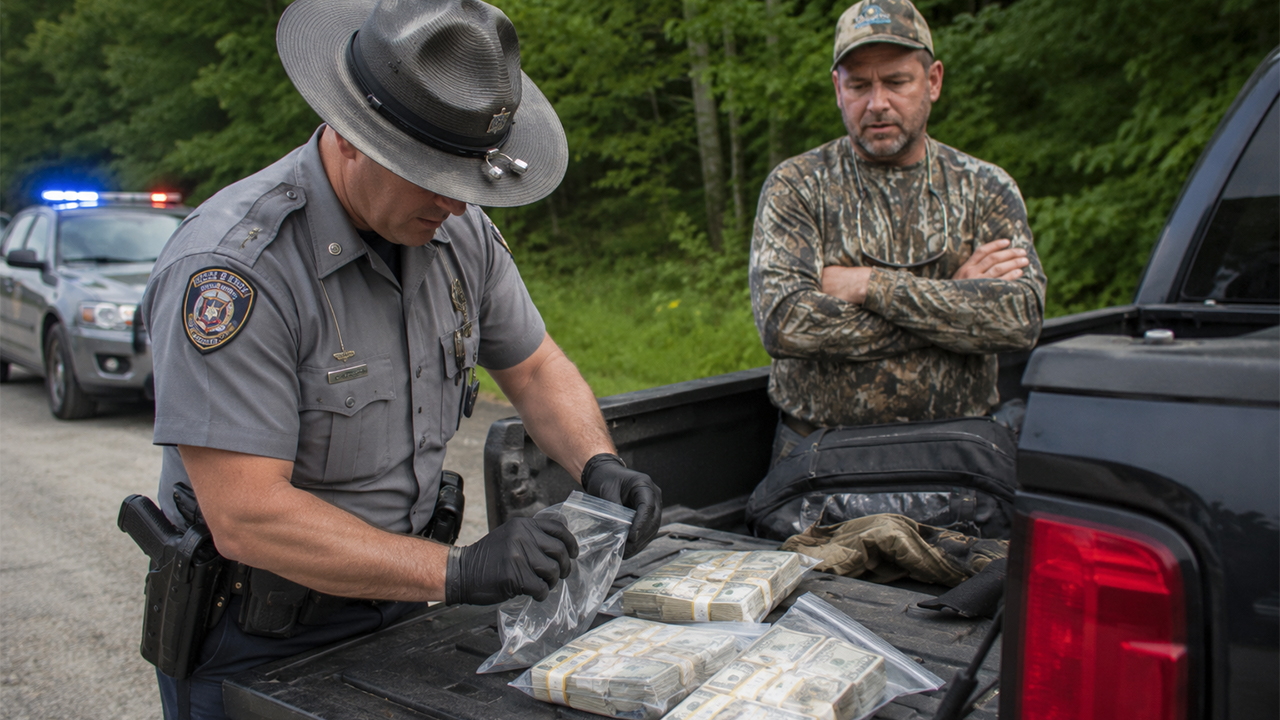
The hunter had just about everything you’d expect in the cab of a pickup after a long week in the field: dusty boots, a cooler that had seen better days, and paperwork from a guided hunt folded into the console. What he didn’t expect was to watch an officer pull an envelope of cash from his truck, treat it like a narcotics score, and drive away with it.
The amount wasn’t pocket change. It was the kind of money guys bring home after settling up with an outfitter, paying a ranch owner, or collecting a deposit for the next season. But on the shoulder of a rural highway, a stack of bills can turn a simple traffic stop into a full-blown seizure in a hurry.
A traffic stop that went sideways fast
It started with a minor reason to get pulled over—something along the lines of a tag light, a lane drift, or a speed that didn’t match the flow. The hunter was returning from a guided trip, and he’d stopped at a local bank earlier in the day. He’d withdrawn cash to pay his guide and cover lodge expenses the way many small operations still prefer: simple, direct, and no card fees.
During the stop, the officer asked the usual questions: where he was headed, where he was coming from, what he did for work. The hunter answered plainly and mentioned the hunt. That should’ve been the end of it, but cash changes the tone. When the officer learned there was a large amount in the truck, the conversation shifted from “routine” to “probable suspicion” without much warning.
Before long, the money was being treated like evidence rather than a guy’s hunting budget. The hunter tried to explain what it was for and why he had it, but anyone who’s dealt with a stop like that knows explanations don’t always matter in the moment.
Why cash in a hunting truck triggers drug suspicions
Outfitters, ranches, and small-town guides still do a lot of business in cash. Some do it because cell service and card readers are unreliable. Some do it because it’s cleaner for tips, deposits, and camp costs. And some simply prefer it—especially when the “office” is a skinning shed and the “reception desk” is the tailgate of a truck.
The problem is that law enforcement also associates cash with narcotics, especially when it’s bundled, rubber-banded, or sitting in an envelope. Add in a pickup, out-of-state plates, and the fact that hunters travel long distances, and you’ve got the ingredients for a situation where an officer thinks he’s found something bigger than a traffic violation.
A lot of folks don’t realize that in many places officers can seize money under suspicion that it’s connected to crime, even if the driver isn’t arrested on the spot. That’s a hard pill to swallow when the cash came from a bank with a paper trail and the only “crime” is traveling with money the old-fashioned way.
The seizure and the paperwork scramble
The hunter reportedly watched the cash get counted and bagged, then received paperwork that essentially said the money was being taken pending further review. That’s the moment it gets real, because now you’re not arguing on the roadside—you’re dealing with a process.
He did what most normal people would do: he started gathering proof. Bank withdrawal records, the booking details for the hunt, communications with the guide, and receipts that showed the money wasn’t some mysterious “found cash” situation. If you’ve ever booked a guided hunt, you know you can end up with a trail of texts, emails, deposits, and signed agreements without even trying.
The key piece was the bank documentation. When records show a clean withdrawal matching the amount seized, and the timing matches the trip, it gets harder to sell the idea that the cash is tied to drugs. It doesn’t mean the problem goes away instantly, but it turns a vague suspicion into something that can be challenged with facts.
Bank records proved the money’s origin, but getting it back wasn’t automatic
Here’s the part a lot of people don’t understand until it happens to them: proving where money came from and getting it returned aren’t always the same thing. Systems that allow seizures often require the owner to actively fight for the return, sometimes through filings, deadlines, and hearings that feel backwards to anyone who believes property should stay yours unless you’re convicted of something.
In this case, the hunter’s documentation reportedly tied every dollar to the guided trip. The cash wasn’t “street money.” It was legitimate funds pulled from a legitimate account for a legitimate purpose. That kind of paper trail is exactly what you want when you’re staring down a claim that your money is “suspected” of being something else.
Still, even when your evidence is solid, the process can cost time and money. It can mean missed work, attorney fees, and a long stretch where that cash is gone—cash you may have planned to use for camp costs, meat processing, taxidermy, or even just getting back home.
Commenters zeroed in on two things: civil forfeiture and “carry a receipt”
Whenever a hunter gets caught up in a seizure like this, the outdoor crowd tends to split into two camps. One group focuses on the bigger principle: the idea that property can be taken without charges and you have to fight to recover it. They’ll call it legalized theft, plain and simple, and they’ll point out how easily it can hit normal working people.
The other group takes the more practical angle, because that’s how most hunters operate. Their advice is familiar: keep your paperwork, save your receipts, and if you’re traveling with a big chunk of cash, keep proof handy. Not hidden. Not buried under gear. Right where you can produce it without digging around and making everyone nervous on the side of the road.
A few folks also pointed out the awkward truth: hunters can look “suspicious” to someone who doesn’t live in that world. A truck with coolers, knives, camo bags, and a locked rifle case can make a stop feel tense even when everything is legal. Add a large envelope of cash and you’ve got a recipe for assumptions.
How hunters can protect themselves without changing how they hunt
No one likes being told to live their life around worst-case scenarios, but a little preparation goes a long way. If you’re paying an outfitter or guide in cash, keep the invoice or booking confirmation printed out or saved offline on your phone. Screenshot it. Save the bank withdrawal receipt. If you’re carrying a deposit for next season, have something that shows what it’s for.
It also helps to keep cash in a simple, boring form—bank envelope, withdrawal slip, and any receipt that matches the amount. And if you’re going to transport firearms, do it the right way: follow state laws, keep them secured, and avoid rummaging around the cab during a stop. You don’t want to create confusion over what you’re reaching for, even if your intentions are fine.
Most importantly, understand that “I can explain it” isn’t as strong as “I can document it.” The hunter in this situation was able to point back to bank records that backed up his story dollar for dollar. That’s what moved it from an accusation to a verifiable timeline.
Cash is still common in the hunting world, especially in places where handshakes and deposits are part of the culture. But if you’re going to travel with a chunk of it, travel like someone who expects questions. Because sometimes, questions turn into paperwork—and paperwork turns into a fight you never asked for.