Photo credit: The Avid Outdoorsman
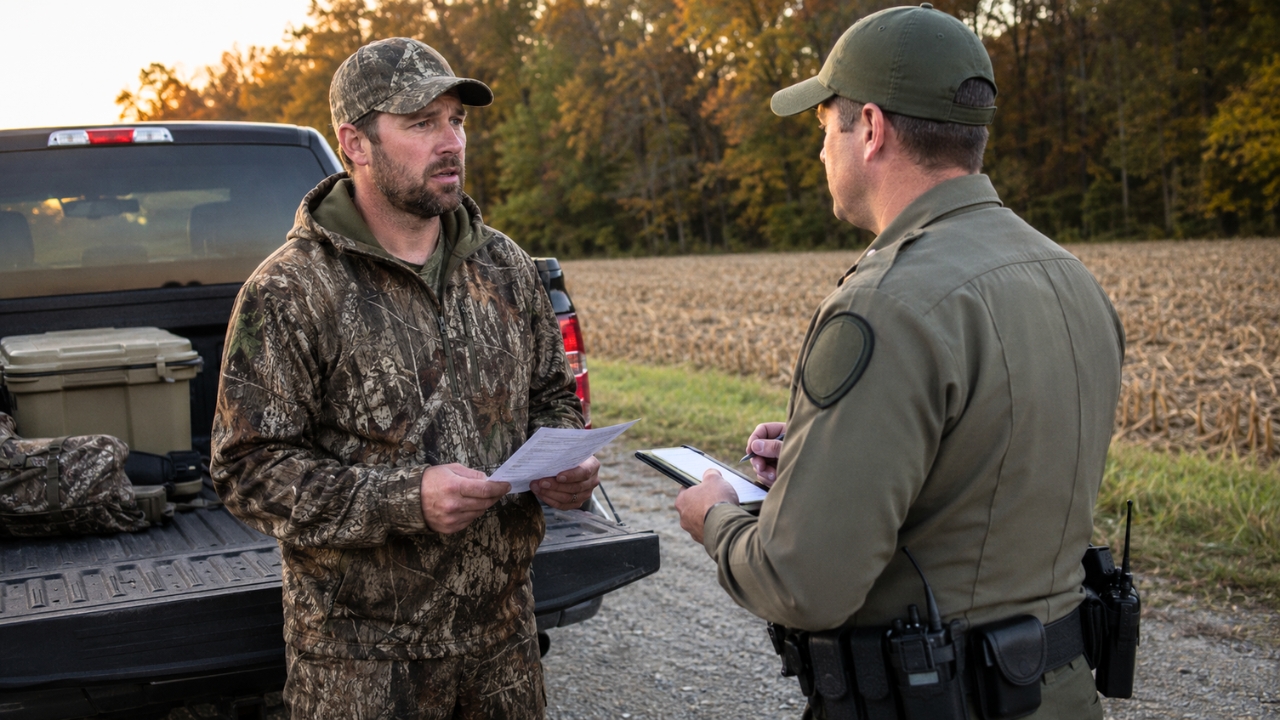
A hunter said a run-in with a game warden left him rattled after questions about where he was hunting, who had given him permission, and whether he had the right paperwork to prove it.
The hunter shared the situation in a post on r/Hunting titled “Run in with game warden”. He described being checked by a game warden while hunting land he believed he had permission to use. But once the officer started asking questions, the situation became less about whether he thought he was in the right and more about whether he could clearly prove it.
That is where a lot of hunting permission problems get uncomfortable. A hunter may have a handshake agreement. He may have talked to a landowner weeks earlier. He may be hunting with a friend who said everything was fine. But when a warden shows up and starts asking for details, “I was told I could be here” can feel a lot thinner than a written permission slip, a text message, or the landowner’s number ready to call.
The post hit a nerve with hunters because game warden encounters are already stressful, even when you have done nothing wrong. You are carrying a firearm or bow. You may have tags, licenses, harvest rules, property lines, and access questions all in play at once. If any one of those details gets fuzzy, the stop can feel serious fast.
The poster’s situation turned into a larger discussion about how much responsibility falls on the hunter to prove permission before setting foot on private ground.
Verbal Permission Can Feel Solid Until Someone Questions It
A lot of hunters have hunted on verbal permission at some point.
In rural areas, that can be normal. A farmer says yes. A family friend lets you sit a field edge. A neighbor tells you to go ahead and hunt the back forty. Nobody signs anything because everyone knows everyone, and the agreement feels simple enough.
The problem is that verbal permission can become hard to prove at the exact moment proof matters.
If a game warden receives a complaint, sees a truck parked near private land, or finds a hunter in a questionable spot, he has to sort out whether the person is legally allowed to be there. If the hunter only has a casual verbal agreement, the warden may need to call the landowner or ask more questions.
That can get especially messy if the land is owned by one person but managed by another, leased to someone else, inherited by multiple family members, or shared between relatives who do not all agree. One person may say yes while another says no. A hunter can get caught in the middle of a family or neighbor dispute without realizing it.
That is why commenters kept coming back to written permission. A quick text message, signed note, or saved conversation can make a huge difference. It does not have to be fancy. It just needs to show who gave permission, where the permission applies, and when it applies.
When a warden asks, a hunter who can pull up a text from the landowner is in a much better position than one who can only say, “He told me it was fine.”
Game Wardens Are Not Only Checking Licenses
A lot of newer hunters think of game wardens mainly as the people who check licenses and tags. But their job reaches much farther than that.
Wardens deal with trespassing complaints, illegal harvests, baiting issues, property-line disputes, road hunting, over-limit problems, and hunter safety concerns. They may show up because someone called. They may already know a landowner has had problems. They may be checking an area where hunters have pushed boundaries before.
That means a warden stop can feel more serious than a normal license check. The officer may not be accusing the hunter of anything at first. He may simply be trying to verify facts. But if the answers are vague, the stop can tighten up quickly.
That is why commenters told the hunter to take permission seriously. When private land is involved, the burden is on the hunter to know where he is and to know he has the right to be there. A good-faith misunderstanding may explain what happened, but it may not erase the problem.
The same goes for boundaries. Permission to hunt one parcel does not mean permission to cross into the neighbor’s woods. Permission to retrieve a deer does not always mean permission to keep hunting across the line. Permission from a buddy is not the same as permission from the landowner unless the buddy has authority to give it.
Those are the details wardens are trained to ask about.
Commenters Said Written Permission Protects Everyone
The strongest practical advice in the thread was to get permission in writing.
That protects the hunter, but it also protects the landowner. A written agreement can spell out which property is open, what species can be hunted, whether guests are allowed, where vehicles can park, whether stands or cameras can be placed, and what to do if a deer crosses a boundary.
Without that, everyone is relying on memory. And memory gets messy once there is a complaint.
A written permission slip also helps avoid awkward situations with neighbors. If someone sees a hunter and calls the warden, the hunter can show that he is authorized. If another family member questions why he is there, he can point to the person who granted permission.
Several commenters likely pointed out that some states already require written permission for certain types of private-land hunting. Even where it is not legally required, it is still smart.
A text message can be enough to clear confusion in many situations. A signed paper is even better. The key is having something more than a spoken conversation from two months ago.
For hunters, that may feel overly formal at first. But one serious warden stop tends to change that attitude fast.
A Permission Mistake Can Cost More Than a Bad Morning
The reason commenters took the issue seriously is because hunting access mistakes can carry real consequences.
Depending on the state and the facts, hunting without proper permission can lead to tickets, fines, loss of hunting privileges, confiscation of game, or a trespassing charge. Even if the hunter avoids the worst outcome, the relationship with the landowner may be damaged.
There is also the reputation issue. Rural landowners talk. If someone gets caught hunting where permission is unclear, other landowners may become less willing to let anyone hunt. One bad misunderstanding can close doors for a lot of people.
That is why experienced hunters often build a permission routine. They confirm before the season starts. They save the landowner’s number. They keep written permission in their truck or phone. They ask about boundaries, parking, gates, livestock, crop fields, and neighboring property. They do not assume permission from last year automatically carries over to this year.
That may sound like extra work, but it is far easier than trying to explain yourself after a warden has already been called.
The poster’s run-in was a reminder that “I know I’m allowed here” needs to be backed up before anyone else has to ask.
What Commenters Said
Commenters focused less on the drama of the stop and more on what the hunter should do differently next time.
Many said written permission is the safest route anytime private land is involved. A text from the landowner, a signed note, or a formal permission slip can turn an uncomfortable game warden conversation into a quick check. Without it, the hunter may be relying on a verbal agreement that is hard to prove in the field.
Others reminded him that knowing the property boundaries is just as important as knowing the landowner. A hunter can have permission on one parcel and still get in trouble if he crosses onto another. Mapping apps help, but they do not replace clear instructions from the person who owns or manages the land.
Some commenters also said game wardens are doing their job when they ask hard questions. If landowners have had problems with trespassers, poachers, or hunters abusing access, a warden has to verify permission. The stop may feel personal, but it may simply be part of protecting the property and the resource.
The practical advice was simple: get permission in writing, keep it accessible, confirm the boundaries, and stay calm if a warden checks you.
For the hunter, the stop may have felt like it got serious out of nowhere. But Reddit’s message was blunt: private-land hunting comes with responsibility, and written permission is one of the easiest ways to keep a simple hunt from turning into a legal headache.