Photo credit: AI-generated image created using ChatGPT. Illustrative only
Most hunters have had that moment of panic in camp: you did everything right on the stalk, the shot felt clean, the pack-out was honest work—and then you realize something small got missed in the shuffle. In Idaho, one couple found out that “small” can turn into a court date fast.
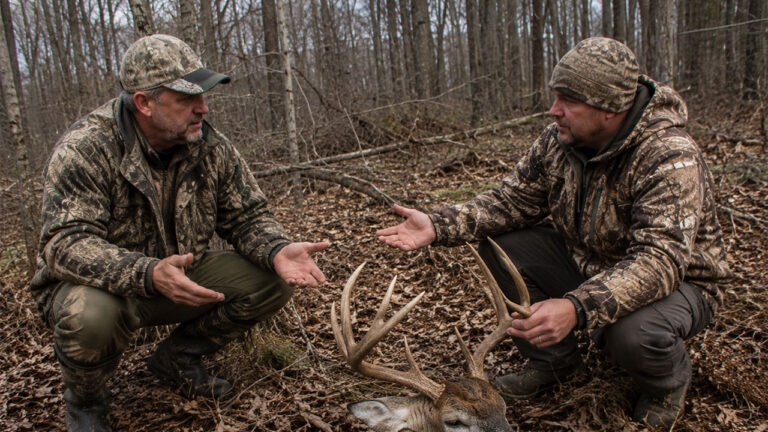
In the original post, a hunter’s spouse explained that her husband shot a whitetail doe on opening day, packed it out, and hung it near camp. He’s “been hunting his whole life,” she wrote, and nothing about the hunt sounded sketchy. The issue came down to a tag that wasn’t attached when it should’ve been.
A deer on the pole, and a tag still in a shirt pocket
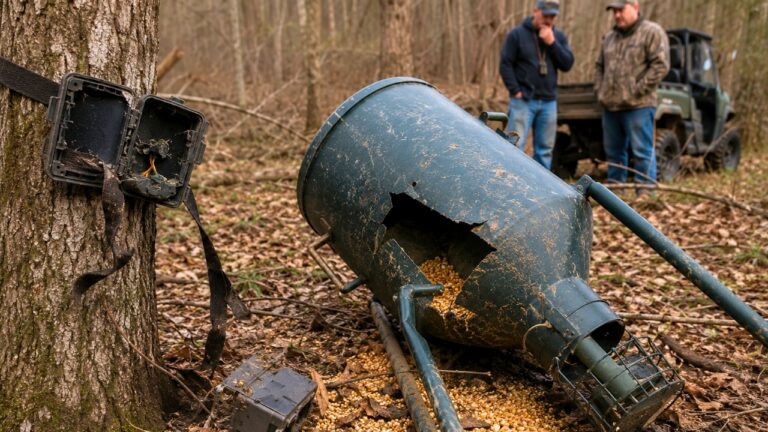
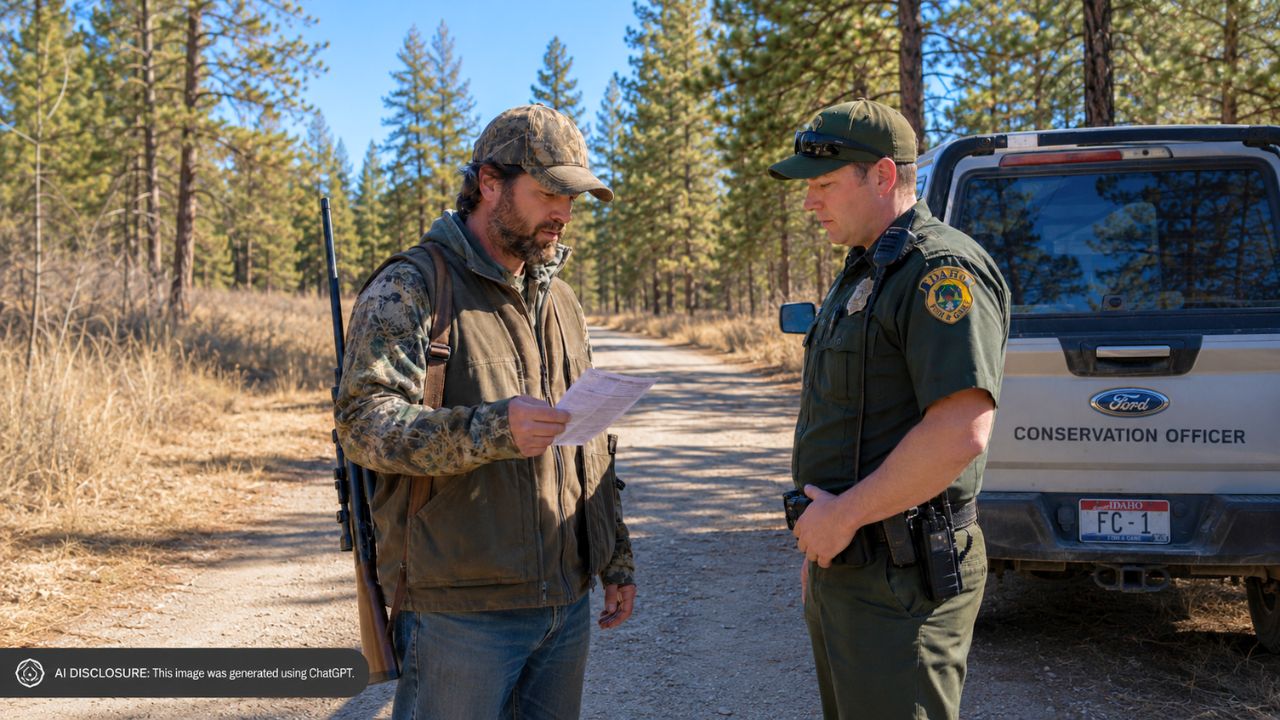
According to the account, the deer was already out of the woods and hanging near camp when a fish and game officer (described as a ranger in the post) pulled up and started visiting with other hunters at camp. That’s when her husband realized his tag was still in his shirt pocket.
He walked over and put the tag on. That’s the kind of mistake a lot of experienced hunters can imagine making—especially on a busy opener when you’re dealing with knives, game bags, rope, headlamps, and trying to get meat cooled down before anything else.
The one question that turned it into a citation
Once the officer was there, the post says he asked the key question: did the hunter put the tag on before the officer arrived or after? The husband answered honestly that he did it once he saw the ranger.
That honesty may have felt like the obvious choice in the moment—because for most of us, it is. But it also locked the timeline in place: in that moment, the animal had been taken, transported, and hung without the tag being validated and attached the way the rules require.
And that’s the kind of detail game officers tend to take seriously, because it’s one of the main tools they have to separate a legal harvest from a deer that could’ve come from anywhere.
Why “tag it immediately” is more than a technicality
Most hunters think of tagging as paperwork. Fish and game tends to see it as chain-of-custody. If an animal can move around camp—or down a road—without a tag on it, you’ve got a problem that looks a lot like “possession of untagged game,” even if the deer was legally taken and the hunter has the right tag in his pocket.
This is exactly why so many states write tagging rules in plain, strict language: validate the tag and attach it right away, before the animal is transported or processed. It’s the same concept as a signed title when you sell a truck—everybody may “know” it’s yours, but the state wants it documented the way the statute says.
The hard part is that camp reality doesn’t always match the clean version in the regulations booklet. Guys are quartering, hanging, cleaning, swapping stories, and dealing with weather and daylight. That’s when a tag ends up folded in a pocket instead of on a tendon.
The penalties on the ticket got real in a hurry
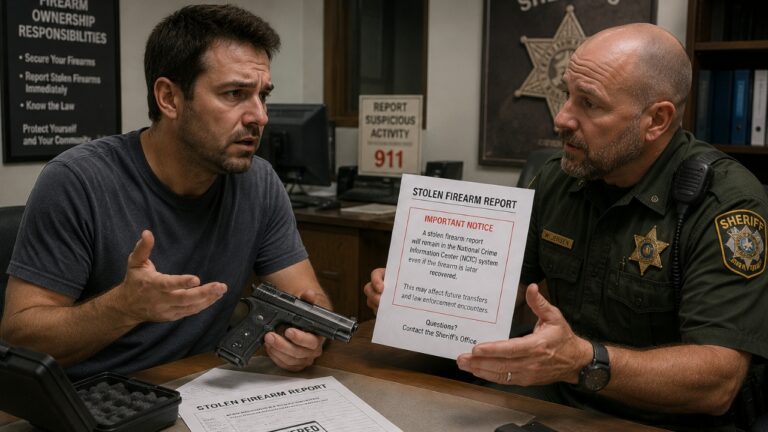
The spouse wrote that her husband was issued a ticket and has to show up in person in court “a few hours away” to determine damages. The ticket, she said, warns of a $1,000 fine, up to six months in jail, and a misdemeanor.
That’s a gut punch for a mistake that—at least from the way it was described—wasn’t about shooting out of season, spotlighting, or trying to slide a second deer into the cooler. It was about timing and procedure.
But those maximum penalty boxes on a citation aren’t there for decoration. They reflect what the law allows if a judge decides the violation fits, or if there are aggravating details not included in the short version we’re hearing. Even when the outcome ends up being less severe, the fact that it can rise to misdemeanor territory is what makes the whole thing feel like it’s spiraling.
And that’s where the bigger fear kicks in for most hunters: a misdemeanor wildlife conviction isn’t just about the fine. It can put your hunting privileges at risk.
How a single conviction can snowball into lost hunting time
Every state handles wildlife violations a little differently, but there’s a common theme: once you get a conviction on the record, license consequences can follow you around. The post’s concern—that a single conviction could end up costing hunting privileges for years—isn’t a crazy thing to worry about, even if the hunter isn’t “that guy” and even if it was a dumb oversight.
For working people who plan their fall around deer season, losing a license for multiple years isn’t just missing a weekend. It’s missing openers, camp traditions, meat for the freezer, and time with family and friends. It’s also a reputational hit in tight hunting communities, because the details rarely travel as cleanly as they should.
The reality is that fish and game enforcement leans hard on compliance items—tags, evidence of sex, proper validation—because those are the easiest things to check, and the easiest things to prove in court. If you want a rule that’s enforced consistently across everyone from a first-time hunter to a seasoned local, it’s usually going to be a simple black-and-white rule like “tag it before you move it.”
What hunters can take from this without getting sideways
This situation is a good reminder that “I didn’t know” doesn’t carry much weight once you’re standing there with an officer and an untagged animal. It’s not fair-feeling, but it’s predictable. States publish regs, officers enforce them, and the burden stays on the hunter.
The best habit is also the simplest: make tagging part of the shot routine, not part of the pack-out routine. Treat the tag like your rifle sling or your release—something you don’t move forward without. Some hunters keep a pen on a lanyard in the kill kit, or keep the tag in a zippered license holder that lives in the same pocket every time, specifically to avoid the “it was in my other shirt” problem.
It’s also smart to keep your cool if you get checked. Be respectful, answer what you can, and don’t try to argue the side of the road. A court date is a pain, but it’s also where details and context can be weighed in a way that doesn’t happen in a five-minute camp inspection.
At the end of the day, this is the kind of mistake that makes honest hunters feel sick to their stomach because it’s so avoidable—and because the downside is so out of proportion to how it feels in the moment. If there’s a silver lining, it’s that every camp has a “tag it now” story, and this one is a sharp reminder to fix the process before it fixes you.
Like The Avid Outdoorsman’s content? Be sure to follow us.
Here’s more from us: