Photo credit: Roman Biernacki/Pexels.com
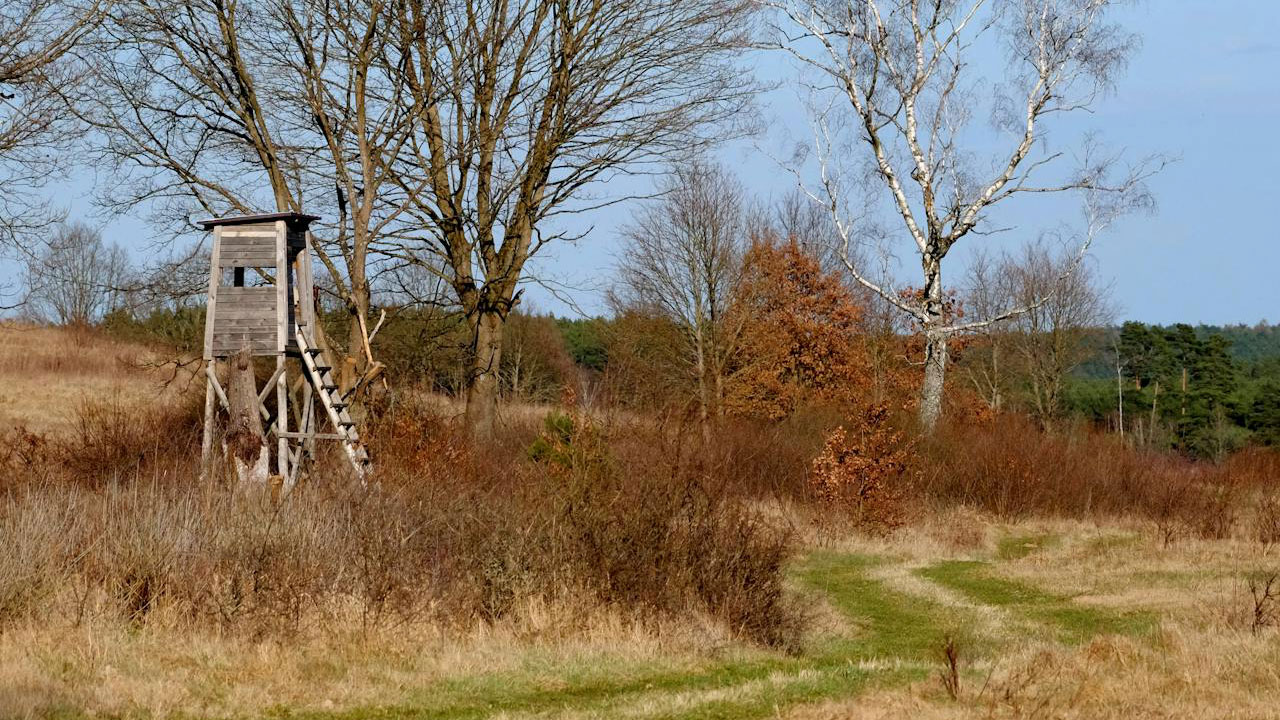
A new landowner in Iowa said he went for a walk through his timber and found something that immediately changed how he looked at the upcoming hunting season: a neighbor’s tree stand sitting right along the property line.
The hunter shared the situation in a post on r/Hunting titled “Neighbor has decided to put a tree stand up right on our property line”. He said he was new to the area and had been scouting his timber when he noticed the stand. From what he could tell, the stand was on the neighbor’s side, not his, but it was close enough to the line that it immediately raised questions.
The problem, in his mind, was not simply that the stand existed. He said the stand was pointed south and appeared to have clear shooting lanes to the south, east, and west. His land sat to the west, which meant he worried the hunter could end up shooting toward or onto his property if a deer came through that side.
That is where the legal and safety concerns started stacking up. The poster said that in Iowa, someone cannot shoot onto another person’s property without permission, calling that trespassing. He admitted he could not tell the neighbor to move a stand that appeared to be on the neighbor’s own land. But he also did not want to ignore a setup that, from his perspective, could put him or someone else at risk while hunting his own timber.
He said part of him did not care, as long as the neighbor stayed on his own side. But the more he looked at the layout, the more it bothered him. The neighbor had plenty of timber on his own plot, the poster said, yet chose to set up right against the line.
That detail seemed to be what got under his skin. He had moved out there to have his own little slice of timber and get away from neighbors crowding him. Finding a deer stand that close to the boundary made the place feel less private right away.
Before going straight to the neighbor, the poster started brainstorming ways to send a message without having a face-to-face confrontation. Some of his ideas were practical. Others were more frustration talking.
He considered using purple paint on trees along the property line, though he said that would mean a lot of spray paint to make the point. He also thought about putting up a big plywood sign warning the neighbor not to shoot onto his land and letting him know a camera was posted nearby.
At one point, he even thought about building a physical barrier out of treated 6×6 lumber. But he quickly recognized how much work that would be. Dragging heavy lumber more than 250 yards through thick timber is not a small afternoon project, especially when the stand itself might not technically be on his side.
The sign idea was the one that seemed to capture the tone of his frustration. He wanted to make clear that he knew the stand was there, that he understood he could not force the neighbor to move it, but that he would press charges if anyone shot onto his land. He also wanted the neighbor to know the area would be watched by camera.
That approach did not go over well with many commenters. A lot of people thought he was jumping several steps ahead before even talking to the other landowner.
But from the poster’s point of view, the concern was not about being controlling. He kept repeating that he wanted a safe hunting environment. He said he had already been shot at too many times while hunting public ground and did not want that same feeling on private property he paid for.
The strongest reaction from commenters was not that the poster had no reason to care. It was that he was acting like a conflict had already happened when, so far, all he had found was a stand.
Several users told him that stands near property lines are common. A hunter may set up on the edge of a property because it gives him a safer or better shooting angle back into his own land. Others pointed out that being close to a line is not automatically the same as shooting across it.
One commenter argued that the neighbor might have placed the stand there specifically to avoid shooting toward a dwelling or other unsafe direction on his own property. Another said the position may actually make sense if the hunter is mainly shooting into his own clearing rather than toward the poster’s timber.
The poster pushed back on that repeatedly. He said the stand faced south, which meant the neighbor could shoot west, south, or east. His concern was the westward shot. He was not accusing the man of already doing it, he said, but he wanted to “nip it in the bud” before the season started.
That did not fully convince Reddit. Commenters kept coming back to the same point: the neighbor had not broken any law yet. If the stand was on his own land and there was no proof he had shot across the line, then the poster’s wall, warning sign, and camera threat might make him look like the unreasonable one.
That is the tricky thing about property-line hunting disputes. The safety concern can be real, but the proof may not exist until something actually happens. By then, the risk may already feel too high.
A large number of commenters told the poster to start with a simple conversation. Not a threat. Not a plywood sign. Not a wall. Just an introduction.
Several people suggested he find the neighbor’s tax address, send a polite letter, or leave a friendly note on the stand with his phone number. The note could explain that he hunts nearby on his own side and wants to make sure neither hunter steps on the other’s toes during the season.
One commenter shared that he had dealt with a similar situation involving someone who had permission to hunt a neighboring property. Instead of turning it into a fight, he left a note on the fence line asking the other hunter to reach out. According to him, they ended up becoming friends and now communicate regularly about what they see on each other’s properties.
That kind of neighborly approach came up over and over again. Commenters warned that rural neighbors can either help you or make life harder, and it is better not to start off with an accusation. Even if the other landowner only owns the plot for hunting and does not live nearby, the relationship can still matter.
There are practical reasons for that. Deer do not care about boundary lines. A wounded animal can cross onto someone else’s land. Fences need repairs. Fires happen. Access issues come up. The guy hunting next door might someday be the person you need to call.
That does not mean the poster’s concern was pointless. It just means the first move can decide what kind of dispute it becomes.
As commenters pushed him to calm down, the poster defended his concern again and again. He said people were treating him like he was angry over a neighbor using his own property, but that was not the point. He said he cared about being shot at while hunting in his own timber.
He also explained that the neighbor did not seem to live nearby, so knocking on his door might not be easy. He believed he may have to catch him during hunting season, which meant the first real conversation could happen at the exact time everyone is already armed, alert, and protective of their setup.
That timing probably added to his anxiety. It is one thing to meet a neighbor on a driveway in June. It is another to run into someone in the woods in November, especially after you have spent weeks wondering where they might shoot.
The poster said if things went badly, he would put up as many trail cameras as needed to monitor the area. He wasn’t looking for drama, he said. He wanted to know that he and anyone else on his property could hunt safely.
That is the piece Reddit did not fully dismiss. Even people who thought he was overreacting seemed to understand that nobody wants bullets crossing onto their land. The disagreement was over whether the stand itself was enough reason to act like that had already happened.
Commenters mostly agreed on one thing: talk first, escalate later.
Some were blunt and told him he sounded like the problem because the stand appeared to be on the neighbor’s land. They argued that the neighbor had not shot across the property line, had not trespassed, and had not done anything illegal based on what the poster had described. To them, putting up a threatening sign or building a wall would make a bad first impression fast.
Others were more sympathetic but still urged him to be careful. They suggested leaving a laminated note on the stand, introducing himself, and explaining that he hunts nearby and wants to avoid unsafe shooting directions. That would give the neighbor a chance to respond like a reasonable person before anyone started posting cameras or threatening charges.
A few commenters understood the instinct to protect the property line. One person said they had dealt with a similar setup and built a brush wall along the boundary, then placed visible cameras nearby to make it clear the area was being watched. Another said the “smile for the camera” sign might be enough if the poster wanted to send a message without building anything.
The strongest advice, though, was to avoid starting a neighbor war over something that had not happened yet. The stand may be annoying. It may feel too close. It may even be a setup worth watching. But most commenters thought the poster would be better off opening with a friendly conversation instead of assuming the worst.
For the landowner, the issue came down to one basic concern: he paid for his timber, and he wanted to hunt it without worrying about someone else shooting across the line. For Reddit, the answer was equally simple: protect your land, but don’t turn a potential problem into a guaranteed fight before you even meet the guy.