Photo credit: Theavidoutdoorsman.com
The buck came in like they always do when you’ve finally settled into the quiet—slow steps through the leaves, head low, and that half-second pause that tells you he’s about to commit. The hunter was set up on private ground he had permission to hunt, a clean lane in front of him, and a clear shot angle into a safe backstop. When the deer stopped broadside, he did what deer hunters do in November and made it count.
The problem didn’t start with the shot. It started with what happened after the deer ran.
The shot was on permissioned ground, but the blood trail didn’t care
The buck didn’t drop in sight. It tore off into a thick strip of cover that ran along a fence line, the kind of boundary that’s easy to “feel” in the woods but not always easy to see when adrenaline hits. The hunter waited, climbed down, and found good sign—bright blood and a steady line that angled toward the corner of the property.
He did what most of us have done: moved carefully, marking last blood, watching for the deer to bed. Within a short distance, the trail crossed near the boundary. On the other side sat the neighbor’s place—another private parcel with its own rules and its own attitude about outsiders.
The neighbor’s claim turned a recovery into a property-line dispute
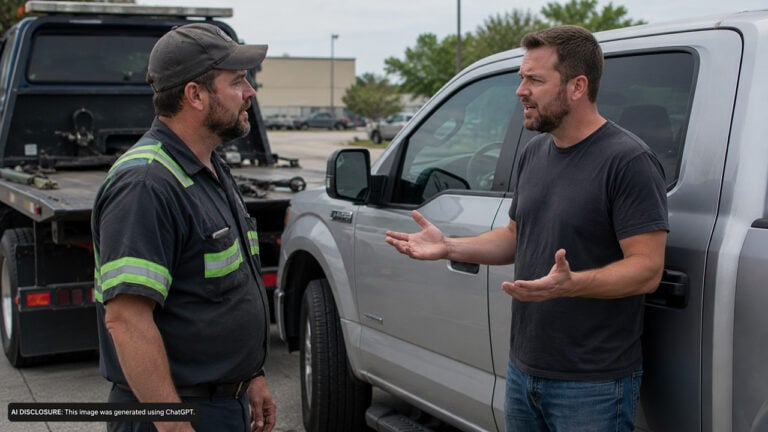
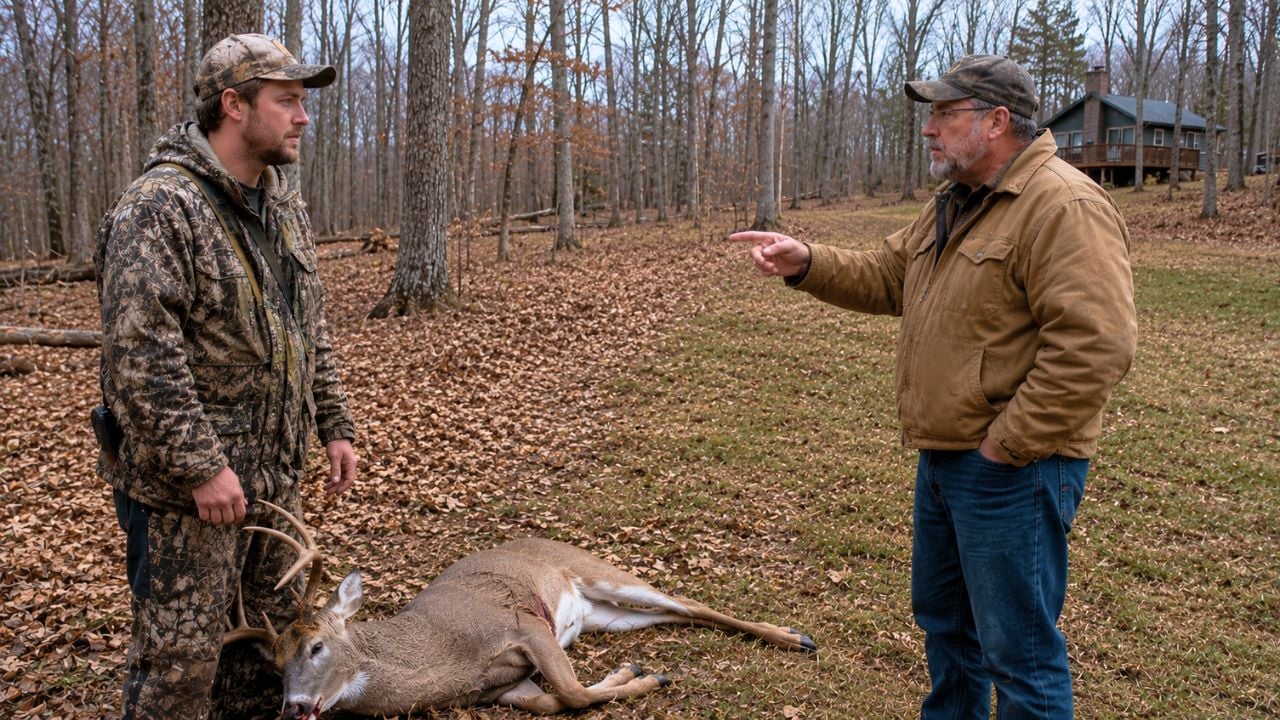
The hunter hadn’t made it far into the tracking job before he saw movement along the fence. The neighbor showed up, not to help drag, but to question who shot what and where. The claim was simple and blunt: the deer had crossed onto the neighbor’s land during the chase, which—according to the neighbor—meant the neighbor should get the deer.
That’s not how it works in most places, and it’s definitely not how it works in the real world when you’re trying to keep tempers down. But the neighbor wasn’t arguing fine points. He was talking possession, demanding the buck, and hinting that the hunter had no right to be anywhere near the line.
In rural America, this is where things can go sideways fast. Not because of the deer, but because of ego and the feeling that somebody’s getting one over on you.
Tracking permission, trespass rules, and why “I’ll just grab him” gets hunters in trouble
Plenty of states have a version of the same rule: you can’t trespass to recover game without permission. Some states offer limited allowances, some require permission every time, and some have very specific rules about firearms and whether you can step across a line unarmed. The details vary, but the lesson is consistent—if you cross without permission, you may be the one getting cited, even if you made a perfect shot from legal ground.
That reality is what makes these situations so frustrating. A deer can cover 100 yards in seconds. It can die five feet across the line. And suddenly a straightforward recovery turns into a standoff where the person who did everything right is stuck making phone calls instead of tagging a buck.
In this case, the hunter stayed put near the boundary and tried to handle it the way a calm adult would: talk first, keep hands visible, and don’t escalate. He asked for permission to recover. The neighbor kept pushing the idea that the deer “became” the neighbor’s the moment it crossed.
A game warden call changes the tone, and that’s usually a good thing
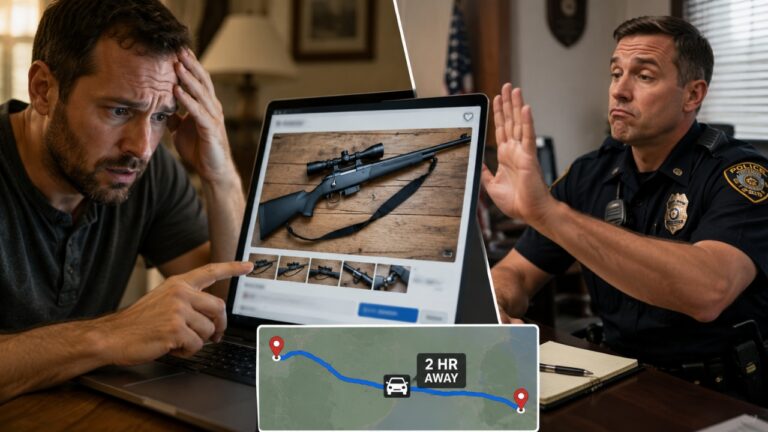
When neither side is willing to budge, a conservation officer is often the only person who can defuse it without someone doing something dumb. The hunter contacted a warden and explained the situation: legal shot on private land with permission, deer ran, boundary dispute, and a neighbor trying to claim the animal.
That phone call matters for another reason—documentation. If you ever end up in a “he said, she said,” your best friend is the fact that you tried to do it clean. Photos of the hit site, first blood, the direction of travel, and any obvious sign near the line can help. So can a GPS pin from a mapping app showing where you were standing when you shot and where the blood trail starts.
Most wardens aren’t looking to punish a guy who is trying to recover ethically. They are looking to prevent trespass, prevent fights, and prevent somebody from turning a deer recovery into a neighborhood feud.
Where hunters said the line really is: ownership vs. possession vs. ethics
When stories like this make the rounds at the feed store or in a group chat, you hear two main camps. One camp says, “If you shot it legally, it’s your deer,” and they aren’t wrong in spirit. The other camp says, “If it dies on my land, it stays on my land,” and they aren’t wrong about property rights and access control.
The truth is those two ideas collide every season. Legally harvested game is generally the hunter’s responsibility to tag and report correctly, but recovery access is a separate issue. You can be 100% legal on the shot and still be 100% wrong if you hop a fence without permission.
What most reasonable outdoorsmen agree on is the ethical line: if a neighbor calls and says they hit a deer and it crossed, you help them recover it. You don’t posture. You don’t try to “win” a buck you didn’t shoot. You certainly don’t demand somebody hand over their tag-worthy deer because it took its last breath on your side.
The practical way to avoid this fight before it starts
None of us can control where a wounded deer runs, but we can control the odds of conflict. Clear boundary marking helps—fresh paint, posted signs where legal, and fence lines that don’t disappear in the brush. A mapping app with downloaded offline layers is cheap insurance, especially on odd-shaped parcels with corners and fingers of timber.
It also helps to have the neighbor conversation before the season. It doesn’t have to be a buddy-buddy relationship. Just a basic agreement: if a deer crosses, we call each other, no rifles in hand, and we handle it like grown men. A five-minute talk in September can save a two-hour shouting match in November.
And if you’re the hunter, don’t push your luck. If the neighbor says no, don’t sneak in. Get the warden involved and let the process play out. Losing a deer is painful. Losing your rights to hunt, paying a trespass fine, or getting wrapped up in a confrontation is worse.
At the end of the day, a legal buck should be a good memory, not a property-line war. The best outcomes happen when hunters keep their cool, document what they can, and let the folks with badges handle the hard edges of the rules—because once tempers flare on a fence line, everyone loses, even if somebody drags a deer out.