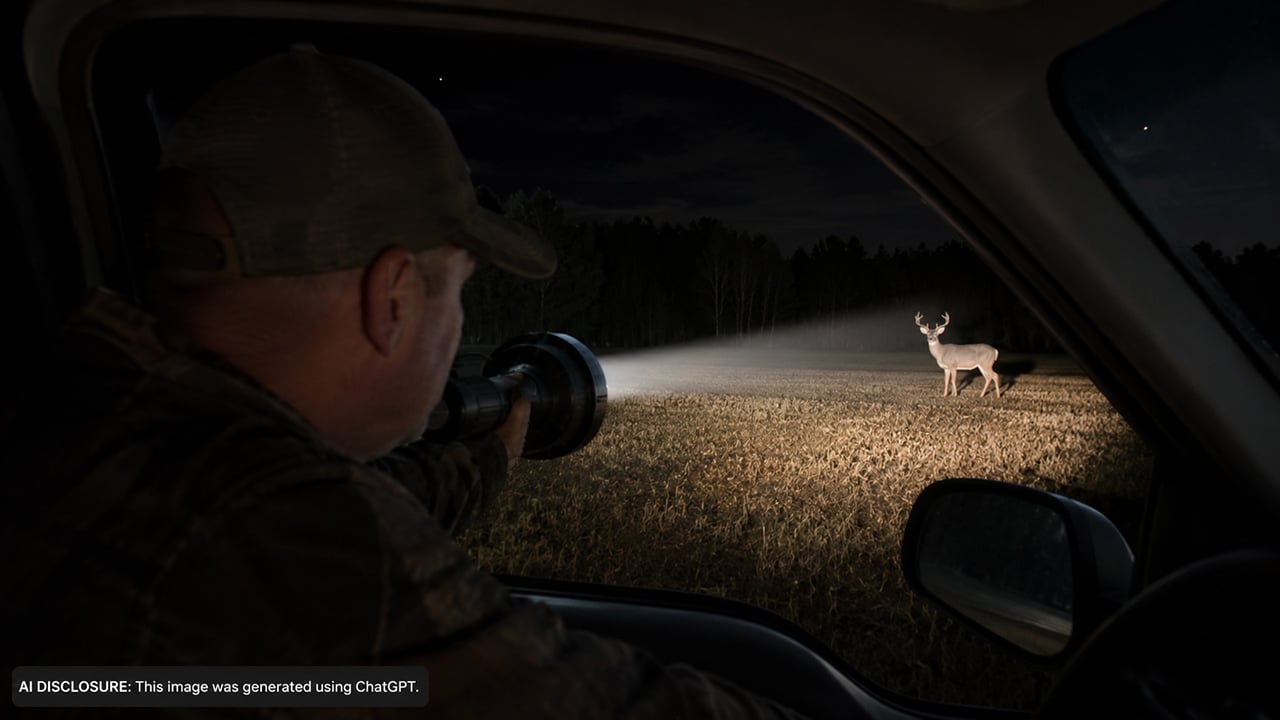
Photo credit: AI-generated image created using ChatGPT. Illustrative only
A pickup idling down a farm lane after dark doesn’t look like much from the road. But add a bright beam sweeping a field edge, and every neighbor within earshot knows what it usually means. In one Iowa situation, a landowner’s nighttime “deer problem” wasn’t being handled with a rifle, a bow, or even a shotgun—he was allegedly using a truck with metal spikes mounted on the front and running deer down on his own property.
The odd detail came out in the original post, where someone described a man who owns “hundreds of acres of farm land” and, when he gets bored, drives into deer he considers vermin. The question wasn’t about ethics or taste. It was simple: how illegal is that, especially if it’s all on private ground?
A truck isn’t a legal “weapon,” even on your own acres
Most hunters know the basic rule: your land doesn’t exempt you from game laws. Seasons, tags, methods of take, and wanton waste rules don’t stop at your fence line. And in a lot of states, the “method” piece is where this thing falls apart fast.
In the discussion, one commenter pointed to a prior Wisconsin case where the logic was straightforward: “A vehicle is not a permitted weapon to hunt deer with, so running over a deer intentionally would be illegal hunting.” That’s the common-sense heart of it. Deer hunting regs are built around lawful implements—firearms and archery gear, sometimes muzzleloaders—plus restrictions on what you can’t use. A pickup, spiked bumper or not, doesn’t fit any legal definition of sporting take.
Why “spotlighting” gets mentioned when lights and trucks show up
Even though the original description focuses on running deer down, the after-dark, truck-based approach is exactly the kind of behavior that gets neighbors watching—and reporting. In farm country, when somebody is roaming fields at night and throwing light around, folks don’t assume it’s “just checking cattle.” They assume deer are involved.
That’s where spotlighting accusations come from. The moment artificial light is used to locate, harass, or attempt to take deer after legal shooting hours, you’re in territory game wardens take seriously. A beam from a cab, movement across a field, and a dead deer later on can look an awful lot like a poaching pattern, even if the landowner insists it’s his property and his “vermin.”
The bigger issue isn’t just legality—it’s safety and public trust
Putting legality aside for a second, intentionally hitting deer with a truck is reckless. You’re talking about high-speed impact with an animal that can come through a windshield, roll under the chassis, or get deflected into fences and ditches. Then add metal spikes on the front and you’ve got a recipe for equipment damage and unpredictable results.
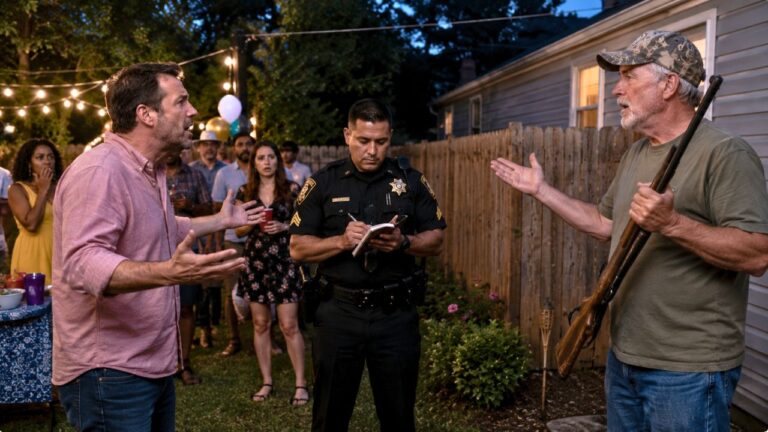
And it doesn’t happen in a vacuum. Neighbors see headlights, hear revving, and find dead or injured animals later. That’s how the whole neighborhood starts watching each other, and it’s how honest hunters get painted with the same brush when enforcement ramps up. Once people associate “deer + truck + night” with criminal behavior, everybody pays for it in suspicion.
Commenters zeroed in on “hunting from a vehicle” rules
The thread didn’t turn into a deep dive on Iowa code, but the comment section locked onto something most outdoorsmen already understand: hunting from a vehicle is illegal in most places, with narrow exceptions. One person flat-out said it’s illegal in most states to hunt out of a car, and that “hunting with a car” was a new one.
There was also some dark humor about whether engine size would matter—jokes about “4-cylinder vs V8” seasons and taking a deer with a compact car. Funny as that is, the joke lands because it highlights the truth: the law is written around approved methods of take, not improvising with a bumper and horsepower.
Disability permits exist, but they don’t cover this kind of behavior
One commenter mentioned that in Pennsylvania you may need a medical dispensation to hunt from an ATV or vehicle, which is a real concept in many states. Those permits are meant for hunters with serious mobility limitations—so they can participate legally and safely—not for using a vehicle as the actual tool of harvest.
That distinction matters. A permit might let someone shoot from a stationary vehicle in certain conditions, following strict rules. It doesn’t turn a truck into a lawful weapon, and it certainly doesn’t bless running animals down. If anything, the existence of disability accommodations makes it even clearer that the default rule is “no,” and the exceptions are narrow and regulated.
What a neighbor report can trigger in the real world
When a neighbor calls about lights in fields at night, a game warden doesn’t have to treat it like harmless curiosity. The report itself suggests time-of-day violations, harassment of wildlife, or illegal take. And if the behavior includes chasing deer with a vehicle—or leaving wounded animals—expect the response to get serious quickly.
Even on private land, enforcement can look at patterns: repeated nighttime activity, vehicle tracks, carcasses, and admissions to others. The original post makes it sound like this was a known “when he’s bored” habit. That kind of reputation is exactly what turns a one-off complaint into a closer look.
If you care about hunting staying hunting—and not turning into a circus—this is the kind of thing worth shutting down early. Legal seasons, legal equipment, and clean kills aren’t just tradition. They’re the line between a legitimate deer harvest and behavior that gets neighbors calling, wardens investigating, and everyone else in the area dealing with the fallout.
Like The Avid Outdoorsman’s content? Subscribe to our newsletter so you never miss an article.
Here’s more from us: