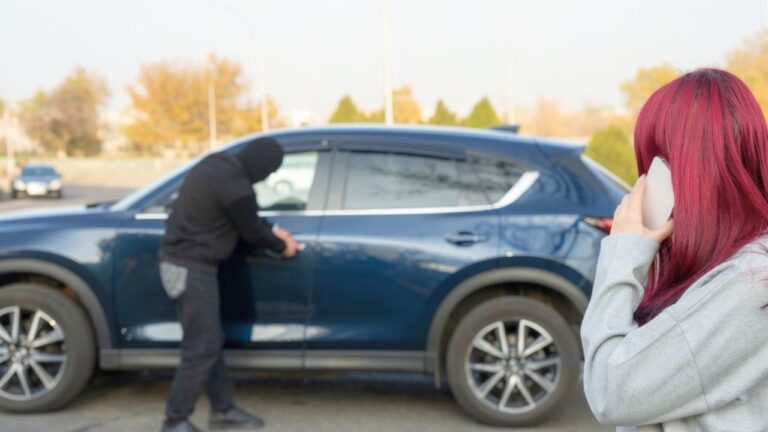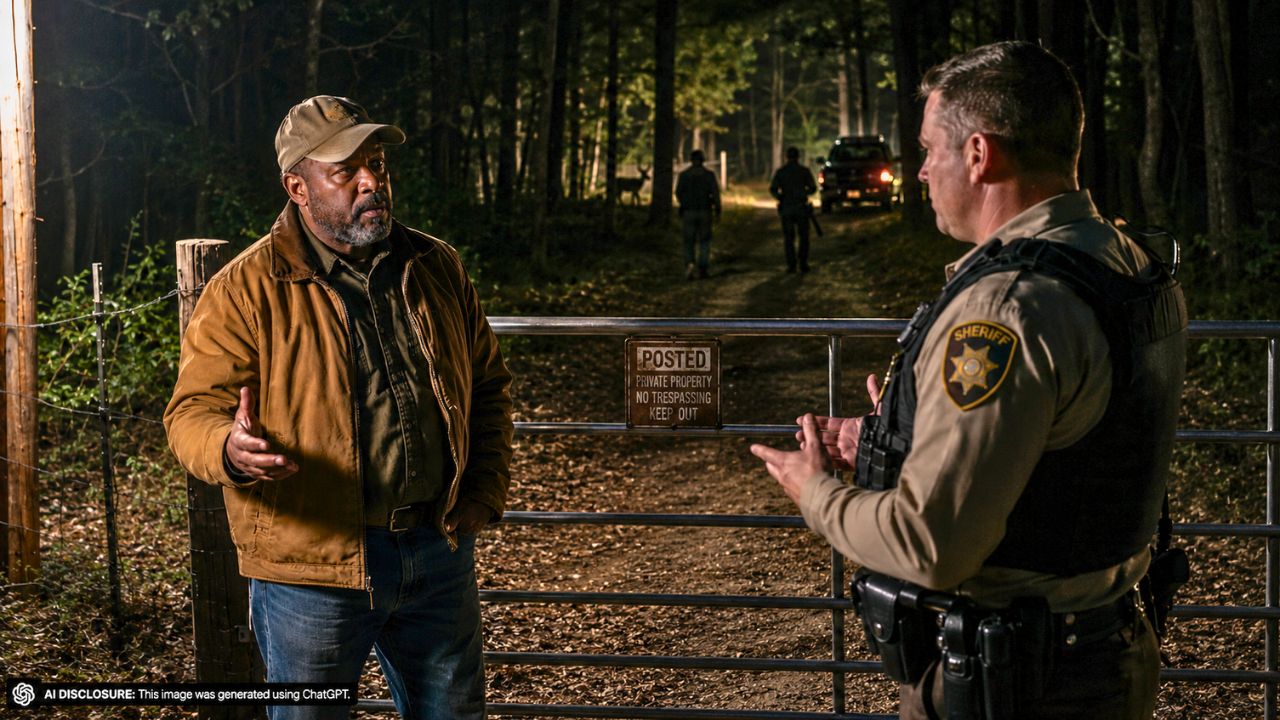
Photo credit: AI-generated image created using ChatGPT. Illustrative only
When you live on acreage in the timber and it’s quiet enough to hear a pickup door shut a long way off, gunfire that isn’t yours hits different. In unincorporated Kern County, California, one landowner said rifle-armed poachers have been slipping onto his heavily wooded 20-acre place at night, shooting deer out of season, and then disappearing before deputies can make the 20-minute run.
What pushed it from “trespass” to “we’re not safe here” was the setting: trees, low visibility, and the very real fear that a landowner or his wife could be mistaken for game while they’re out in their own yard. In the original post, he asked the question a lot of rural folks have asked in one form or another: if armed people are illegally hunting on my land, can I go out there armed and make them leave?
A deer hit the ground, and the poachers came back for it
According to the landowner, the problem wasn’t hypothetical. Over two days, he said there were “multiple visits” from armed poachers, and at least one deer was actually shot. When he confronted that person, the poacher left before law enforcement arrived—then returned later to recover the carcass.
That’s a big detail because it shows intent and comfort level. Somebody willing to come back after a confrontation isn’t just “lost.” They’re treating the place like it’s theirs, and they’re betting the response time and the darkness will keep consequences away.
The real danger wasn’t just the trespass—it was stray rounds in the trees
Most landowners are used to dealing with the occasional boundary-crosser. What makes this a different animal is rifles going off in a wooded area where the homeowners live. Even a “safe” shot at a deer can get unsafe fast when you don’t know what’s beyond it, and you don’t even know who else is out there.
The landowner’s fear was simple and reasonable: he or his wife might be outside, partially obscured by tree cover, and get mistaken for game. Add in the fact that these aren’t lawful hunters following seasons and rules, and you’ve got people already willing to break one set of laws with a gun in hand.
He wanted to confront them, but California self-defense law felt murky
The landowner said he’d been reading California self-defense statutes and jury instructions and found them vague in plain-English terms. His core questions were practical: can he approach armed poachers while armed himself, and at what point does an armed trespass in his yard qualify as an imminent threat to life, health, or property?
He also wondered how “home” is interpreted—whether it’s just the mobile home itself or includes the yard—and whether the threat needs to be as obvious as someone pointing a rifle at him. That’s the hard part for rural folks: you can know something is dangerous and still not know where the legal line is until you’ve stepped over it.
Most feedback boiled down to one blunt point: don’t escalate a gun problem
The overwhelming response he summarized was to avoid direct confrontation altogether—armed or unarmed. The advice wasn’t “do nothing,” so much as “don’t walk into the dark timber toward criminals with rifles and hope it ends politely.” That’s not cowardice; it’s recognizing how fast a bad situation turns final.
When you insert yourself into the middle of a poaching incident, you can become the target, even if you’re in the right. In thick cover at night, nobody has full information, and any movement, flashlight, or shouted command can trigger a panicked reaction. If you’re holding a gun too, you’ve just raised the stakes for everyone.
Deterrence from inside the house: sirens, signs, and making the spot “hot”
One suggestion the landowner called “brilliant” was using a siren to scare off deer and potentially the poachers without walking out into danger. That idea fits rural reality: if you can make the area uncomfortable to hunt, you reduce the reason they’re there, and you do it while staying behind cover.
He also asked about upgrading signage—specifically whether aggressive warnings like “trespassers will be shot on sight” are legal to post for deterrent effect, even if you never intend to act on them. He floated more vague imagery too, like skull-and-crossbones style warnings, trying to find something that might make a would-be poacher pick an easier place.
Signs are good, gates are good, and visible boundaries matter. But signs don’t stop a person who’s already decided the deer is worth the risk. For those folks, documentation and reporting become the tools that actually lead to consequences.
The part nobody likes: proof, documentation, and playing the long game
One of the ugliest truths about rural law enforcement is that it’s often stretched thin, and response time is response time. That’s why the landowner was trying to figure out what he could do in the moment—because “call and wait” feels useless when rounds are popping off close to home.
But the “proof” problem is real. If poachers are slipping in and out, and they’re gone before a deputy arrives, the system needs something it can use: dates, times, vehicle descriptions, photos, video, and patterns. From a practical standpoint, trail cameras positioned on likely entry points, gate approaches, and road pinch points are often how landowners turn a recurring mystery into a solvable case.
Just as important, the landowner’s safety concern doesn’t end when the shooting stops. If someone already came back to retrieve a deer after being confronted once, there’s always the chance they come back again—either for more hunting or out of anger. That’s another reason most experienced outdoorsmen will tell you: don’t create a personal feud with an armed trespasser if you can help it.
In the end, the smartest “move” usually looks boring from the outside: tighten up the property perimeter, improve lighting and visibility at access points, add deterrents that don’t require you to step outside, and document everything. It’s not as satisfying as marching out there, but it’s how you keep your family safe while building the kind of record that gives law enforcement and wildlife authorities something solid to act on.
Like The Avid Outdoorsman’s content? Be sure to follow us.
Here’s more from us: