Photo credit: AI-generated image created using ChatGPT. Illustrative only
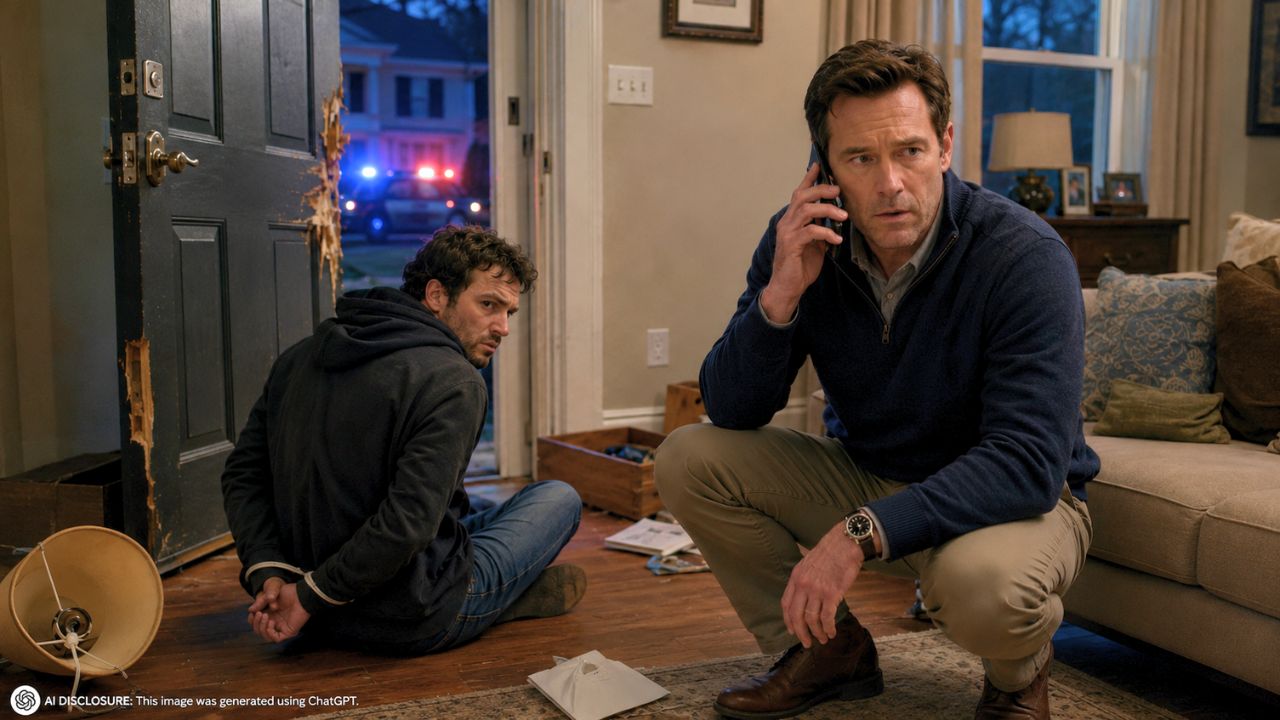
It’s one thing to wake up and realize something’s missing. It’s another to catch a stranger in that narrow slice of “only people who live here should be” space between your house and the garage, after midnight, climbing fences like he owns the place.
That’s where one Baltimore City homeowner found himself after his bike disappeared from his garage around midnight. The very next night, about the same time, his roommates spotted a teenage male back in the enclosed area behind the row homes, trying doors and probing both their place and a neighbor’s. Instead of charging outside hot-headed, they stayed back and filmed it.
Later, the homeowner laid out his what-if questions in the original post: If he had gone out there, what could he legally do? Tackle him? Hit him with a bat? Shoot? Hold him down until police arrived?
The break-in attempt wasn’t a random “wrong address” situation
The details matter. This wasn’t a kid strolling up a sidewalk or cutting through an open alley. The homeowner described the space as completely enclosed—sandwiched between other row homes—and said you can’t just “wander” into it. To get back there, the teenager would’ve had to climb over fences and walls.
That kind of access point changes how most outdoorsmen read the scene. Someone who scales barriers to reach a detached garage at midnight isn’t looking for directions. It looks like scouting for unlocked doors, quick-grab theft, or a place to force entry where nobody’s watching.
They chose video over a confrontation, and that’s not nothing
Plenty of folks talk tough until the moment comes. In the real world, walking out into a dark yard to confront someone who’s already proven he’ll climb fences can go sideways fast. The homeowner admitted what a lot of us think but don’t always say out loud: he didn’t know if the person had a weapon or was high on something that makes people unpredictable.
So they stayed inside and recorded him. That’s a simple move, but it’s a smart one: you’re safer, you preserve evidence, and you avoid being the guy who turned a property crime into a violent encounter because anger took the wheel.
The temptation is to “detain” him—but restraint can become your problem
The homeowner’s biggest practical question was about physically stopping the suspect: “Can I forcibly constrain him until police arrive?” That’s the moment where a lot of well-meaning homeowners step onto thin ice.
Even when you’re right about someone trespassing or attempting to break in, the law often cares about how you respond. If you put hands on someone—tackle them, tie them up, pin them down—what started as “stopping a burglar” can be argued as assault, unlawful restraint, or excessive force if your actions go beyond what’s allowed in your state and situation.
That’s the legal line in plain terms: it’s not just whether the other guy was doing wrong. It’s whether your force and your restraint match the threat and the circumstances. Cross that line, and you can wind up explaining yourself in handcuffs or in court, even though you were the one who got robbed.
Bat, gun, tackle: the tool matters less than the justification
The post laid out the classic escalation ladder: tackle him, hit him with a baseball bat, shoot him. Outdoorsmen and gun owners understand this part instinctively—because we spend time thinking about force, distance, and what happens after the trigger breaks.
But the legal side doesn’t care that a bat was “handy” or that a firearm was “the great equalizer.” It cares about justification. A bat to the head can be lethal force. A firearm is lethal force by definition. Even a tackle can turn into serious injury if the suspect hits concrete wrong. If the facts don’t support that level of force—especially when the threat is property-focused and the person isn’t actively attacking—you can become the one in trouble.
The homeowner also mentioned, “I could have been fearing for my own well-being if this makes a difference.” It often does, but fear alone isn’t a magic phrase. The question becomes whether that fear was reasonable based on what was happening: the person’s actions, distance, whether they advanced on you, whether you could safely disengage, and whether you were trying to protect people versus just recover property.
Where homeowners get burned: chasing property instead of protecting people
There’s a hard truth here. The law is usually more forgiving when you’re protecting human life than when you’re protecting a bike, a tool chest, or a garage full of gear. A lot of states draw sharp lines between defense of persons and defense of property, and they don’t always match what feels “fair” at 12:01 a.m. when your stomach drops.
That’s why the homeowners’ original choice—stay back, film, and avoid direct contact—wasn’t timid. It was disciplined. If you go outside looking for a fight, you’ve voluntarily inserted yourself into the danger zone. If you stay inside, call law enforcement, and act like a witness, it’s much harder for anyone to claim you were the aggressor.
And in a row-home neighborhood, there’s another layer folks forget: backdrop. Even if someone believes they’re justified using a firearm, discharging a round in a tight, enclosed urban space can create risk to neighbors. That’s not just a safety issue; it’s a legal liability issue.
The practical playbook when a prowler is in the “fenced-in” zone
The homeowner asked what he “could” have done. The better question for most of us is what we should do to stay alive and stay out of jail. In a situation like the one described—midnight, enclosed access, unknown suspect—your best options usually start with avoidance and documentation.
Get eyes on the situation without exposing yourself. Turn on exterior lights if you can. Record video. Call 911 and give clear, simple information: where the person is, what they’re doing, and that the area is enclosed and not publicly accessible. If you have family or roommates, get everyone behind a locked door and account for them.
If you do have to go hands-on—and that’s a big “if”—the risk isn’t only physical. The risk is that your restraint turns into “crossing a line” because adrenaline makes you squeeze harder, hold longer, or “teach a lesson” you can’t legally teach. The moment it becomes punishment instead of prevention, you’ve handed the other side an argument.
None of that is satisfying when you’re thinking about a stolen bike and a repeat attempt the next night. But it’s real. Sometimes the most responsible move is also the one that feels least like payback.
For this Baltimore homeowner, the video and the decision not to confront likely kept a bad situation from becoming worse. The bigger lesson is one every landowner and gun owner should keep close: you can be 100% right about a trespasser and still end up paying for it if your force or restraint goes beyond what the law will defend.
Like The Avid Outdoorsman’s content? Be sure to follow us.
Here’s more from us: