Photo credit: AI-generated image created using ChatGPT. Illustrative only
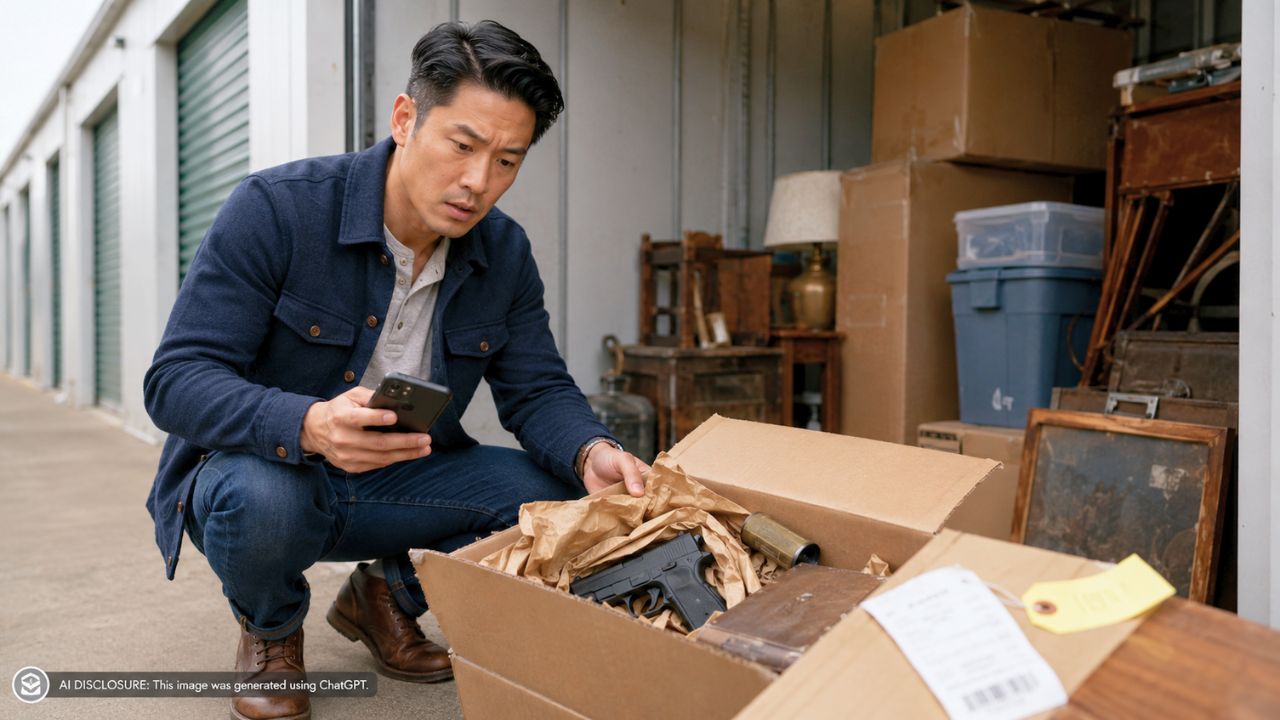
Buying a storage unit is usually about rolling the dice on furniture, tools, and maybe a few boxes of old hunting clothes. But every once in a while, the “mystery box” turns into something that changes the whole day. That’s what happened to one auction winner who dug through their unit and found a loaded handgun tucked away in a box—then realized the real problem wasn’t the gun itself, but what owning it might mean.
A surprise find that needs to be treated like it’s ready to fire
From a safety standpoint, “loaded handgun in a box” is about as serious as it gets. It’s one thing to find an old single-shot shotgun in a soft case. It’s another to find a pistol that’s allegedly already charged up and hidden with household junk, where a hand can land on it without thinking.
The immediate outdoorsman move here isn’t to admire it or start planning a range day. It’s to slow down, keep it pointed in a safe direction, and get it secured so nobody—kids, neighbors, buddies helping you unload—handles it casually. When a firearm shows up in a place it shouldn’t be, assume nothing about how it’s stored, whether it’s in good mechanical shape, or whether it’s been messed with.
“You own the unit” doesn’t always mean “you own everything the way you think”
One response in the discussion laid out a common-sense take: if the container was auctioned legally, then the buyer is now the owner of what’s inside—including the firearm.
That’s the assumption most folks operate under with storage auctions. You buy the locker, you haul the contents, and you deal with the leftovers. But firearms are one of those categories where “finders keepers” doesn’t always line up neatly with how state laws treat transfers and private-party transactions.
The baggage that can follow a gun is the part most people forget
The most practical warning from the responses wasn’t about the value of the handgun or what model it was. It was about what can come attached to a serial number.
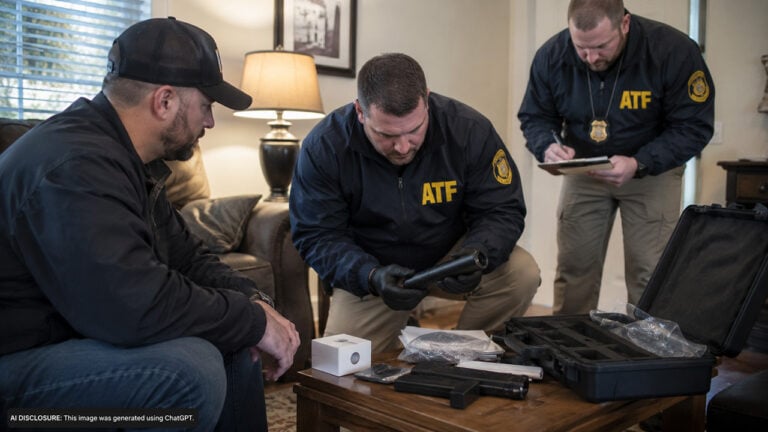
If a gun has been reported stolen, used in a crime, or even just tied up in some prior mess, the person holding it can wind up with a major headache. The advice given was straightforward: checking serial numbers with law enforcement can be a really good idea, because the last thing you want is to be stuck trying to prove you weren’t the one connected to whatever the gun’s history might be.
That’s a hard truth for gun owners, especially those of us who buy used rifles at estate sales, trade gear, or pick up old revolvers from family. A firearm can be perfectly functional and still be a problem because of paperwork and past ownership.
In Oregon, a “private transfer” issue can turn the whole situation sideways
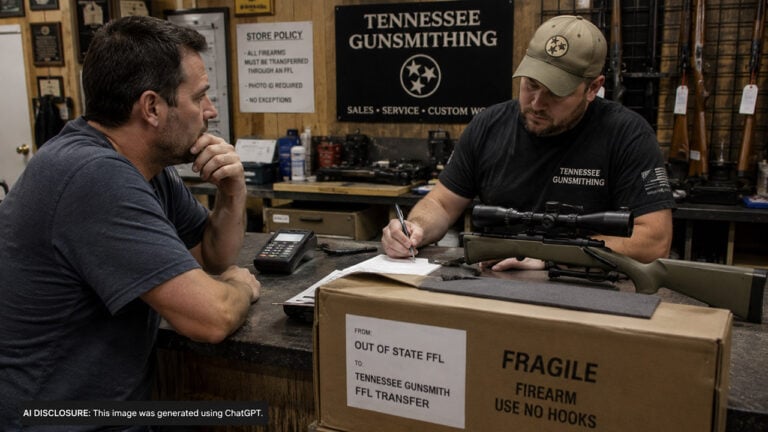
Another commenter pointed out a specific wrinkle: Oregon doesn’t allow private-party firearm sales without going through an FFL (a federally licensed firearms dealer). In their view, that means the firearm transfer through a storage unit auction “at least wasn’t legal,” even if the buyer didn’t purchase the handgun as a standalone item.
That’s the kind of detail that matters a lot depending on where you live. Plenty of states treat private transfers differently, and storage auctions aren’t a special carve-out in most folks’ minds. But if the state requires certain steps for a transfer—background check through an FFL, paperwork, waiting periods, specific exceptions—then an auction win can put the buyer into gray territory fast.
Even the commenter who raised the Oregon point wasn’t sure whether the liability falls on the seller, the buyer, or both. And that uncertainty is exactly why “I’ll just hang onto it” can be a risky decision when a gun pops up unexpectedly.
What a careful outdoorsman would do next
This is where practical thinking beats internet bravado. If you unexpectedly come into possession of a handgun through a storage unit, you’re juggling three problems at the same time: safety, legality, and documentation.
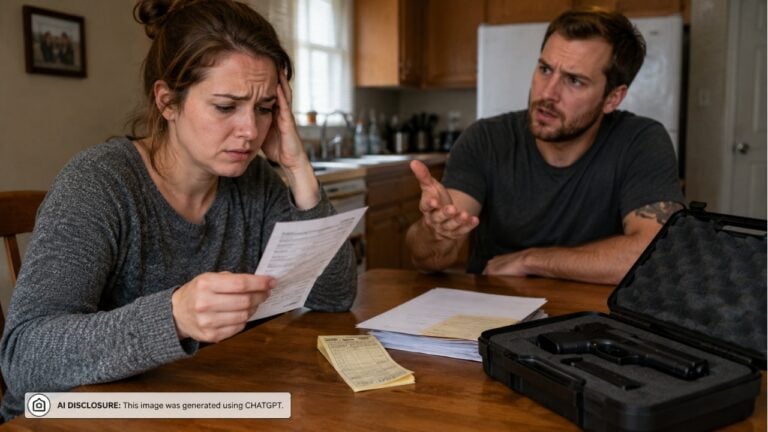
Safety is immediate—secure it and keep it out of casual hands. Legality depends on your state’s transfer rules, and in places like Oregon, the FFL requirement mentioned in the comments is a big flashing sign to slow down. Documentation matters because if that handgun is stolen or linked to something bad, you’ll want a clean, calm way to show how it came into your possession: storage unit auction paperwork, receipts, auction listing, anything that shows you didn’t “buy a gun under the table.”
And no, that doesn’t mean you need to play detective. It means you avoid turning a weird find into a bigger mess by acting like the gun is just another tool you picked up at a yard sale.
Why this hits home for gun owners who buy used gear
A lot of hunters and rural folks have bought used firearms the same way we buy used four-wheelers or chainsaws: a handshake, a cash bill, and a promise it runs. But the rules around firearms don’t always follow the same logic as other gear, and the penalties can be more serious.
The storage unit scenario is a good reminder that “ownership” isn’t always a simple story when the item is regulated. The smart play is to treat it like a live issue until you’re sure it’s clean and you’re sure the transfer is handled in a way your state recognizes.
Because at the end of the day, a loaded handgun found in a box isn’t just a surprise. It’s a responsibility—and in the wrong circumstances, it can become a problem you didn’t sign up for when you raised your hand at an auction.
Like The Avid Outdoorsman’s content? Be sure to follow us.
Here’s more from us: