Photo credit: AvidOutdoorsman
Most folks who hunt, fish, or just live with one boot in the country and one in town understand the value of a quiet night. That’s why a hard knock at the door at 2 a.m. hits different. You’re not thinking about paperwork or addresses—you’re thinking about your family, your dog, and whether you’ve got time to figure out what’s happening before it’s happening to you.
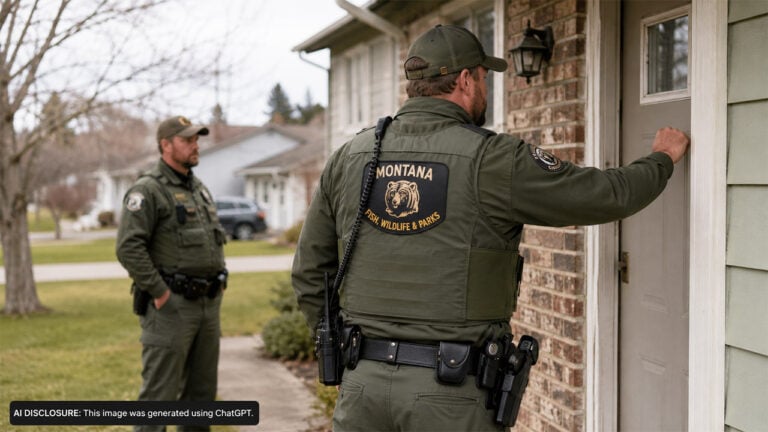
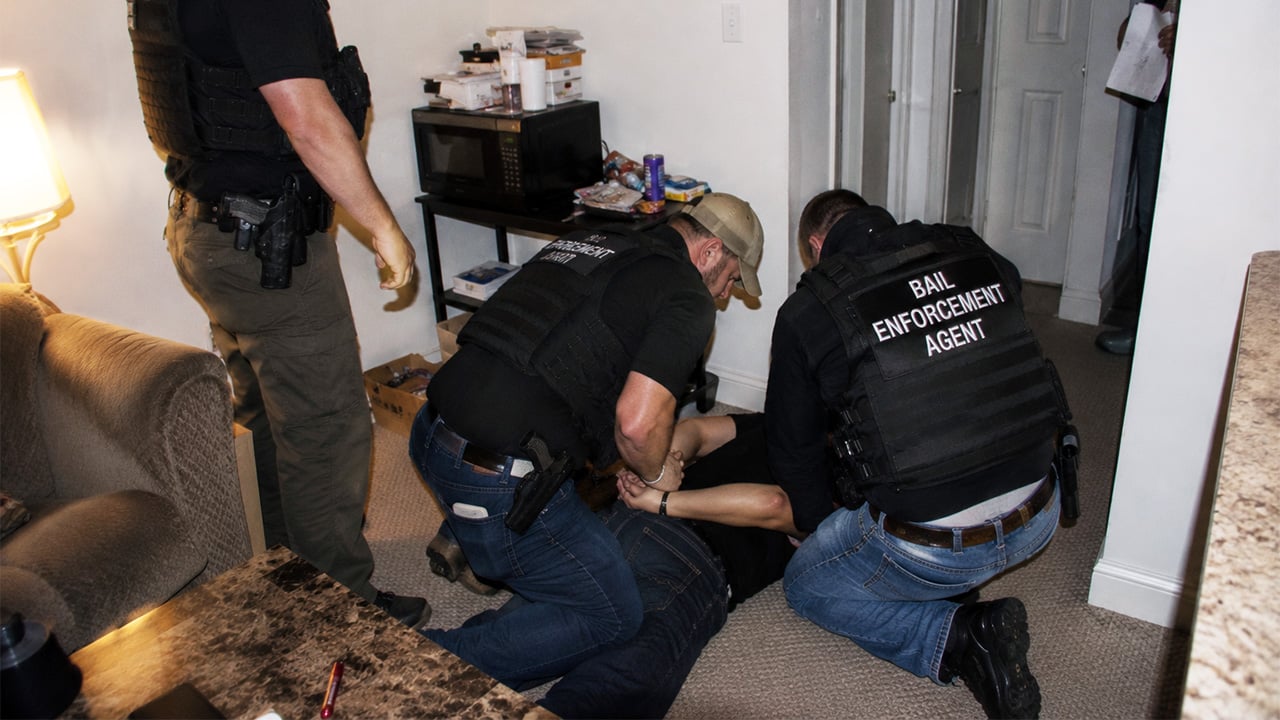
That’s the kind of morning one apartment resident ran into when a pair of bail recovery agents showed up believing a fugitive was inside. The agents didn’t leave with the person they wanted. Instead, the resident ended up restrained on their own living-room floor while the agents searched for someone who wasn’t even in the same state.
A late-night “skip” call turned into a bad entry
Bail agents don’t operate like uniformed police, but they do chase people who’ve failed to show for court, and that work often starts with an address—sometimes an old one. In this case, the agents were reportedly working off location info tied to a bond and a recent lead that pointed them to an apartment complex.
They arrived after midnight, thinking they had the right unit and the right person. The problem with “thinking” at 2 a.m. is that it doesn’t take much for a mistake to turn into a full-blown confrontation. Wrong building, stale intel, an old lease record—any of it can put the wrong door in the crosshairs.
The resident woke up to strangers forcing the issue
According to the account that followed, the resident was awakened by heavy knocking and voices outside the door. Before there was any real clarity, the agents pushed the situation forward—insisting the fugitive was inside and demanding entry.
From the resident’s side of the door, it sounded like a home invasion. No marked patrol car. No uniform. No calm “step outside and we’ll talk.” Just urgency and authority from people the resident didn’t know. And once the door opened—whether by pressure, confusion, or fear—the whole thing escalated fast.
Restraints and a search—without the person they came for
The most troubling part is what happened next: the resident was restrained while the agents tried to secure the apartment and locate the fugitive. That’s a hard scene to picture without your blood pressure going up—especially for readers who keep a defensive firearm at home and train for the exact moment when “unknown people in the doorway” becomes a life-or-death decision.
The agents reportedly controlled the resident and checked rooms, acting on the belief that the wanted person was hiding inside. But the fugitive wasn’t there. Not in a closet. Not in a bathroom. Not behind a shower curtain. Not in the unit at all.
Later, it came out that the person they were after was actually in another state. That’s not a small error. That’s the kind of mix-up that can get somebody hurt, ruin a sense of safety at home, and trigger a long line of questions about who has authority to do what.
The outdoorsman angle: home defense meets mistaken identity
Plenty of Avid Outdoorsman readers live rural, but plenty also live in apartments or have family who do. Either way, the principle is the same: when you’re woken up by strangers demanding entry, your brain goes straight to protecting your people. That’s not paranoia—that’s normal.
This is also where things get dangerous in a hurry. A resident who’s legally armed could interpret forced entry as an imminent threat. A bail agent might interpret a resident moving toward a bedroom as reaching for a weapon. Neither side has the benefit of daylight, calm, or clarity. It’s a recipe for tragedy built out of bad information and impatience.
If there’s a practical lesson here, it’s that “I’m here for someone else” doesn’t matter in the moment. What matters is what’s happening at your door, whether the person outside is clearly identified, and whether you can slow the situation down long enough to verify what’s real.
What people fixated on: authority, identification, and cameras
When stories like this circulate, the comments usually split into a few predictable camps. One group focuses on whether bail agents should be allowed to operate with that much freedom in the first place. Another group says this is exactly why you never open the door late at night, and you do your talking through a locked door.
A lot of folks also zero in on identification. If someone is claiming authority, do they have documentation? Do they have a clear way to prove who they are? In real life, at 2 a.m., a badge-looking thing and a loud voice don’t mean much to a resident who’s half-awake and scared.
And then there’s the camera crowd—and I’m with them on this part. Doorbell cameras and a cheap interior camera can turn a messy “he said, she said” into something you can actually show. Whether you’re a hunter dealing with trespassers on a lease road or a tenant dealing with a midnight knock, video and timestamps are hard to argue with.
The practical takeaways for regular folks
This kind of situation isn’t a reason to get jumpy. It’s a reason to get prepared in a calm, boring way—before anything happens. If you live in an apartment, know your complex’s policies and keep your leasing office contact info handy. If you’ve got a door chain or secondary lock, use it.
If someone shows up claiming they have authority to enter, the safest play is usually to keep the door secured and call 911 yourself. Ask for uniformed officers to come verify what’s going on. You’re not “refusing” anything by asking for verification—you’re protecting yourself from exactly the kind of mistake that happened here.
And if you’re a gun owner, this is also a reminder that defensive plans need to include identification and communication, not just equipment. A firearm is a last resort tool, not a flashlight. Knowing how to create distance, stay behind cover, and call for help can keep a bad situation from turning permanent.
In the end, the resident didn’t just lose sleep—they lost the basic expectation that their home is their home. Meanwhile, the person the agents were chasing wasn’t even close. That’s the problem with cutting corners on verification: when you’re wrong, you’re not just wrong on paper. You’re wrong at someone’s front door in the dark, and that’s where consequences live.
Like The Avid Outdoorsman’s content? Subscribe to our newsletter so you never miss an article.
Here’s more from us: