Photo credit: AI-generated image created using ChatGPT. Illustrative only
A guy in Miami thought he had a normal routine: hit the gym, park where he’d been told he could park, and head home. A few days later he was standing in a tow yard staring at an unlocked vehicle and an empty center console where he says he’d left his concealed-carry handgun.
In the original post, he laid out a mess of problems that will sound familiar to anyone who’s ever dealt with a questionable tow: disputed permission to park, a vehicle moved in the middle of the night, cash-only payment demands, and then the big one—missing property that’s not just valuable, but dangerous in the wrong hands.
The tow started with “verbal permission” and ended with an empty console
According to the poster, he parked at his local gym in Miami and says the gym manager gave him verbal permission to park there. The catch was that it wasn’t in writing, and that matters when a tow company gets involved. He also said that on Friday, May 12, he left his firearm in the center console of his vehicle.
The tow company reportedly told him his car was towed around 2:30 a.m. on May 12. He didn’t realize it was gone until Monday morning, May 15, when he went to leave for work around 6:30 a.m. That gap—days between tow and discovery—can complicate everything, especially when property goes missing.
What he says he found at the tow yard raised immediate red flags
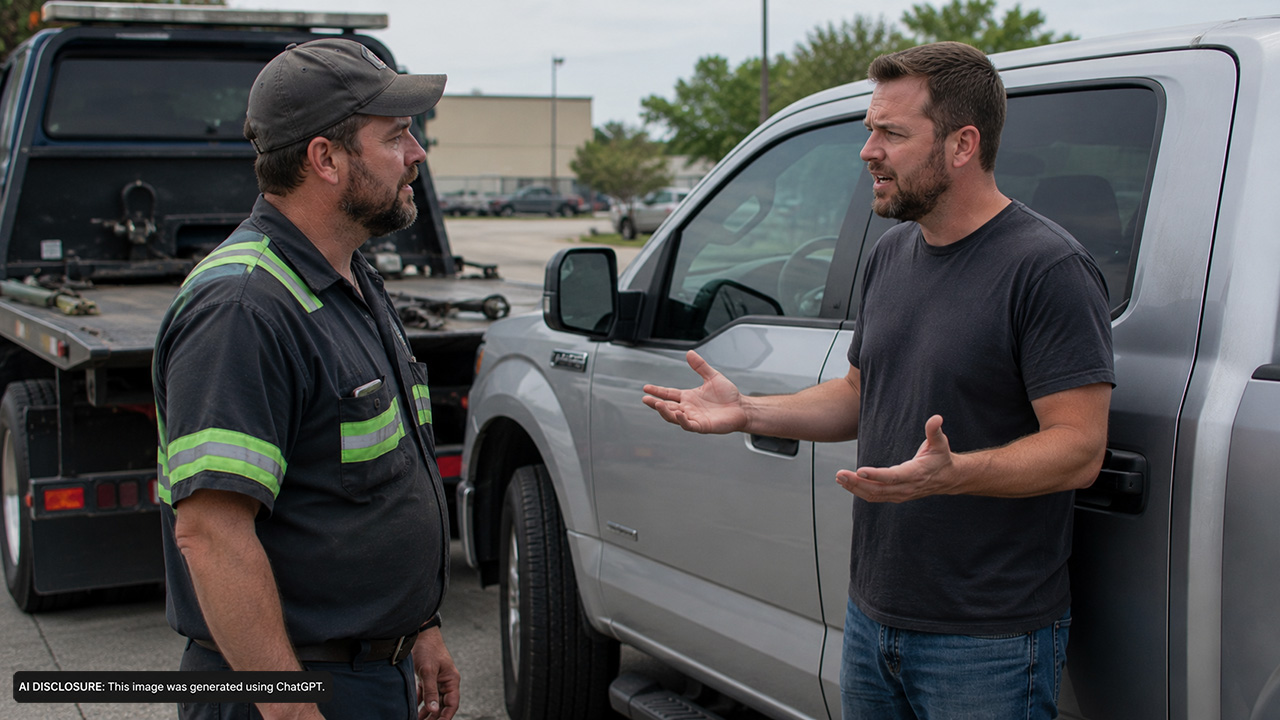
He went to the tow lot that same day and paid the fee to get the vehicle back. During his inspection, he says he found the car unlocked with the seatbelt tied around the steering wheel, which he viewed as “a clear sign of entry.” He also says the handgun that had been in the center console was gone.
Then came another detail that makes people’s antenna go up: he said the tow yard refused to give him a receipt and told him he could only pay in cash, despite a sign posted saying card payments were accepted. Whether that ends up being legal or not, it’s the kind of thing that makes a person feel like they’re dealing with a business that doesn’t want a paper trail.
Calling police turned into a jurisdiction runaround
He says he immediately called 911 and told the tow company owner that the gun was missing. After he’d already paid, he claims a tow yard employee tried to kick him off the property. He waited for police and reported what happened, but he says officers told him they couldn’t do anything because the vehicle was originally parked outside their jurisdiction.
He then went to the police department where the car was originally towed from to try to file a report there. He says he was told that because the tow company had possession of the vehicle, he needed to file through the department near the tow lot. That meant another drive and, according to him, more back-and-forth before he finally completed a report.
If you’ve ever tried to report a stolen firearm or stolen gear and been bounced around between agencies, you know how frustrating that is. But it also shows why documenting locations, times, and who said what becomes important fast.
The towing company’s position: no firearm was ever there
At the center of his complaint is a simple, ugly dispute: he believes his handgun was stolen while the vehicle was in the tow company’s control, but the company’s stance—based on what he reports being told—is that there was no firearm in the vehicle to begin with.
That denial matters because it changes the fight from “recover my property” to “prove it existed and was taken.” It’s one thing when a missing item is a set of binoculars or a range bag. When it’s a handgun, the stakes go up for the owner and for public safety, and it tends to harden everyone’s posture immediately.
He also believes the tow itself was illegal, since he says he had permission to park there. Without something in writing, though, that’s the kind of claim that can quickly turn into one person’s word against another’s, unless there are texts, emails, or camera footage to back it up.
What he documented, and what he believes could support his side
The poster said he recorded every phone call and his interaction with the tow yard employee. Depending on the facts and local law, those recordings could help refresh timelines and preserve exactly what was said when tensions were high. He also noted that there are cameras in the gym’s parking lot, and he believes there should be cameras at the tow yard as well.
For gun owners, this is the part that’s worth slowing down and thinking about. A firearm doesn’t just “go missing” like a glove. If you ever end up in a similar situation, the most helpful information is usually boring: timestamps, receipts, tow paperwork, and video that shows who accessed the vehicle and when. In this case, he says he didn’t get a receipt—so any other proof of payment (even a photo of posted pricing, a witness, or a record of the 911 call) may matter to reconstruct the event.
He also mentioned loss of wages from missing a day of work and what he described as malicious business practices, which shows he’s thinking beyond the gun itself and looking at the whole chain of events.
The practical reality: it often becomes a civil fight alongside the police report
He said he contacted local lawyers and was told this would likely be handled in civil court. That lines up with how these disputes often play out: police take a report, especially when a firearm is involved, but the money side—fees, damages, and accountability for missing property—frequently turns into a civil matter unless there’s clear evidence of a specific crime by a specific person.
From an outdoorsman’s perspective, the lesson isn’t “never carry” or “never park at the gym.” It’s that leaving a handgun in a vehicle—even in a console—creates a theft risk you can’t control once the car is out of your sight, and that risk gets worse if the vehicle is towed, impounded, or otherwise accessed by strangers. If you do store a firearm in a vehicle, it’s worth thinking hard about secure storage and what your local laws require for vehicle storage, especially in a dense city where tows and break-ins are common.
In the end, he’s left trying to prove two things at once: that the tow was improper, and that the gun was in the vehicle and disappeared while it was under someone else’s control. That’s a tough spot, and it’s exactly why paper trails, written permission, and secure storage matter—because when a business says “it was never there,” you need more than frustration to push back.
Like The Avid Outdoorsman’s content? Subscribe to our newsletter so you never miss an article.
Here’s more from us: