Photo credit: The Avid Outdoorsman
The carrier thought he had already made the safe choice.
He was not carrying at work.
That part mattered. A lot of workplace carry stories turn into problems because someone brings a gun into a place where company policy does not allow it, then gets caught when a shirt rides up, a magazine falls out, or somebody notices printing. This was a little different.
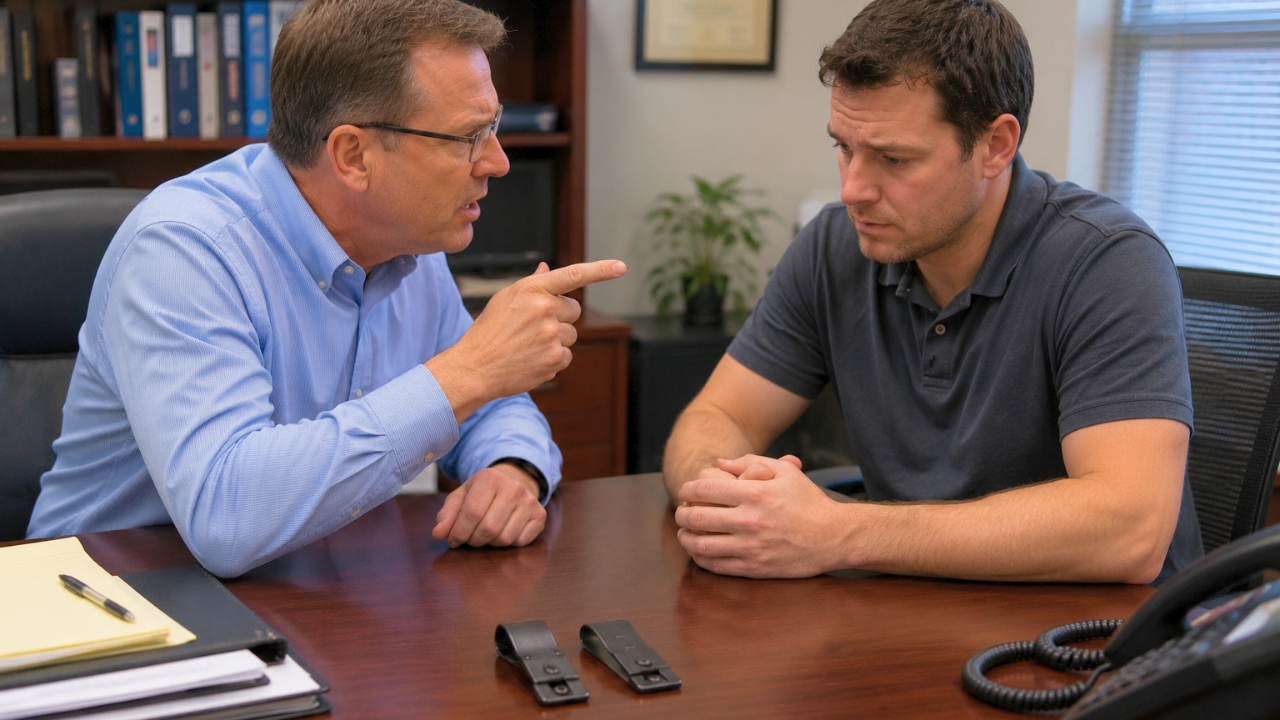
In a Reddit thread, concealed carriers were talking about times they had been caught or noticed while carrying. One story involved a boss spotting holster clips at work, even though the employee said he was not actually armed while on the clock.
That is an awkward spot to be in.
Because to a boss, holster clips can look like enough.
The gun may not be there. The holster may be empty. The employee may have left the firearm secured elsewhere before coming inside. But once someone sees the clips on the belt, they may assume the rest of the setup is there too. And in a workplace, assumptions can move fast.
A visible holster clip is one of those tiny details carriers can forget about. The firearm might be covered. The shirt might hang fine. The actual gun might even be absent. But those little clips on the belt can tell a story before the carrier says a word.
People who carry notice them immediately.
Some bosses do too.
The employee suddenly had to explain that he was not carrying at work. That is not a conversation most people want to have with a supervisor. It puts the worker in a weird middle ground. He is trying to be clear enough to calm the concern without saying so much that it turns into a bigger issue. He has to explain why the clips are there, why there is no gun, and why management does not need to treat it like a workplace weapons violation.
Even if he is telling the truth, the moment still feels tense.
Workplace policies can be strict, and they do not always care about nuance. Some companies ban firearms. Some ban weapons. Some ban ammunition. Some may even take issue with holsters or empty carry gear if it makes other employees uncomfortable or suggests a firearm may be nearby. A boss who sees clips may not know the technical difference between a holstered gun, an empty holster, and a belt attachment.
He may only know it looks like gun gear.
That is why the explanation matters, but it also shows the bigger problem. Concealed carry is not only about hiding the firearm itself. It is about hiding the whole system when the setting demands discretion. Clips, loops, bulges, spare magazines, tactical-looking belts, and repeated shirt adjustments can all give away more than the carrier realizes.
Even an empty holster can start a workplace conversation.
The carrier’s situation was probably less serious than someone actually getting caught armed at work, but it still had consequences in the social sense. Once the boss notices, the employee may feel watched. The boss may wonder if the worker has carried there before. Coworkers may hear about it. The employee may worry that any future belt clip, shirt bulge, or pocket shape is going to be questioned.
That is the part people underestimate.
Being “made” while carrying, or even while wearing carry gear, can change how others see you. Some people will not care. Others may get nervous. A supervisor may feel obligated to document it or ask HR. The carrier does not fully control the reaction once the gear becomes visible.
The safest move is to know the policy and plan around it.
If a workplace bans carry and the employee chooses not to carry there, that is only half the solution. He also has to think about whether the holster should stay on, whether clips are visible, and whether the empty gear creates confusion. In some cases, removing the holster before entering work may be the cleaner choice. In others, a tucked shirt, different clips, or a less obvious setup may prevent unnecessary questions.
The goal is not to hide wrongdoing.
The goal is to avoid making people think something is happening when it is not.
This story also shows how gun owners can get used to their own gear. What feels normal to the carrier may look obvious to someone else. A belt clip that blends into the carrier’s daily routine might stand out to a boss who has seen enough holsters to know what it is. The carrier may forget it is visible because he is focused on the gun not being present.
But other people notice details.
For the employee, the conversation could have gone worse. He had an explanation. He was not actually armed. There was no dropped gun, no panic, no police, no HR blowup in the story. But it still likely taught him that “not carrying” does not mean “nothing to see.”
The holster clips were enough to start the whole thing.
And at work, that may be all it takes.
Commenters mostly treated it as a reminder that concealment includes the gear, not just the gun.
Several people said clips are one of the easiest tells. Even if the firearm is covered or absent, a visible holster clip can make people wonder whether the carrier is armed. Anyone familiar with concealed carry may recognize it right away.
Others focused on workplace policy. If a company bans firearms, the employee needs to understand how strict the rule is and whether empty holsters or visible carry gear could still create problems with management.
A lot of commenters said the best answer is avoiding unnecessary attention. If you are not carrying at work, it may be simpler to remove the holster too, especially if a boss or coworker might misunderstand what they see.
Some people also pointed out that explaining calmly matters. Getting defensive can make the situation feel more suspicious. A simple answer that the firearm is not present may keep the conversation from escalating.
The main lesson was simple: at work, even an empty holster can talk. Make sure it is not saying something you do not want your boss to hear.