Photo credit: AI-generated image created using ChatGPT. Illustrative only.
It’s a bad feeling when you reach for a pistol you know you put somewhere safe—and it’s gone. One gun owner described exactly that scenario after a range trip with a Glock 19: bag on the couch, life got busy, and by the time he went to clean it the next morning, the pistol had vanished.
In the original post, he said he searched the house and then checked his car, where he found the door unlocked and the glove box open. With a local requirement to report within 48 hours, he did what a lot of folks would do: he reported the handgun stolen and tried to move on.
How a “stolen gun” report can start with plain old clutter
The details are painfully relatable. After the range, he set the bag on the couch, got pulled into other tasks, and didn’t do a full unload-and-clean routine until the next morning. When the Glock wasn’t there, his first thought wasn’t “someone took it from inside the house”—it was that he’d absentmindedly left it in the vehicle.
Then came the part that pushes any responsible gun owner into problem-solving mode: he found the car door unlocked, the glove box open, and no pistol. At that point, it’s easy to feel like you’re chasing two bad possibilities at once—carelessness and theft—and either one can become a serious issue fast.
The 48-hour clock forced a decision
In some areas, the law gives you a limited window to report a stolen firearm. The poster said he had 48 hours in his area, so once he couldn’t find the Glock and the vehicle looked disturbed, reporting it wasn’t just a “maybe”—it was the safe, compliant move.
That clock matters because it changes how you handle the search. Most folks want to tear the house apart, re-check the safe, look under seats, and dig through every range bag pocket. But when there’s a deadline and the circumstances look suspicious, delaying can turn a stressful mistake into something worse.
Years later, the “thief” turned out to be a couch
Fast forward: he’s moving out, forced out by gentrification, and breaking down a sectional so it’ll fit in a dumpster. That’s the kind of job where you find old dog toys, loose change, a missing TV remote—and, apparently, a Glock 19.
He said the pistol had somehow wedged between the wooden couch frame and the metal supports. In other words, the gun wasn’t stolen at all. It slipped into a spot that’s basically invisible unless you’re disassembling furniture.
If you’ve ever dropped a pocketknife into a recliner and had it disappear into another dimension, you understand how this can happen. Upholstered furniture has cavities and gaps that can swallow surprisingly large objects—especially when you’ve got cushions shifting, people sitting down, and bags getting set and slid around.
The moment it turns from relief to a legal headache
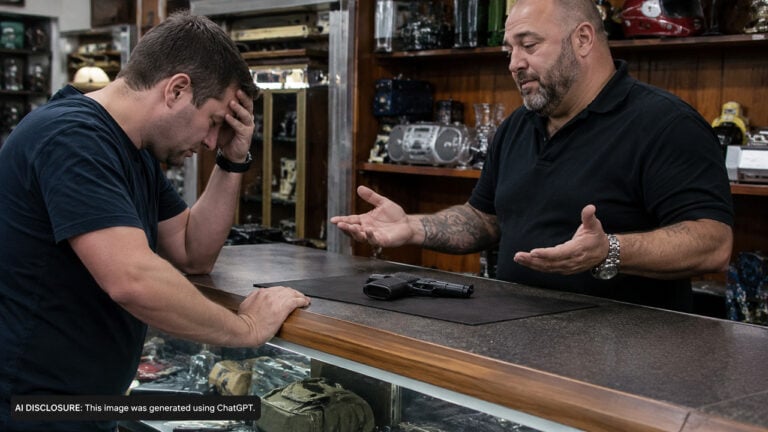
Finding the missing gun should feel like pure relief. But with a firearm that was officially reported stolen, the relief comes with an immediate new question: “How do I make sure I don’t get treated like I’m holding a stolen gun?” That’s exactly what he asked, saying he wanted to report it as “not stolen after all” so he wouldn’t “get popped” by his own report.
This is where a lot of gun owners get uneasy, and for good reason. Once a firearm is entered as stolen, it can remain flagged in systems that officers rely on during stops, calls, and routine checks. If that gun is later discovered—during a traffic stop, at a range, during a move, or in a completely unrelated police interaction—the flagged status can escalate a simple moment into a long day.
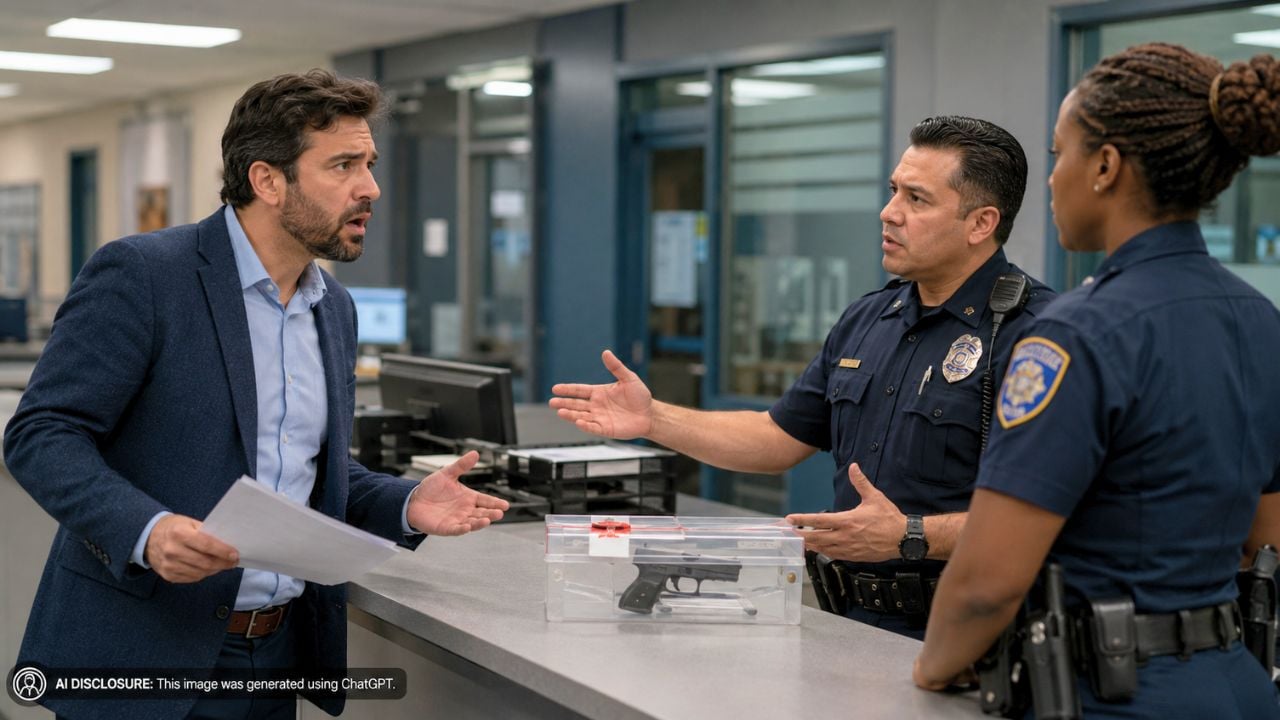
The headline angle people worry about is the nightmare version: a person tries to reclaim their own firearm after it’s been recovered, but gets told they can’t have it back. That can happen in the real world for a bunch of reasons—paperwork gaps, mismatched serial numbers in reports, local policies about returns, or simply the practical friction of bureaucracy. The key point is that “I’m the owner” can still turn into “prove it, and do it our way.”
What other gun owners tend to focus on in situations like this
Even without a long back-and-forth included in the source material, you can predict where the experienced crowd’s mind goes: documentation, serial numbers, and a clean paper trail. If you ever report a firearm stolen, keep your case number and any report copies somewhere you can actually find them years later—because it might not be years before you need them.
The other big focus is safe handling and safe storage when something goes missing. If you’re tearing up the house looking for a gun, it’s worth slowing down enough to do it methodically. Check “sticky” hiding spots where firearms can slide—between couch cushions, under liner material in range bags, behind shelving, between a vehicle seat and center console—without turning it into a frantic rummage that risks a negligent discharge.
And there’s a practical lesson hiding in plain sight: don’t let a post-range routine get broken up. It doesn’t have to be fancy. But having a consistent habit—unload, clear, wipe down, put it in the same place every time—keeps you from living this story.
His side note: two Gen 5 Glock 19s and thinking about .40 S&W
After finding the pistol, the owner mentioned he has two Gen 5 Glock 19s and was considering trading one for a different caliber, specifically a Glock 23 or 22 in .40 S&W. That’s a common fork in the road: stick with 9mm because it’s affordable and widely available, or jump to .40 for a little more bullet weight and a different recoil impulse.
From a practical outdoorsman’s angle, .40 can still make sense if you already have a reason for it—agency trade-in mags and ammo, a stash you trust, or a preference for how it performs. But most folks who shoot a lot end up back at 9mm because it’s easier on the hands, easier on the wallet, and easier to find in normal times. If you’re carrying in the woods and want “more,” plenty of people skip sideways into .40 and instead go straight to something like 10mm—though that comes with its own recoil and ammo cost realities.
Whatever caliber you pick, the bigger point remains: it’s hard to enjoy a new gun trade when an old gun is still tangled up in a stolen status on paper.
The clean ending to a story like this usually looks boring: get the right case number, contact the agency that took the original report through their normal channels, and follow whatever process they require to update the report and clear the gun’s status. The couch may have been the culprit, but the paperwork is what decides whether that “found it!” moment stays a relief—or turns into a preventable mess later on.