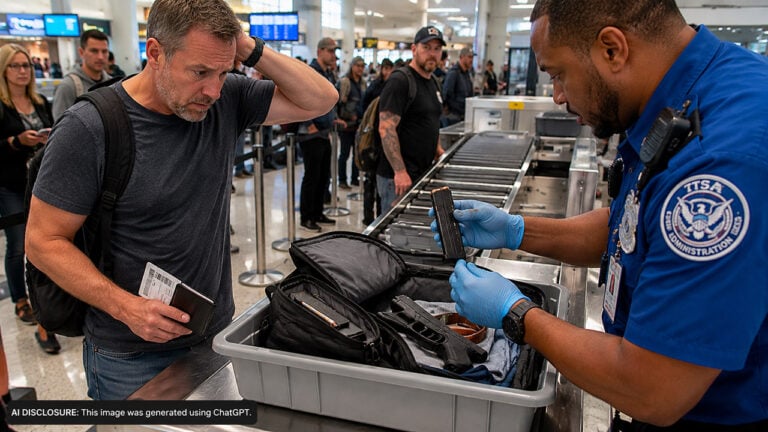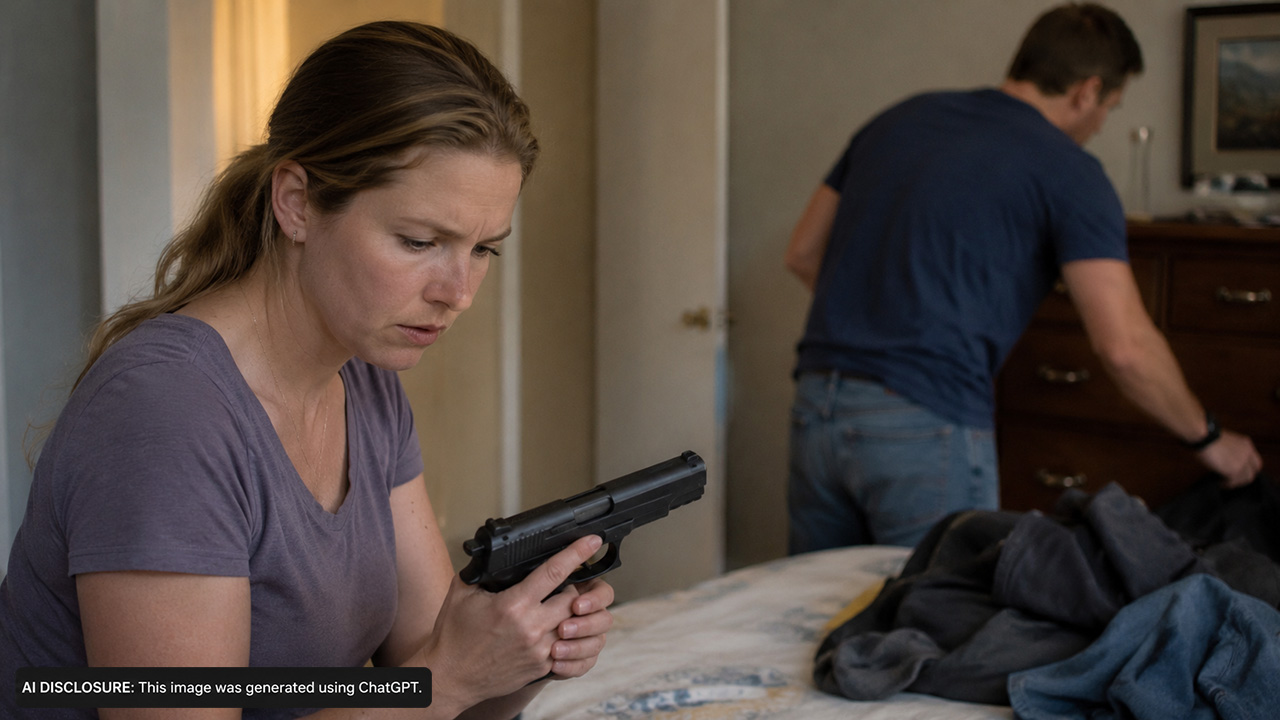
Photo credit: AI-generated image created using ChatGPT. Illustrative only
It’s the kind of mistake that can turn a relaxing trip into a gut-knot in about five minutes: you’re already a couple hours down the road, then you realize a firearm didn’t make it back into the truck with the rest of the gear.
That’s what happened to one couple after a stay at a rental condo in New York. The husband left a gun behind, didn’t realize it until they were roughly two hours away, and tried to do the right thing by calling the management office—only to hit voicemail. Not long after, local county police contacted the friend who booked the place, and the wife started worrying not just about her husband’s exposure, but whether staying quiet could pull her into it too. The details were shared in the original post.
A forgotten gun in a rental turned into a law-enforcement call
From the wife’s telling, the timeline was quick. After they left New York, the husband realized the gun was still in the rental condo. He called the management office to report it, but could only leave a message.
About an hour after that call to the management office, police contacted the friend whose name and contact information were on the booking. The officer said they’d call back on Wednesday with more information, leaving the couple to stew through the weekend.
He tried to own the mistake and keep the friend out of it
Once they learned police had reached out to the friend, the husband called the county police himself. He explained the gun was his, that the friend “had nothing to do with this,” and asked that communication go through him.
Police reportedly gave him the same answer they gave the friend: they would call back on Wednesday. If you’ve ever sat in that waiting period—knowing something could be a paperwork fix or could be a mess—you know how long three days can feel.
The fear wasn’t just the gun—it was New York’s legal landscape
The wife’s biggest worry was that her husband could be looking at a felony and jail time. She mentioned seeing information suggesting it could be a class E felony and believed that could mean up to a year in prison or a fine.
That anxiety is understandable, especially for folks who don’t live under New York’s patchwork of firearm rules and don’t spend their weekends reading statutes. In a lot of states, “I left it behind, I called immediately, I’m coming to retrieve it” would still be serious—but it wouldn’t necessarily feel like standing on the edge of a felony.
On top of that, she was worried about the friend—because the friend’s name was tied to the rental. In real life, police don’t always know whose gun is whose at the start. They know where it was found, who rented the unit, and who is easiest to reach first. That alone can pull an uninvolved person into an uncomfortable conversation.
The real fork in the road: talk first, lawyer later—or lawyer now
There was also a common debate playing out inside the marriage. The wife wanted him to speak with an attorney before the Wednesday call, worried he might accidentally incriminate himself. The husband leaned toward waiting, because he believed “lawyering up will escalate the situation into something worse than if he didn’t.”
That’s a very normal instinct among decent people who don’t have criminal histories. They assume getting a lawyer looks like guilt. But gun owners should understand the other side of it: when you’re dealing with firearms laws—especially across state lines—the difference between “cooperative” and “self-incriminating” can be a few sentences said at the wrong time.
This situation also has a practical angle outdoorsmen recognize right away. A forgotten handgun in a rental isn’t like leaving a phone charger. Once a firearm is left unsecured in a place you no longer control, it’s a safety issue, a liability issue, and a legal issue all at the same time.
What people keyed in on: responsibility, paperwork, and keeping it legal
Even without a long list of responses included, you can see the pressure points that always show up in these cases: whose name is attached to the location, who admits ownership, and how the gun can be recovered without creating a second problem.
The wife emphasized her husband had a clean record aside from a few speeding tickets and that he was accepting responsibility. She also repeatedly stressed that the friend wasn’t involved. That matters because it frames the incident as a mistake and a retrieval problem—not a criminal scheme.
Still, the underlying lesson for gun owners is simple: your intent doesn’t automatically protect you from a bad outcome when you’re in a strict jurisdiction. The most “good guy” moment—calling to report it—can still trigger enforcement steps. That’s why so many experienced travelers have a mental end-of-stay checklist: wallet, keys, meds, chargers, and yes, firearms accounted for and secured.
The outcome: no charges, and an FFL-assisted pickup plan
The best part of the update is also the most instructive. The wife later wrote that her husband was not charged with anything. Instead, his lawyer arranged for an FFL (a federally licensed firearms licensee) to pick up the gun in New York and transfer it to the husband in a neighboring state where they live.
That’s the kind of solution a lot of outdoorsmen overlook until they need it: sometimes the safest, cleanest path isn’t “I’ll just drive back and grab it.” It’s using a legal intermediary who understands the rules and can move the firearm in a way that doesn’t trip state-specific requirements.
For gun owners who travel—whether it’s for hunting, fishing, work, or family trips—the big takeaway is to treat every lodging checkout like you’re leaving a campsite: you don’t abandon gear, and you don’t leave hazards behind. If something does go sideways, take a breath, get good advice early, and focus on fixing the problem the right way instead of the fastest way.
Like The Avid Outdoorsman’s content? Be sure to follow us.
Here’s more from us: