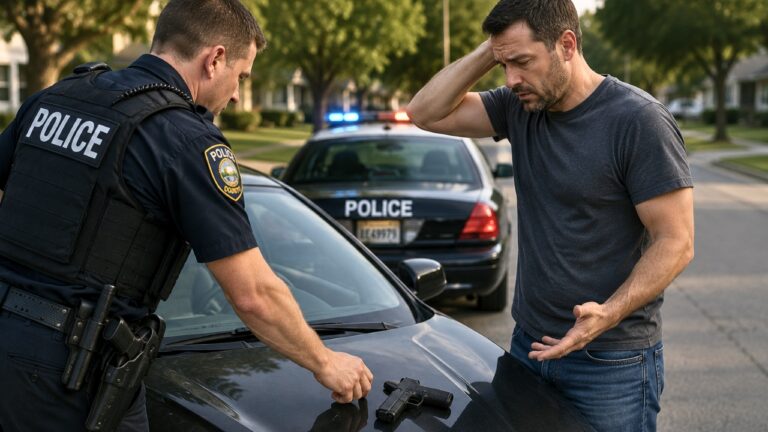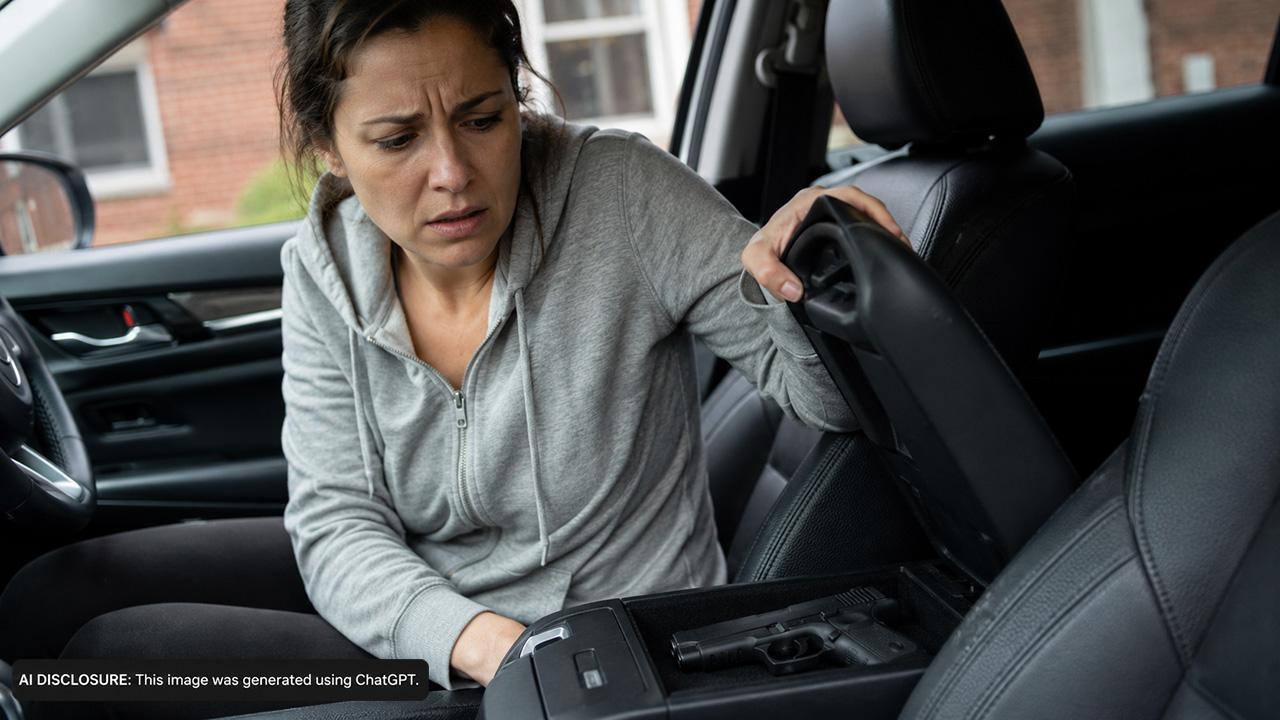
Photo credit: AI-generated image created using ChatGPT. Illustrative only
Breakups are messy enough without a surprise stashed under the back seat. But that’s exactly what one Florida woman ran into after she drove out of town to her parents’ place, started unloading her car, and found a boxed handgun tucked under the rear seat—something she says she doesn’t know how to handle and never agreed to carry around.
The situation, shared in the original post, reads like a worst-case combo of bad timing, bad communication, and a very real safety problem. She believed she was simply picking up her belongings and closing the door on the relationship. Instead, she’s now worried about how to safely get a firearm out of her possession without stepping into legal trouble.
It started with a normal “grab my stuff and go” move
According to the account, the woman still had a key to her ex-boyfriend’s place and some of her belongings were there. She told him she was coming over, packed up her things, and left the keys behind when she was done.
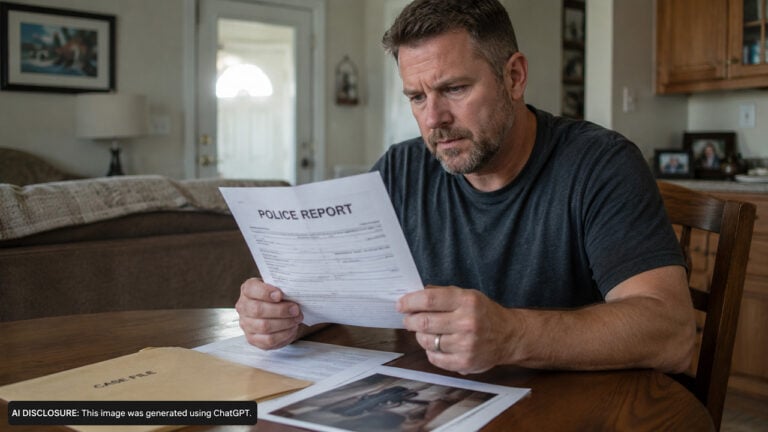
That should’ve been the end of it. Instead, her ex sent her photos of herself taken from a doorbell-style camera and told her the police would be in contact. She was confused, since she says she gave him a heads-up before she ever pulled in.
The discovery came after she’d already left town
After the drive to her parents’ home out of town, she began unpacking the car and noticed a box shoved under the back seat. Inside was a handgun in a case/box. She says she has never used a gun and didn’t feel comfortable handling it.
The part that’ll make any responsible gun owner wince is the timeline. She didn’t find it right away—meaning she’d been driving around with it unknowingly. Whether it was days or weeks, the point is the same: an unsecured firearm hidden in a vehicle is a problem, especially when the person behind the wheel doesn’t even know it’s there.
Why a “forgotten gun” turns into a big deal fast
Plenty of outdoorsmen keep a rifle in a safe at camp or a pistol locked up at home. But a handgun left in someone else’s car after a breakup isn’t “storage”—it’s a liability. If that gun gets stolen, if a child finds it, or if the vehicle gets searched after a traffic stop, the situation can go sideways in a hurry.
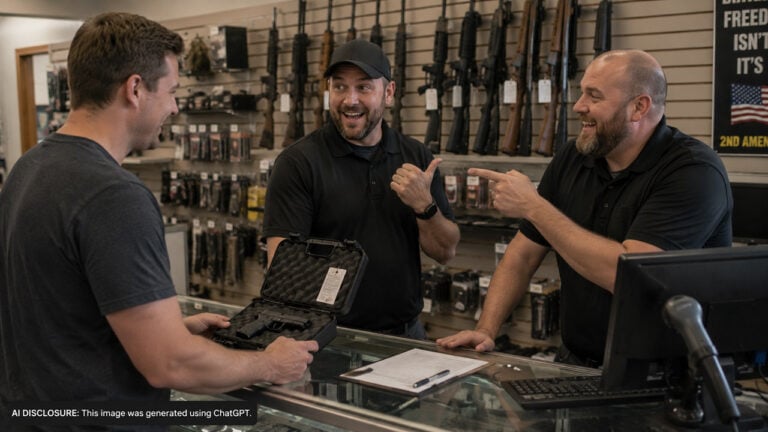
She also mentioned that while they were still together, her ex bought “seven or eight guns at once” with friends. That detail matters because it hints that firearms were a normal part of his world, but not hers. When one person in a relationship is comfortable around guns and the other isn’t, the margin for error gets thin.
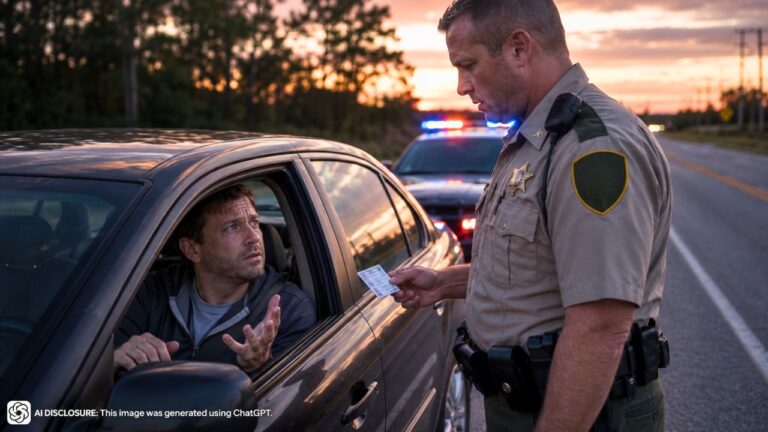
And then there’s the second layer: she’s now wondering if her ex contacted police because he was upset she entered to retrieve her property, or because he realized a gun was sitting in her car and wanted to get ahead of it.
The immediate concern wasn’t politics—it was safe handling
If you’ve been around firearms long enough, you know there are two kinds of people in these moments: those who want to “just check it” and those who freeze because they don’t want to touch anything. Her reaction was the second, and frankly, that’s not the worst instinct for a brand-new gun handler.
She said she didn’t feel comfortable handling the handgun at all. That’s a big deal because safe gun handling isn’t about bravado; it’s about competence. If you don’t know how to open the case safely, keep the muzzle in a safe direction, and confirm the condition of the firearm, you’re better off slowing down and getting help than guessing.
From a practical outdoorsman’s standpoint, this is why we harp on two basics: secure storage and clear ownership. A gun should never be “mystery cargo” in a vehicle. Not for a spouse. Not for a buddy. Not for an ex.
She debated two options: turn it in locally or drive it back
With the handgun now discovered at her parents’ place, she’s faced with a choice that a lot of folks would wrestle with: call the local police department and ask them to take possession, or drive a few hours back home and have her ex retrieve it directly.
She asked whether police in her parents’ town could take it and then route it through the proper channels so it gets back to him. She also worried about not having “any sort of license for a gun” and whether that would cause problems when turning it in.
That fear is common with non-gun folks, especially in states where gun laws get talked about like a maze. The truth is, the safest path usually involves doing exactly what she was already thinking: don’t play games with it, don’t hide it, and don’t toss it in a dumpster. Get it handled in a way that creates a record and reduces risk.
Driving it back herself might sound simple, but it can stack up complications. Long drive, unfamiliar gun, uncertainty about how it’s stored, and the possibility of an already tense ex deciding to escalate the conflict. If someone is already threatening police contact, meeting up in person to hand off a firearm isn’t most folks’ idea of a calm Saturday afternoon.
What most people keyed in on: don’t make it your problem alone
Even without a pile of comments included, you can tell what the smart, safety-minded crowd tends to focus on in situations like this: limit handling, document what’s happening, and involve authorities or a qualified third party instead of trying to “figure it out” in your driveway.
There’s also the simple common-sense angle: if someone else left a gun in your car without telling you, you didn’t sign up to be their gun safe. The priority becomes getting it secured and transferred appropriately, not smoothing over their mistake.
And for gun owners reading this, it’s a reminder worth taking seriously. If you own firearms, you’ve got to know where every one of them is. If you loan, transport, or stash one, you do it intentionally and legally—and you don’t leave it behind in a vehicle that isn’t yours, especially when emotions are running hot.
In the end, this wasn’t a story about a “gun person” doing gun things. It was about a non-gun person unexpectedly being put in charge of a deadly tool, with a relationship already in the rearview mirror and police talk on the table. However it gets resolved, the lesson is straightforward: firearms and breakups don’t mix, and “I forgot it was there” isn’t an excuse that keeps anyone safe.
Like The Avid Outdoorsman’s content? Subscribe to our newsletter so you never miss an article.
Here’s more from us: