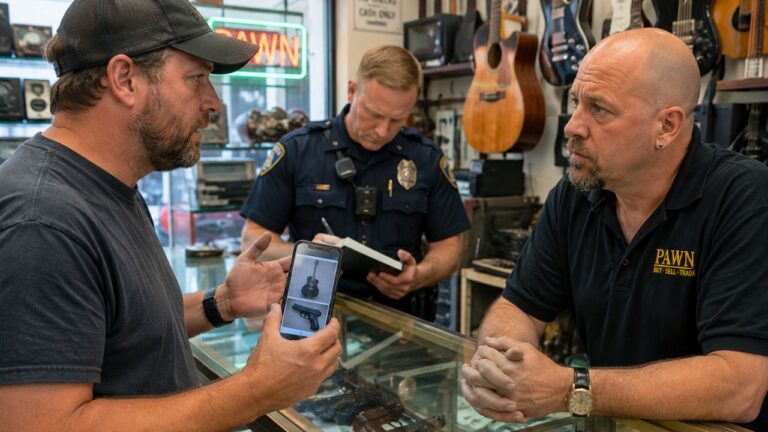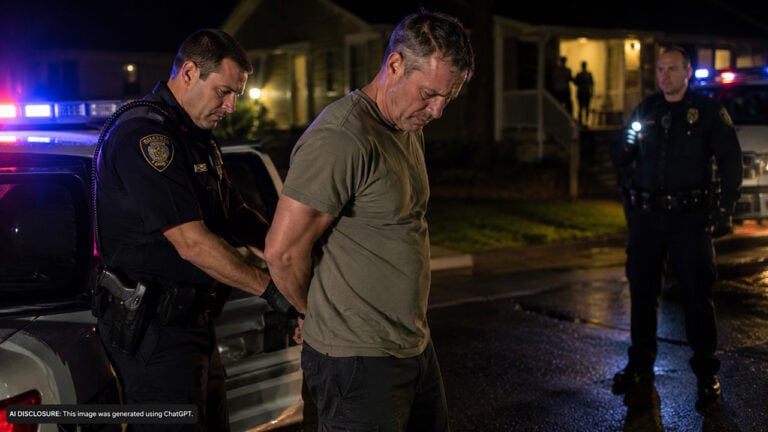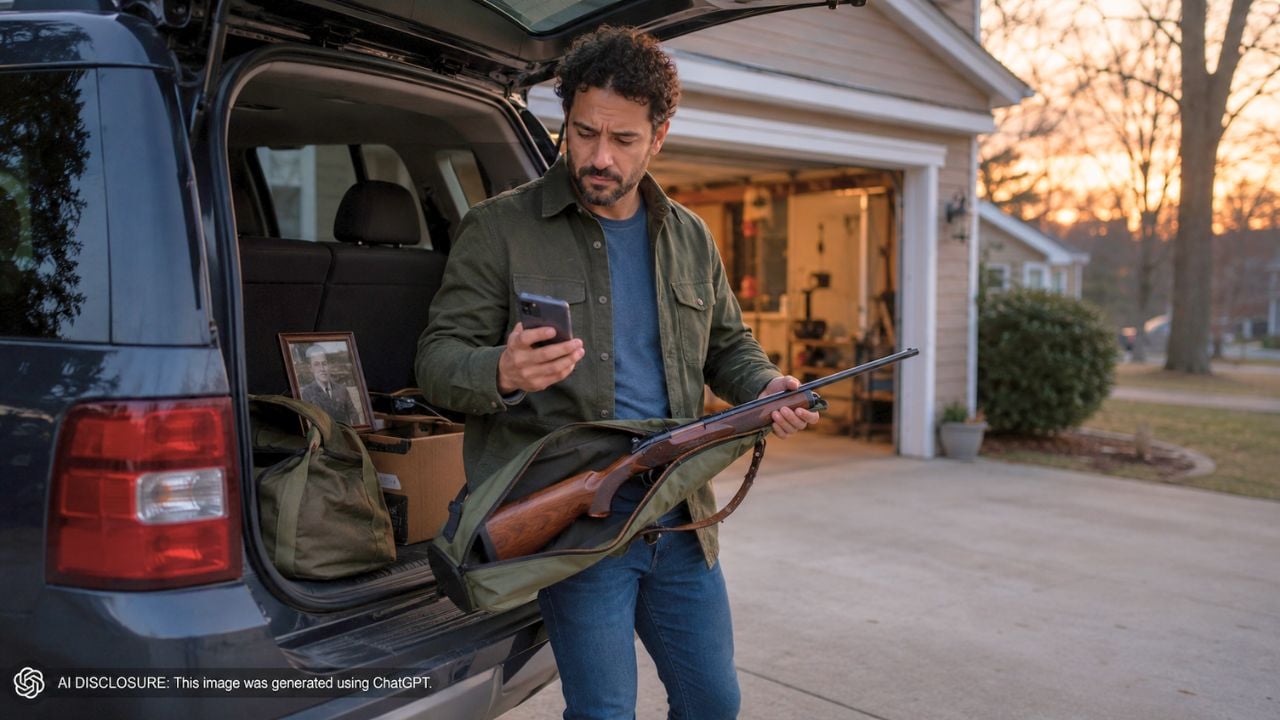
Photo credit: AI-generated image created using ChatGPT. Illustrative only.
A family gun can feel like more than steel and springs. It’s a memory you can hold, a piece of the old man’s story that doesn’t fit in a photo album. That’s exactly why one Utah gun owner-in-waiting found himself trying to do things the right way after his grandfather passed and his grandmother began handing down some of the collection.
In the original post, the grandson explained that his grandpa had served in both the Army and Air Force and later worked as a deputy for a sheriff’s department. The family had no shortage of firearms around, and the grandfather owned “maybe a dozen” guns. As the grandmother cleaned out the house to prep it for sale, she wanted the grandson to have one of his grandpa’s handguns as a keepsake.
The catch: the grandson had never owned a gun before. He said he was legally eligible—old enough, trained in firearm safety, experienced shooting—but he didn’t want to stumble into a problem that could bite him later. So he asked the plain, practical question most of us would ask: does he need to register it, get a background check, or do anything special to make the transfer legal in Utah?
A sentimental hand-me-down can turn into a paperwork problem fast
Most outdoorsmen hear “inherited gun” and think it’s simple: it stays in the family, nobody’s selling it on a street corner, and the new owner isn’t a prohibited person. But the law doesn’t always care why the gun is changing hands. It cares how and where.
In the grandson’s case, the plan was straightforward—grandmother gives him a handgun that belonged to his late grandfather. No mention of a sale, no mention of any bad intent. Just a family passing down property.
Where folks get sideways is assuming “family” automatically equals “no rules.” Sometimes it does. Sometimes it doesn’t. And the confusion only gets worse when you add state lines into the mix—like when someone takes a gun home after a funeral or drives it back to their own state after cleaning out a relative’s house.
Utah feels gun-friendly, but “friendly” isn’t the same as “anything goes”
The grandson’s comment about Utah—how it can feel like nearly anyone can own a gun there—rings familiar to anyone who’s lived in a gun-friendly state. Utah is generally permissive compared to places with registration schemes and long purchase permitting processes.
But even in states where you can buy a rifle without a mountain of paperwork, the transfer rules still exist. There are federal rules that don’t change just because the local culture is pro-gun. And there are state rules that can be surprisingly specific, especially around handguns, concealed carry, and who can legally possess a firearm.
The grandson wasn’t asking how to cut corners. He was asking how to avoid trouble. That’s the right instinct, because the worst time to learn the rules is after a traffic stop, a defensive gun use, a move across state lines, or when you try to sell the gun years later and realize the ownership chain is muddy.
Inheritance versus “gifting” is where people mix things up
One detail in the post matters: the grandmother was “giving things to members of the family” and wanted him to have one of the handguns. That sounds like a gift from the grandmother, even though the handgun originally belonged to the grandfather.
That’s not just splitting hairs. In a lot of states and under federal law, an honest-to-goodness inheritance—property passing directly because someone died—can be treated differently than a living person gifting or transferring a firearm to someone else. If the firearm is being transferred by an executor or through an estate process, there may be specific exemptions that apply.
But if grandma is simply alive, has possession, and is giving away grandpa’s property as she cleans house, that can start to look less like “inheriting from grandpa” and more like “receiving a firearm from grandma.” Again, that doesn’t mean it’s automatically illegal. It means the exact legal path can change depending on how the transfer is technically happening.
For regular folks, this is where a five-minute phone call to a knowledgeable local gun shop or an attorney who handles estate and firearms questions can save a ton of heartburn. Not because you’re planning something shady—because you want the gun to stay a keepsake, not become a liability.
Crossing state lines is the part that can trigger federal trouble
The headline angle—driving a newly inherited firearm across state lines and later realizing the transfer might have been a federal violation—hits on the most common real-world mistake. People don’t think of a family handoff as a “transfer” in the legal sense, and they definitely don’t think of a drive home as a federal issue.
But interstate firearm transfers are where federal law steps in hard. Even gun owners who are careful about safe handling and storage can miss this, because it doesn’t feel like “commerce.” It feels like “family business.”
If the recipient and the person handing over the firearm live in different states, or if the recipient is taking possession in one state but lives in another, the rules can tighten quickly. Depending on the situation, a transfer may need to go through a federally licensed firearms dealer (FFL) in the recipient’s home state. Certain exceptions may exist for lawful inheritance, but whether the situation qualifies can depend on estate details and timing.
This is also where a lot of people get burned by bad advice from well-meaning relatives: “Just take it home, it was your grandpa’s.” That may be morally true. It may not be legally clean.
What the cautious, common-sense path looks like for most families
The grandson asked about “registering it” in his name, plus whether he needed a background check or even a mental health exam. That’s a clue he’s starting from zero and doesn’t want to assume anything.
In many places, there isn’t a firearm registry for typical privately owned guns, so “registration” isn’t always a thing you can even do. The more common compliance tools are dealer transfers, purchase permits (in some states), or concealed carry permits—each with their own rules and purposes.
What does tend to be universal, though, is the wisdom of putting a clean paper trail behind a transfer when there’s any doubt—especially with handguns and especially with anything that might involve different states. Using an FFL transfer when required (or even when not strictly required, but you want documentation) is often the simplest way to keep a family gun from becoming a future legal question mark.
And while the grandson didn’t mention kids in the house or roommates, it’s worth saying out loud: once that handgun is in the new owner’s possession, safe storage becomes part of “doing it right.” A basic lockbox or safe is cheap compared to the cost of a mistake.
Why this question matters to hunters and gun owners who “already know the rules”
Plenty of experienced shooters shrug off inheritance questions because they’ve done private sales, built collections, and lived around guns their whole lives. But estate guns are different. There’s grief, there’s family pressure, there’s a house getting cleaned out, and there’s often a mix of out-of-state relatives trying to sort things quickly.
That’s when someone tosses a pistol case in the truck and drives home thinking they’re just holding onto grandpa’s memory. Later, a buddy mentions interstate transfer rules, or a gun shop asks where it came from, and suddenly you’re staring at the possibility that a well-intended family keepsake was handled the wrong way.
The smarter move is slowing down before the handoff happens—exactly what this grandson was trying to do. Figure out who legally owns it right now, how it’s being transferred (inheritance through the estate versus a gift), and whether anyone involved is from another state. If there’s any doubt, route it through an FFL and keep the documentation with the gun.
A good family rifle or handgun should come with stories, not legal problems. Taking a little time up front helps make sure that heirloom stays what it ought to be: a reminder of the man who carried it, not a lesson learned the hard way.
Like The Avid Outdoorsman’s content? Be sure to follow us.
Here’s more from us: