Photo credit: AvidOutdoorsman
It was the kind of noise that yanks you out of sleep before your brain catches up. Three sharp reports just after midnight, close enough to rattle nerves but not close enough to pinpoint from a dark bedroom window. Out in the country, folks hear coyotes, fireworks, even a late-night truck backfiring. But gunshots hit different.
By morning, the uneasy feeling had a physical shape: a fresh hole in the shingles and a bullet lodged in the roof decking of the house next door. No one was hurt, but the message was clear—what goes up doesn’t disappear. It comes down somewhere.
A midnight “celebration” turned into a daylight problem
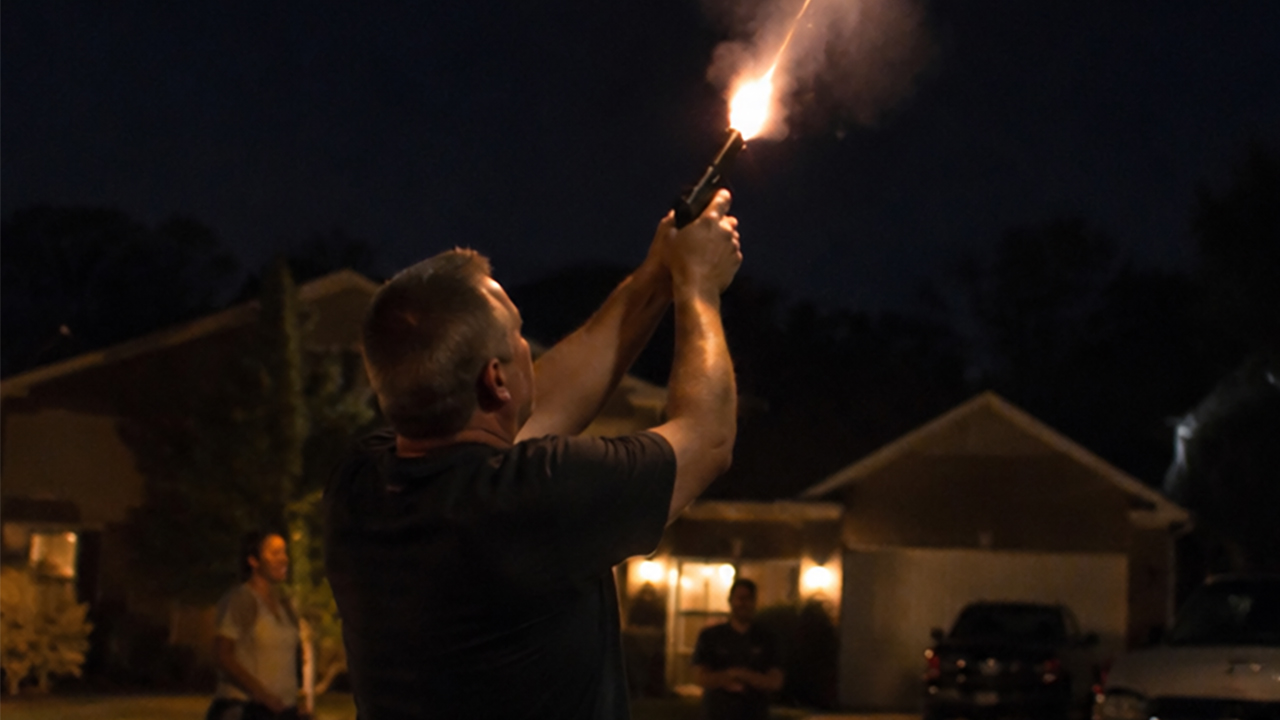
The neighbor who fired the shots reportedly did it straight up into the air, the classic bad idea people convince themselves is harmless. Sometimes it’s alcohol. Sometimes it’s frustration. Sometimes it’s somebody trying to scare off trespassers or “make a point.” However it started, three rounds sent skyward in a neighborhood where houses sit within earshot of each other is a recipe for a close call.
In rural areas, folks tend to mind their own business and handle small conflicts with a handshake. But the moment a projectile crosses a property line and lands in someone’s home, it’s no longer a neighbor spat. It’s a safety incident with a paper trail.
The roof told the story better than anyone’s memory
The homeowner who found the damage noticed it like most people do—something looked “off” from the driveway. A shingle scuffed and lifted. A small puncture that didn’t match hail or a falling branch. Once they got a closer look, they found the entry point and the path into the roof structure, with the bullet stopped by wood after chewing through asphalt shingle and sheathing.
That’s the part that makes your stomach drop. A few feet lower and it’s a bedroom. A few feet over and it’s a kid’s room. The roof did its job this time, but it’s not armor plating.
Even a handgun round fired upward can travel a long way before it returns, and when it comes back down it may not be perfectly vertical. Wind, angle, and the round’s stability all matter. People like to argue about “terminal velocity” like it’s a magic safety switch, but the real-world lesson is simpler: if you can’t account for where it lands, you shouldn’t be pulling the trigger.
How neighbors usually connect the dots
Outdoorsmen are pretty good at reading sign, and the same skills apply here. Folks heard shots at a specific time and noticed which direction the sound carried. In a quiet neighborhood, that’s often enough to narrow it down to one or two houses.
Once the bullet was recovered, it gave investigators something more solid than a hunch. Caliber can sometimes be estimated from the projectile itself, and the marks on the bullet may be consistent with certain barrel types. It doesn’t always identify a specific firearm on its own, but it does help confirm whether the story matches the evidence.
And then there’s the human side: the person who fired those rounds didn’t do it in a vacuum. In most rural neighborhoods, somebody knows who was drinking late, who was arguing, who was mad about a gate being left open, or who has a habit of using gunfire as punctuation. That local knowledge moves fast, especially when there’s property damage.
What the smart homeowner did next
The best move in this kind of situation is to document first and cool down second. Photos of the roof, close-ups of the impact point, and pictures of the recovered bullet (before it gets handled too much) are worth their weight in gold. If there are security cameras, doorbell cameras, or a trail cam pointed down a driveway, those clips can help establish timing and direction.
After that, most homeowners go one of two ways: a direct conversation if they genuinely believe it was an accident and the neighbor is reasonable, or a call to law enforcement if they’re not confident it stays calm. When a bullet hits a house, calling it in isn’t being dramatic. It’s creating a record and getting the situation in front of someone who can take it out of your hands.
There’s also the practical piece: you want the roof fixed correctly, and you want someone else paying for it if their actions caused it. That typically requires a report number and documentation that insurance companies recognize.
Gun owners weren’t arguing about the Second Amendment—they were talking about backstops
The loudest reaction from responsible gun owners tends to be the same every time this happens: there’s no such thing as “safe” celebratory shooting. You don’t have a backstop. You can’t see the impact area. And in settled country, there’s always a house, a road, a barn, or livestock somewhere downrange—whether you know it or not.
A lot of folks also pointed out something that gets overlooked: even if you live on acreage, your “downrange” can include neighbors you rarely see. Tree lines, rolling hills, and darkness create a false sense of privacy. At midnight, nobody’s out checking where your muzzle is pointed except the people trying to sleep.
Some also zeroed in on the difference between legitimate nuisance control and reckless shooting. If you’re dealing with predators in the chicken coop or a rabid animal, that’s a serious scenario—but it still doesn’t justify sending rounds into the sky. The outdoorsman mindset is knowing your target and what’s beyond it. That rule doesn’t take nights off.
The hard part: living next to someone you don’t trust with a firearm
Once the immediate danger passes, you’re left with the long-term problem. You still share a fence line, a road, maybe even a property corner with a person who demonstrated poor judgment with a gun. That changes how you feel about letting your kids play outside, how you park vehicles, and whether you spend time in the yard after dark.
Many people in this situation choose to add lighting, cameras, and clearly posted property markers—not because signs stop bullets, but because documentation stops excuses. If there’s already tension over trespassing, access, or boundary disputes, this kind of incident tends to pour gas on it.
And if the shooter was impaired, emotionally charged, or simply careless, the best outcome is usually a clear warning backed by consequences. The goal isn’t revenge. The goal is making sure it never happens again.
A gun going off into the night might sound like a short event, but the aftermath can linger for years. The next time you hear shots after dark, you don’t brush it off. You listen, you look, and you think about where those rounds are headed. Because somebody’s roof—somebody’s family—is always downrange of a bad decision.