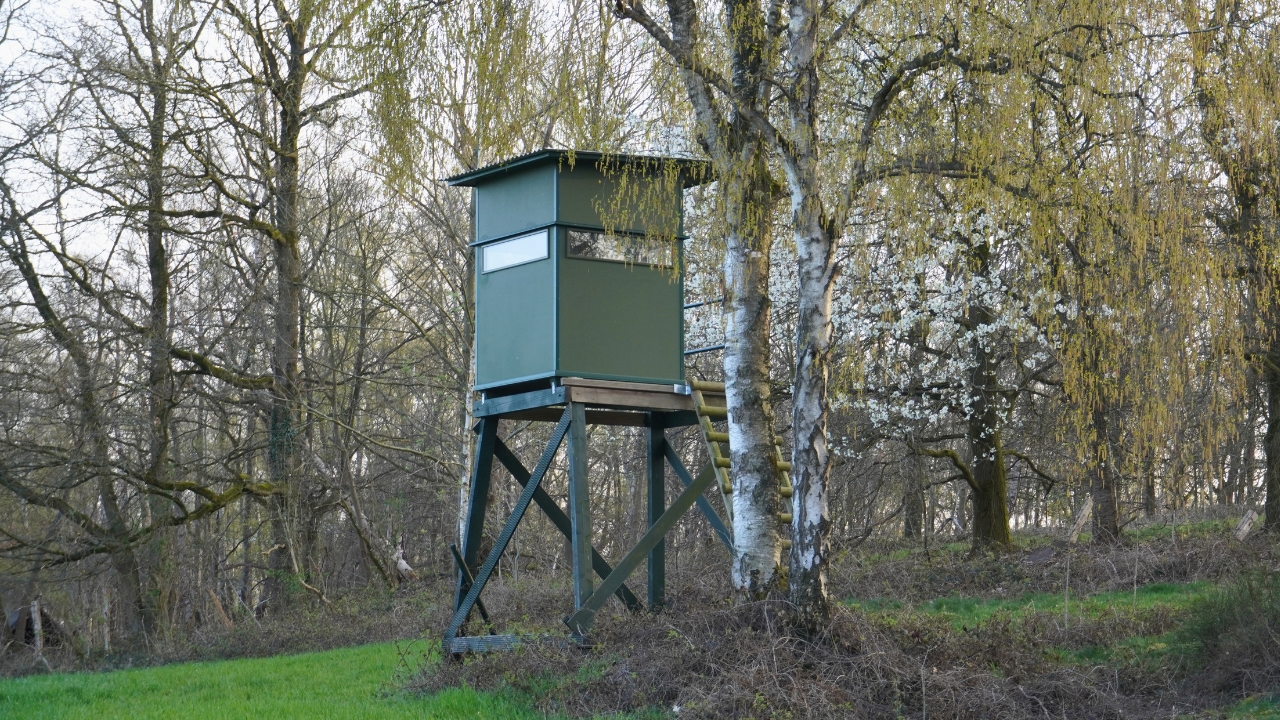
Photo credit: Heinsdorff Jularlak/Shutterstock.com
A Reddit user said he had just gotten access to a family-owned 40-acre whitetail property and quickly realized he might not be the only person who had plans for it. In the post, he explained that the land had been vacant for years, which he believed was why people had started putting up trail cameras and tree stands there. He said he wanted to hunt it before the family sold the property at the end of the year, but before he could even think about his own setup, he had to decide what to do with equipment other people had apparently left behind. He asked the question plainly: if people had placed tree stands on the property illegally, were they technically his now?
The post made it clear he was not just asking in a jokey way. He wanted to know what he could actually do with the stands. He asked whether he could cut them down, whether he could use them himself, and whether, if somebody showed up later claiming them, he could basically tell them tough luck. At the same time, he tried to strike a careful tone. He wrote that he was not trying to be a pain, but also admitted it would be pretty nice not to have to buy and set up his own stands if usable ones were already sitting there. That mix of irritation and temptation gave the whole thread its tone.
People immediately started asking the questions he had probably been dreading. One commenter pointed out that from the way the post was written, it sounded like the land was not actually his, but family property he had permission to hunt. That mattered, because if he was not the legal owner, the whole issue could get murkier fast. The original poster answered that he was certain nobody had permission to hunt the place and said no one had been allowed on it for more than 20 years. He added that because nobody had lived at the house for a few years, people had started setting up climbers and ladder stands on the property anyway. In another reply, he said the stands were not just a few feet over a line either. One was, in his words, “in the middle of 50 acres.”
That changed how the thread felt. This no longer sounded like a guy using an app and drifting a few yards off course while trying to hug a property line. It sounded like people had gotten comfortable walking onto vacant land, setting up gear, and treating it like no one was watching. The original poster even said he planned to talk to the neighbors because, as he put it, it felt like a bold move to put a permanent tree stand on property that was not yours. He also noted that the land had been in the family for 20 years and was only now going up for sale at the end of the year, which made it less likely that somebody had old permission from a prior owner.
The advice he got was all over the place. One commenter said the first thing to do was post the land clearly, because without posted boundaries some trespass cases can get harder to enforce depending on the state. Another said it is always better to stay civil first because people sometimes have old permission or genuine confusion about where they are allowed to hunt. A different commenter said that in his experience, stands left out on land are supposed to carry identifying information, and suggested calling whoever owned them and giving them a chance to come get them. Still another person said the better move was to talk to a local game warden and ask whether he could take the stands down and leave them at the base of the tree, because simply claiming them outright could create a new problem if somebody later accused him of theft.
The original poster seemed to take that middle-ground advice seriously. He replied that he would talk to neighbors and, after checking the rules in his state, said it looked like even unposted land could still count as trespass in New York, though proving it might be harder if the land was vacant or unimproved. He said his plan was to put up posted signs and leave notes on the tree stands. That seemed to tell the real story better than his original question did. He may have been tempted to treat abandoned stands as found property, but once the replies started coming in, he sounded more like someone trying to avoid turning an illegal setup into a bigger neighbor fight or legal mess.
By the end, the thread had turned from a half-joking “can I keep them?” question into something more familiar to anybody who has dealt with vacant family land. He had access to a property that had gone unmonitored long enough for other hunters to start treating it like it was fair game. Now he was stepping into the middle of that, trying to hunt the place before it sold, while figuring out how to clear off other people’s gear without making a bad situation worse. The stands themselves were the obvious problem. The harder part was deciding whether the people who left them were careless, confused, or bold enough to come back and argue once somebody finally pushed back.