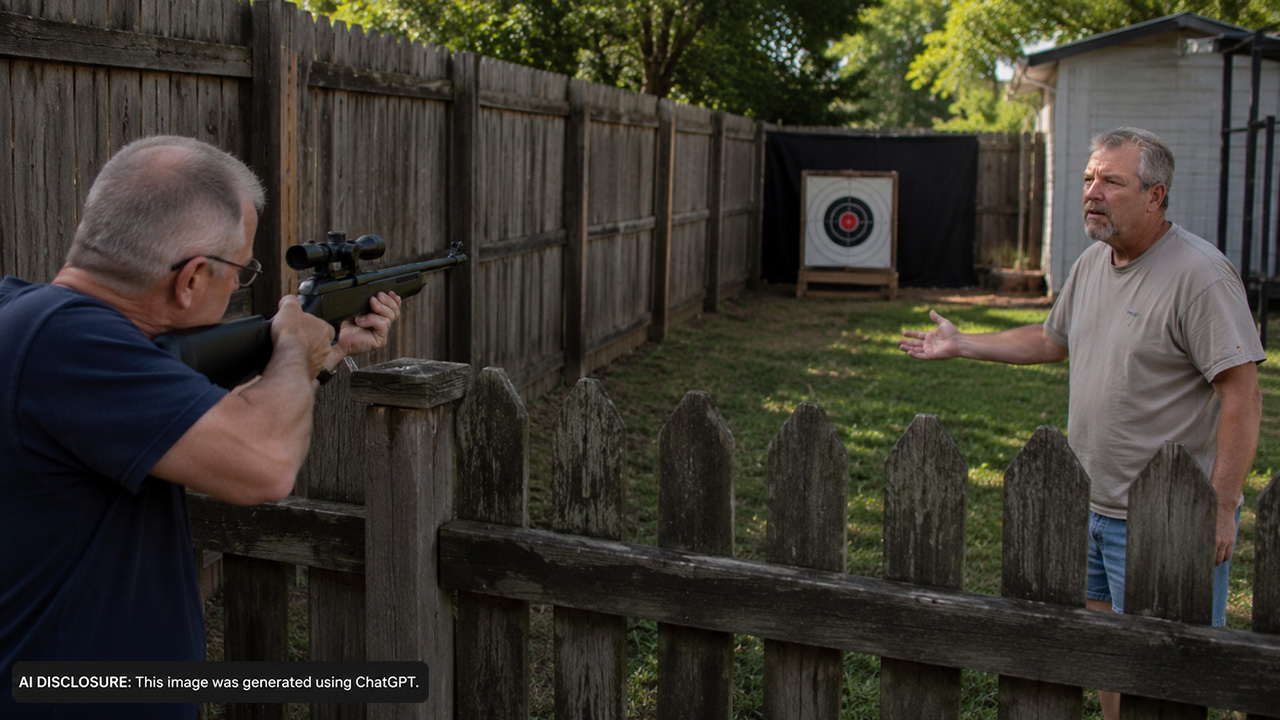
Photo credit: AI-generated image created using ChatGPT. Illustrative only
It doesn’t take much to turn a quiet block into a pressure cooker—one loud appliance, one neighbor who can’t let it go, and then the worst possible choice: pulling out an air gun and using it to intimidate someone.
In Alberta, one homeowner described a dispute that started over an air conditioner compressor and spiraled into a late-night confrontation, a pellet handgun being pointed at someone’s face, and a heavy police response. The details come from the original post, where the writer asked whether police handled the situation properly and what the next steps could look like.
It began with noise, then turned into a property-line obsession
The story starts with an ongoing feud between a man living “two doors up” and the poster’s friends who live between them. The flashpoint wasn’t firearms, hunting, or anything outdoorsy—it was an AC unit installed the previous summer, with a compressor the neighbor considered too loud.
Instead of handling it like most folks do—talking during daylight hours, calling bylaw if it’s truly excessive, or just accepting that summer comes with some mechanical noise—he went the homemade-barrier route. According to the post, he built a wooden wall between properties and padded it with blankets, then later extended it further. That kind of DIY “sound control” can be a sign the dispute has moved past normal neighbor friction and into fixation territory.
The “range” problem: when pellets don’t stop where they’re supposed to
When people hear “pellet gun,” they often think “toy.” That’s a mistake. A pellet handgun still launches a projectile with enough energy to break skin, take an eye, and—if someone is being reckless—send pellets somewhere they were never intended to go.
The headline angle here hits a point every landowner and backyard shooter should understand: if you’re firing at a fence line, a thin wooden barrier, or anything that isn’t a real backstop, you’re gambling with where that pellet ends up. Even if the intent is “just target practice,” pellets can pass through soft materials, bounce off hard surfaces, and travel into the next yard. That’s how you go from a nuisance neighbor to a real safety hazard in a hurry.
Doorbells at night, a threat, and the worst possible response
The post says tensions spiked during a recent heat wave when the AC compressor ran more. The neighbor allegedly began ringing the friends’ doorbell “at all hours of the night” to demand the compressor be shut off. Anyone with kids knows what that does to a household—sleep gets wrecked, tempers get short, and people stop thinking clearly.
Things came to a head when, around 1 a.m., the friend reportedly got stern and threatened an “ass whopping” if the neighbor didn’t leave the property and go home. It’s not hard to see how that kind of language escalates the situation, even if it came from pure frustration after repeated late-night disturbances.
But the next move was the one that changed everything. According to the account, the neighbor went home, grabbed a pellet handgun, came back, pointed it at the friend’s face, and chased him down the street. The friend hid behind a van and then into the yard while calling 911.
A big police response, then a result that felt unsatisfying
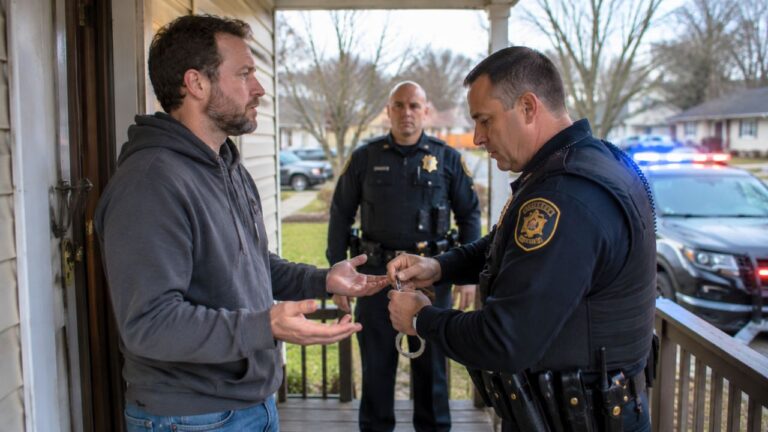
Police reportedly responded in force—enough that the writer described it as a “huge” presence, including a K9. The post claims officers sent the dog into the neighbor’s house and brought him out.
Then came the part that’s hard for most folks to swallow: after a few hours, the neighbor was “let… scot-free” because he was compliant and because it was a pellet gun. Whether that’s exactly what happened in legal terms isn’t spelled out, but the writer’s frustration is clear. From a common-sense perspective, pointing any gun-shaped object at someone’s face and chasing them down the street is the kind of behavior that makes communities unsafe.
The writer asked two questions that a lot of gun owners and landowners would ask, too: did police do their job properly, and how can the neighbor pursue charges if possible?
Where outdoorsmen tend to land on this: document, de-escalate, and treat air guns like real guns
Even without digging into statutes, there are a few practical realities here that apply anywhere you’ve got property lines, neighbors, and projectiles.
First, documentation matters. If someone is ringing the doorbell at all hours, record the times, keep any camera footage, and save call logs. If a weapon is produced, note what happened while it’s fresh—what was said, where people stood, and where the person ran. That’s not being dramatic; it’s building a clear timeline so you’re not relying on fuzzy memory later.
Second, don’t meet harassment with threats. It’s understandable why someone would snap after being woken up repeatedly—especially with kids in the house—but threatening violence tends to pour gas on the fire. The safer play is to stay inside, call police for the trespass/harassment, and let the official report trail begin.
Third, air guns aren’t “no big deal” when they’re used to intimidate or when pellets can leave the shooter’s control. Anyone who’s ever built a safe backyard range knows the rule: your backstop has to actually stop the projectile, every time. A fence isn’t a backstop. A wall with blankets isn’t a backstop. And shooting anywhere that could put pellets into a neighbor’s yard is asking for a tragedy.
What the poster seemed to be looking for: accountability and a safer neighborhood
Reading between the lines, this wasn’t just about an annoying neighbor. The writer described someone who seemed unstable, who allegedly escalated from noise complaints to nighttime harassment to using a pellet handgun in a threatening way. That’s a pattern that makes people worry about what comes next.
When a situation gets to that point, the practical goal isn’t winning an argument over an AC compressor. It’s getting clear boundaries in place—no more late-night visits, no more trespass, no more threats—and making sure law enforcement and local authorities have enough information to act if it happens again.
If you’re the kind of person who keeps guns around, hunts, or shoots recreationally, this is also a reminder that the way you handle conflict matters. Most of us work hard to be seen as safe and responsible. The guy who uses an air gun as a tool for intimidation burns that reputation for everybody.
At the end of the day, neighbors can disagree about noise, fences, and property lines. But once projectiles and threats enter the picture—pellet gun or not—it stops being a “dispute” and becomes a safety problem that has to be handled with cool heads, good records, and zero tolerance for reckless shooting near a shared fence.
Like The Avid Outdoorsman’s content? Subscribe to our newsletter so you never miss an article.
Here’s more from us: