Photo credit: AI-generated image created using ChatGPT. Illustrative only
Loaning a pistol to somebody you live with can feel as casual as handing over a flashlight. Same house, same routines, you figure it’s controlled. But one gun owner in New Orleans learned fast how a “just for the night” decision can turn into a full-blown legal and logistical mess, all in a matter of hours.
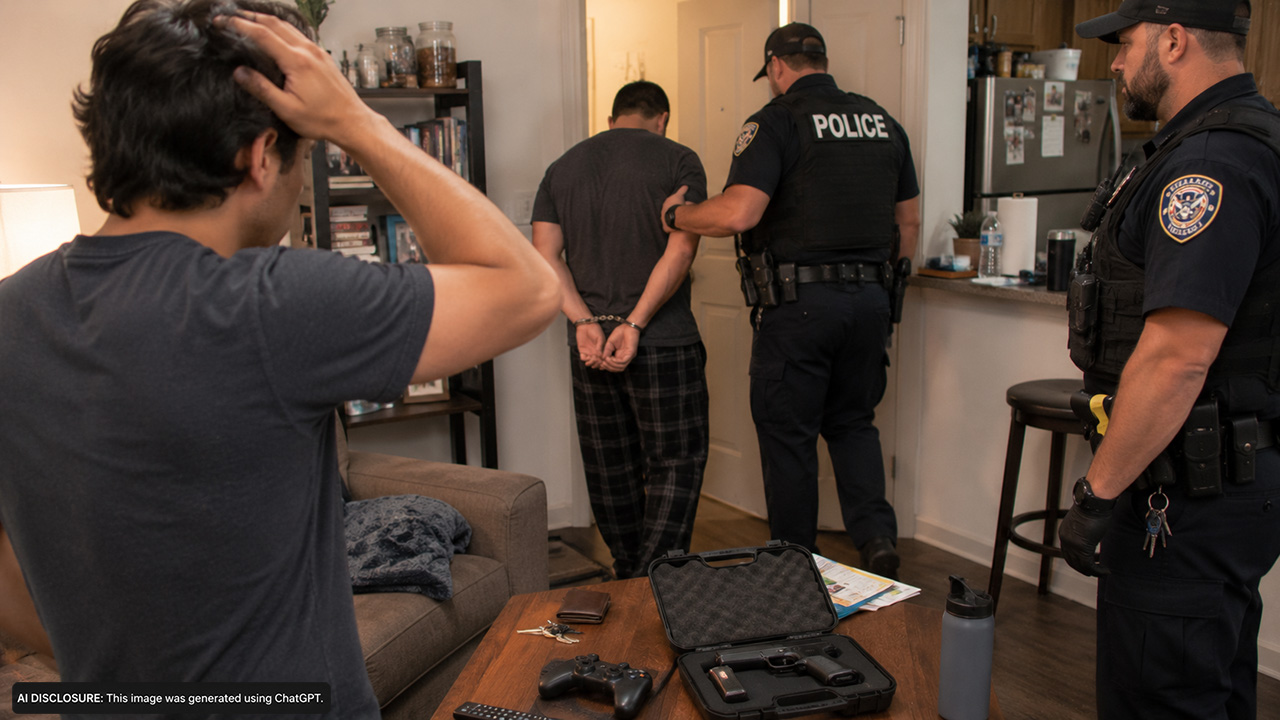
In the original post, the gun owner explained that his roommate was arrested while carrying the owner’s pistol without a permit. The bigger surprise came after: the roommate was also a felon—something the owner said he didn’t know—and the pistol had already been seized as evidence.
A “roommate trust” situation that went sideways fast
If you’ve lived with buddies, you know the rhythm. Folks share tools, truck ramps, fishing rods, sometimes even a deer rifle for a range trip. A handgun is different, though, because the laws don’t care that you share a roof or split rent.
Here, the pistol wasn’t just “borrowed”—it ended up out in public on someone who, according to the poster, didn’t have the legal ability to carry it. Once that traffic stop or contact happened and an arrest followed, the gun immediately became part of the case. At that point, it’s not just property. It’s evidence.
How the arrest creates problems for the actual gun owner
Most gun owners focus on the obvious issue: “How do I get my pistol back?” That’s a real concern, especially if it’s your carry gun or a reliable home-defense piece. But the first problem is usually bigger—making sure you don’t get pulled into the roommate’s situation.
When a firearm is recovered during an arrest, officers and investigators may want to know where it came from, who owns it, and whether it was transferred or provided knowingly. Even if you’re completely on the up-and-up, you can still find yourself answering uncomfortable questions. And “I didn’t know he was a felon” may be true, but it doesn’t automatically end the conversation.
In Louisiana, the “permit” detail matters—but so does prohibited possession
The poster said the arrest happened in New Orleans, Louisiana, and that the roommate was carrying the pistol “without a permit.” Louisiana gun laws have changed over the years, but the key point in a situation like this isn’t just the permit question—it’s the prohibited person question.
If someone is a felon, firearm possession is a serious issue all by itself. That’s the kind of fact that can turn a simple “wrong place, wrong time” carry situation into a bigger case. And once the state believes a prohibited person had a firearm, that gun tends to stay locked up until the case is resolved—or longer, depending on local procedure.
The seized-as-evidence reality: getting it back is rarely quick
A lot of outdoorsmen picture a quick property claim: show a receipt, show a serial number, prove it’s yours, and pick it up. In practice, it’s often slower and more frustrating than that—especially when the firearm is tied to an arrest.
Evidence rooms don’t move on your schedule. The gun may be held until the criminal case is settled, declined, or otherwise closed out. Even then, there’s usually a release process, paperwork, and sometimes a separate trip to an evidence facility. And if there are any questions about ownership or transfer, that timeline can stretch.
There’s also a hard truth: the pistol may come back in worse shape than it left. Guns stored in evidence aren’t always babied. If you ever do get it returned, expect to give it a careful inspection and a full cleaning before you trust it again.
What people tend to focus on in situations like this
When gun owners talk through a mess like this, the conversation usually zeroes in on a few practical points: whether the firearm was actually loaned versus taken without permission, whether the owner can document ownership, and whether the owner needs to proactively distance himself from the roommate’s actions.
Even in the short description provided, a couple things stand out that many experienced gun folks would home in on. First, the owner says he didn’t know the roommate “took it out,” which hints at either misunderstanding or lack of clear boundaries. Second, learning after the fact that the roommate was a felon is the kind of surprise that makes people rethink how well they really know the folks they live with.
Hard-earned lessons for gun owners who share a home
This is the part nobody likes to talk about, but it’s the most useful: the cleanest way to avoid this problem is to prevent access in the first place. If you live with roommates—especially new ones, casual acquaintances, or friends-of-friends—your safe storage plan needs to assume they may make dumb decisions when you’re not around.
That doesn’t mean living paranoid. It means basics: a quality lockbox or safe, controlling keys and codes, and not treating a handgun like a communal item. You can be a generous guy and still have firm rules—because the consequences don’t land on the borrower alone. They land on the gun owner, too, in the form of seized property, questions from police, and the risk of being painted into a corner by someone else’s bad choices.
The outdoorsman takeaway is simple and stubbornly practical: if your name is tied to the serial number, you’ve got skin in the game no matter who was holding it when the cuffs went on. Keep your firearms secured, be careful about who has access, and if your gun ends up in an evidence locker, treat it like a legal issue first and a property-retrieval problem second.
Like The Avid Outdoorsman’s content? Be sure to follow us.
Here’s more from us: