Photo credit: The Avid Outdoorsman
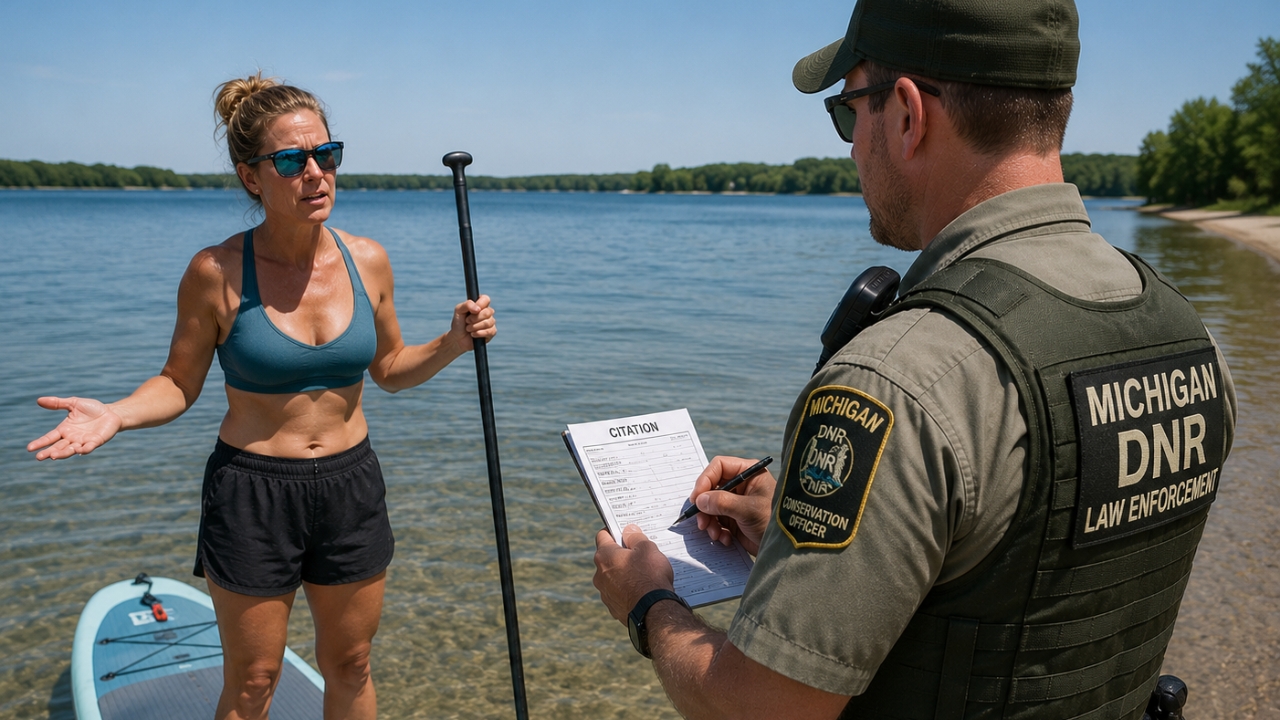
The paddleboarder said the day did not feel dangerous at the time. According to the Reddit post, they were paddleboarding on a small inland lake in about four feet of water when a game warden issued a citation for not having a life jacket.
The original Reddit post can be found here: https://www.reddit.com/r/legaladvice/comments/obmkju/paddle_boarding_in_a_small_inland_lake_in_4_ft_of/
From the paddleboarder’s point of view, the situation probably felt overly technical. They were not far offshore, not in deep water, and not describing rough conditions or a rescue situation. They were standing in shallow water where they likely felt they could step off the board and touch bottom.
But boating and water safety rules do not always turn on how confident someone feels in the moment. In many places, paddleboards are treated as vessels once they are being used outside certain swim or surf areas. That can mean life jacket requirements apply even when the water feels shallow or the activity seems casual.
That is where the game warden’s role came in. Wardens and conservation officers are not only checking hunting and fishing licenses. They also enforce boating and water safety rules in many areas. A paddleboard without the required flotation device can become a citation even if the person thinks the risk is low.
The paddleboarder’s question was really about whether the ticket made sense and what to do with it. That is understandable. People often think of paddleboarding as recreation closer to swimming than boating. But once the law classifies the board a certain way, the rule may apply more broadly than expected.
The shallow water detail made the ticket feel frustrating, but it may not have changed the legal requirement. A rule that says a personal flotation device must be carried on a paddleboard usually does not disappear because the person is in four feet of water. The officer may not be judging whether that specific moment was dangerous. He may simply be enforcing the equipment rule.
That is the lesson many people learn the hard way on lakes and rivers. Safety gear rules can be simple, strict, and not especially flexible in the field. If the rule says the life jacket has to be on board, then “I was close to shore” or “I could stand up” may not be enough.
Commenters focused on the exact regulation. Several said the paddleboarder needed to check whether the state treated paddleboards as vessels and whether a life jacket was required on that lake. If the law said it was required, the shallow water argument might not help much.
Others explained that the citation was not necessarily about whether the paddleboarder personally felt unsafe. It was about compliance with water safety rules. A game warden or boating officer may issue a ticket based on missing required equipment, not on whether an accident had already happened.
Some commenters suggested contacting the court or agency listed on the citation to ask about options. Depending on the jurisdiction, the paddleboarder might be able to pay the fine, contest it, or possibly show proof of buying the required safety gear afterward. But commenters warned not to assume the ticket would go away.
A few people said the easiest takeaway was to keep a life jacket on the board every time. Even if the lake is small, the water is shallow, or the paddle is short, having the required gear avoids the citation and keeps the safety question simple.
The post ended with a reminder that outdoor rules can apply even when the activity feels harmless. Four feet of water may not feel like boating to the person standing in it, but if the law treats the paddleboard like a vessel, the life jacket rule can still follow.
Like The Avid Outdoorsman’s content? Subscribe to our newsletter so you never miss an article.
Here’s more from us: