Photo credit: AvidOutdoorsman
The call started like a lot of rural neighbor disputes do: one landowner saying the guy next door was sending rounds over the property line. It’s the kind of thing that makes your stomach tighten up, because it’s not just annoying—it’s a safety problem that can get somebody hurt.
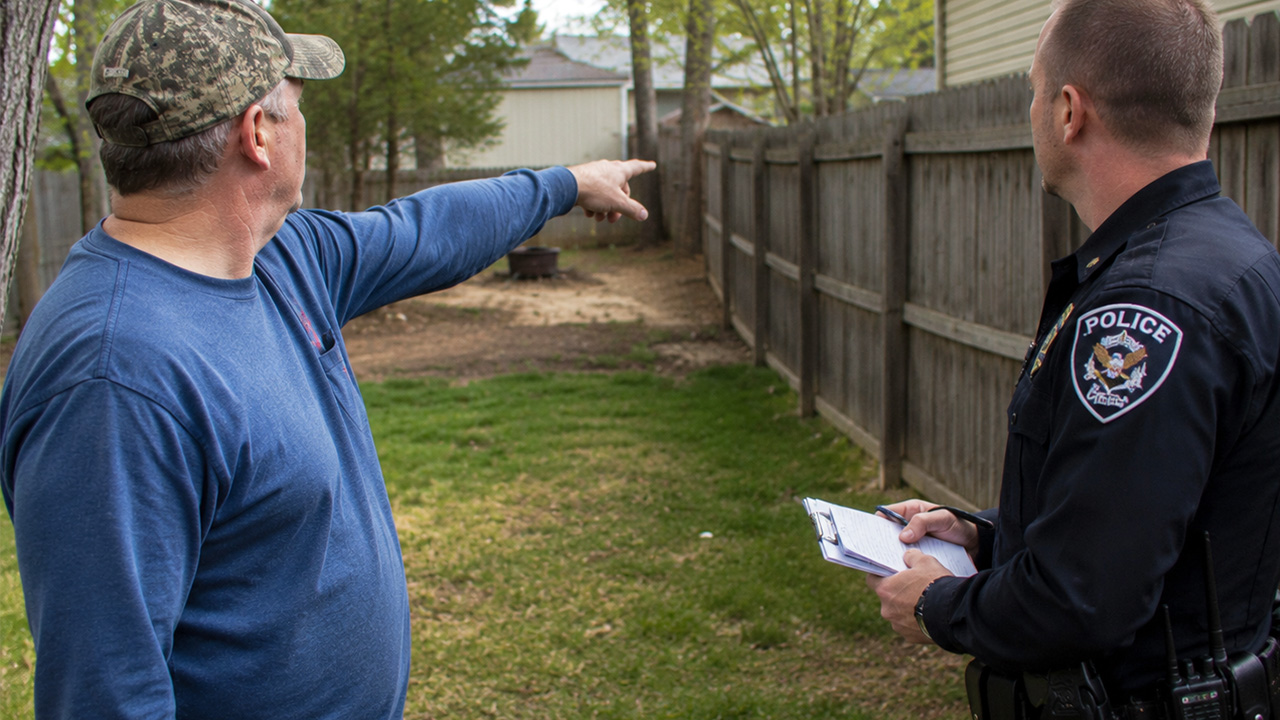
When the deputy rolled in, the homeowner had his story ready. He pointed toward the back tree line and described the sound of shots, the direction they came from, and how he believed the neighbor was “shooting across” the boundary. He also mentioned past friction—noise, late-evening target practice, and a running argument about where the line actually sat.
The complaint sounded simple until it didn’t
The officer did what most do in these situations: asked where everyone was standing, where the shooter would’ve been, and what the backstop looked like. The homeowner walked him toward a stretch of fence that ran behind a small outbuilding, then into a strip of woods that opened into a rough clearing.
From the homeowner’s side, it looked like a clean accusation. The neighbor had a spot where he liked to shoot, and the land dropped just enough that the homeowner figured rounds could sail over. The deputy’s first impression matched that logic—until he started looking for physical evidence instead of taking the story at face value.
One piece of brass changed the direction of the investigation
Down near the property line, the deputy found a fresh shell casing in the homeowner’s grass—close enough to the fence that it stood out. Not an old, tarnished piece of range trash, but a shiny casing that looked recently fired. The officer didn’t make a big scene about it, but he did what a good cop does: he asked the homeowner to slow down and explain why there was spent brass on his side.
The homeowner tried to pivot. First it was “maybe it bounced,” then “maybe kids,” then “maybe it washed down in the rain.” None of those explanations fit well when the casing was sitting on top of the grass, not pressed into the dirt or half-buried under leaves. The deputy widened his search and started looking for more—spent casings, scuffed ground, bits of cardboard, anything that suggests an improvised shooting spot.
It didn’t take long to find a couple more clues. A flattened box tucked behind a stump. A few torn paper scraps. A spot of bare dirt that looked like it had been stood on a lot more than the surrounding area.
The story flipped from “incoming fire” to a possible boundary shoot
At that point, the officer’s questions changed. Instead of “when did your neighbor fire,” it became “when did you last shoot back here” and “where’s your target set up.” The homeowner didn’t like that turn. Most folks don’t, especially when they called for help and suddenly they’re the one explaining evidence.
The deputy walked the line, eyeballing angles and terrain. From where the homeowner had been standing, a shooter could easily send rounds toward the neighbor’s side if they didn’t have a real backstop. Even if the homeowner believed he was shooting “parallel” to the line, it doesn’t take much—one slight angle change, one unstable stance, one ricochet—to turn a harmless afternoon into a dangerous situation.
That’s the part a lot of people miss when they talk about shooting on rural property. It’s not enough to say, “I’m on my land.” You’ve got to be able to show you’ve got a safe direction of fire and a backstop that will actually stop bullets. Dirt berms, hillsides, and thick timber can work. Flat ground with a fence line ten yards away usually doesn’t.
Why shell casings matter more than people think
Spent brass is small, but it’s hard to argue with. It’s a timestamp, a breadcrumb, and sometimes the only neutral witness when neighbors are pointing fingers. In a boundary dispute, casings can help establish where someone was standing, what direction they likely faced, and whether “it wasn’t me” holds water.
And brass doesn’t usually travel far on its own. Yes, an ejected casing can bounce—especially off hard-packed dirt or a rock—but it typically lands within a few feet of the shooter. If the casing is on the caller’s side and it looks fresh, that’s a red flag that the problem might not be the neighbor at all.
That doesn’t mean the neighbor was innocent, either. Plenty of situations are messy, with both sides taking turns doing dumb things. But the deputy’s job isn’t to referee feelings. It’s to sort out what’s actually happening and keep rounds from crossing into somebody else’s yard.
What outdoorsmen and landowners zeroed in on
When stories like this make the rounds in hunting and shooting circles, the comments tend to follow a familiar track. First, folks talk about cameras. Trail cams on corners, cellular cams aimed at gates, and a simple photo log of who’s where and when. Not to “catch” someone for pride’s sake, but to document patterns before it escalates.
The next thing people bring up is property lines—because half the time the line isn’t where somebody thinks it is. Old fences wander. Survey pins disappear. A “since granddad’s day” handshake agreement doesn’t help when bullets are involved. More than a few seasoned landowners will tell you a survey costs money, but it costs a lot less than court.
Then you get the practical shooters chiming in about backstops. They’ll tell you not to rely on trees. Not to trust a thin rise in the ground. And not to shoot anywhere that you can’t clearly define as a safe lane with a safe impact area. They’re not being paranoid—they’re thinking like someone who has watched a ricochet do something weird.
The best way to keep a neighbor dispute from turning into a tragedy
This is one of those situations where the “right” move is usually the boring move. If you want to shoot on your property and you’ve got neighbors close, build the kind of setup you’d be comfortable explaining to a deputy with a tape measure and a flashlight. A real berm. A clear direction. No shooting toward roads, houses, or the edge of a line you can’t see.
If you’re the one hearing shots and you think rounds are coming your way, don’t try to solve it by yelling across a fence or stepping out to “prove a point.” Call it in, document what you can, and stay out of the line of fire. The goal is to stop unsafe shooting, not to win an argument.
In this case, that single casing did what it often does: it forced the story to match the ground truth. And whether the homeowner meant to stir the pot or simply didn’t realize how his own shooting looked from the outside, the takeaway is the same. When you live close enough to hear your neighbor’s gunfire, you live close enough that your own setup needs to be squared away—every time you pull the trigger.