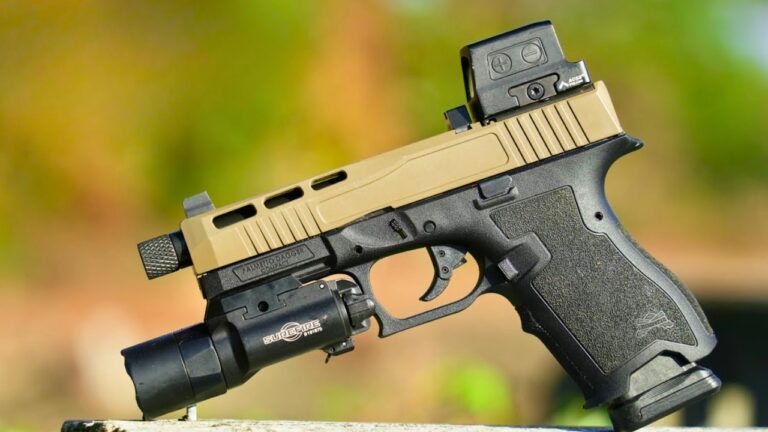
Photo credit: Jurie Maree/Shutterstock.com
Some pistols come out of the box ready to work. Others come out of the box with sights that are technically “sights,” but barely. Tiny black nubs, trench sights you can’t see under stress, plastic placeholders, or sights that wash out the second you get indoor lighting—those are all common. And the worst part is a lot of these guns are carry guns, where fast sight pickup matters more, not less.
Here are 15 pistols where it’s smart to plan on replacing (or at least improving) the sights immediately if you want the gun to be easy to shoot well.
Glock 19

The Glock 19 is a proven pistol, but the factory polymer sights are still the classic “placeholder” setup. They work, but they’re not what most serious shooters want long-term. They’re not as durable as steel, and the sight picture isn’t exactly high-performance in low light or on fast transitions. If you’re going to train hard, the sights are one of the first upgrades that makes sense.
Most guys who carry a Glock 19 end up putting on steel night sights or a high-vis front because it makes the gun faster to use in real conditions. It’s not because the gun is bad—it’s because Glock ships a great pistol with bargain sights. If the Glock is your defensive tool, there’s no reason to leave yourself with the weakest part of the setup.
Glock 43X

Same story, different role. The 43X is a carry gun, which means you’re often shooting it under time pressure, awkward angles, and imperfect lighting. Factory polymer sights are functional, but they’re not ideal for fast, repeatable sight pickup. If you’re going to shoot the 43X the way you should shoot a carry gun, you’ll notice the limitations quickly.
A better front sight alone can change your experience with the pistol. The 43X can be very shootable, but it rewards a clear sight picture because it’s smaller and more sensitive to little errors. If you’re trying to build real confidence, upgrading to steel and/or a brighter front is one of the cleanest improvements you can make.
Ruger LCP II

The LCP II is built to disappear in a pocket, not to win a sight-picture contest. The sights are small and basic, and for a lot of shooters they’re hard to pick up quickly. On a calm day you can make it work. Under speed or stress, it’s easy to lose the front sight and start “point shooting” without meaning to. That’s where the misses happen.
If you carry an LCP II, you either accept the role as “very close” or you improve the sighting system—paint, a bright front, or a laser depending on your preference. The gun can be a legitimate deep-carry tool, but stock sights are one of the reasons people don’t practice enough with it. Make it easier to see and you’ll shoot it more.
Ruger LCP Max
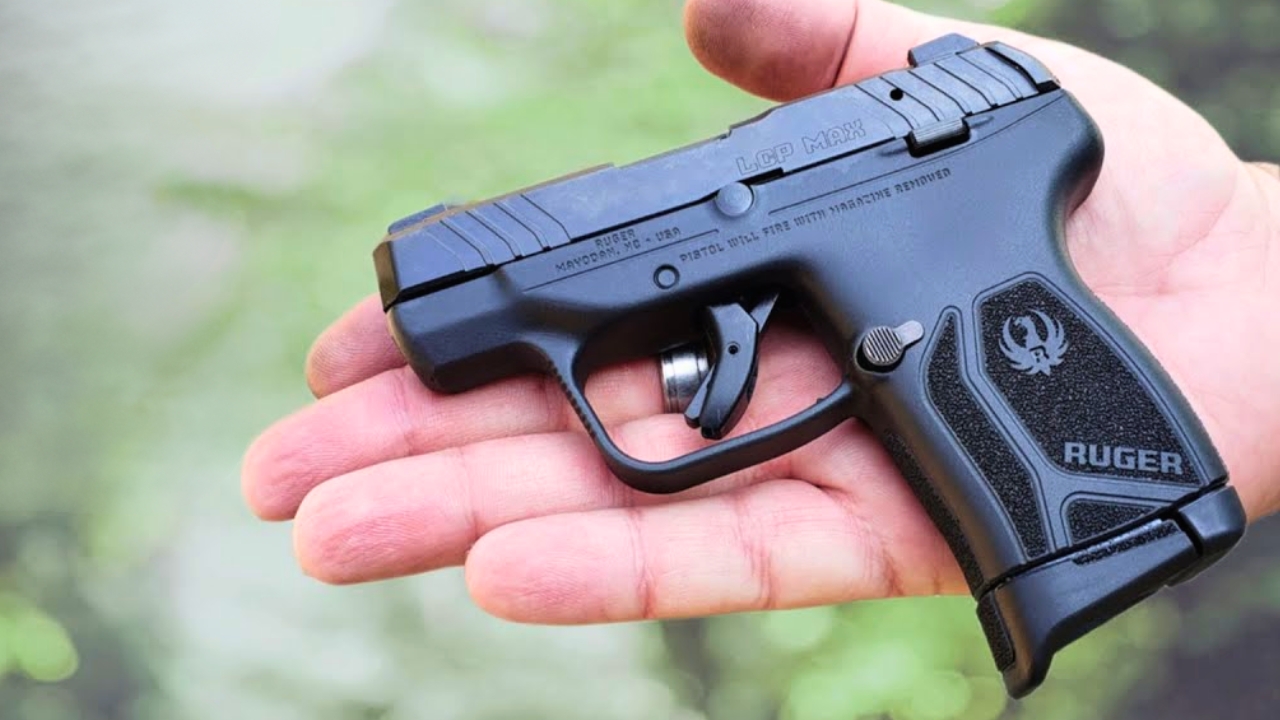
The LCP Max is a step up in a lot of ways, but it’s still a tiny pistol with tiny sights. For many shooters, the stock setup is better than earlier LCP variants, yet still not great for fast work. The sight picture can be hard to track quickly, especially indoors or in shade, where everything looks like the same dark shape.
If you want to be confident with the Max, plan on improving visibility somehow. A bright front sight, paint, or a laser can make a real difference. This isn’t about making it a duty gun—it’s about making your deep-carry gun usable enough that you’ll actually train with it. The gun is capable; the sighting system is what usually holds people back.
Smith & Wesson Bodyguard .380

The Bodyguard is another “great to carry, not great to shoot fast” pistol, and the sights are part of that. They’re small, they’re not especially bold, and for a lot of shooters they disappear when you’re trying to go quicker than slow-fire. That pushes people into sloppy shooting habits, because they’re not seeing enough to correct themselves.
If the Bodyguard is going to be in your carry rotation, make the sights easier to work with. Even simple paint on the front can help. Better yet, upgrade to something more visible if your model supports it. When a pistol is small and snappy, the sights need to help you—not add another problem you have to fight.
Beretta Pico

The Pico is designed for deep concealment, and the sights reflect that. They’re minimal and not something most people find easy to use for fast, accurate shooting. The gun can be carried all day without thinking about it, but once you’re on the range, the sight picture tends to feel like an afterthought. That’s where frustration starts.
With tiny pistols, you don’t need target sights—you need sights you can actually see. A bright front, paint, or a laser setup can make the Pico far more practical. Otherwise you’ll do what most owners do: fire a couple mags, decide it’s “fine,” and then never build true confidence with it.
Remington RM380
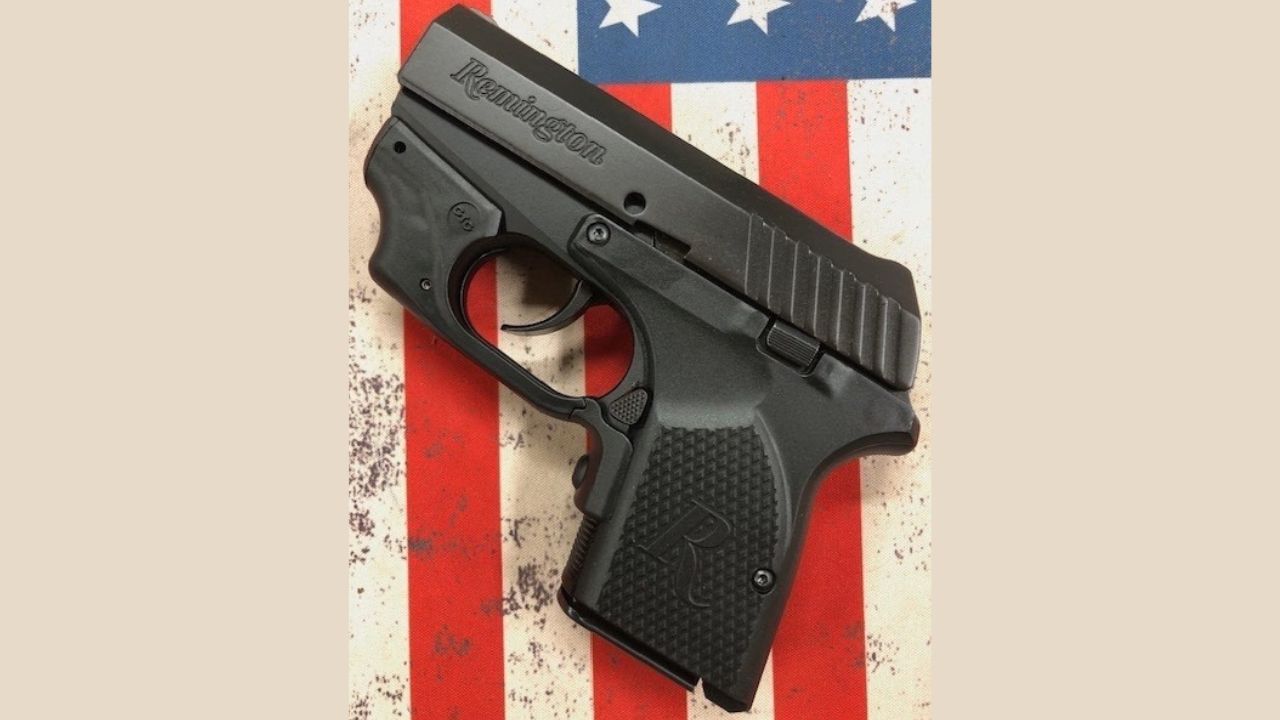
The RM380 carries nicely and shoots “okay,” but the sights are small and basic, and they’re one of the first reasons people lose interest in training with it. On a clean target at close range, you’ll hit. When you speed up or shoot in mixed lighting, it’s easy to lose the front sight and start drifting.
If you want the RM380 to be more than a “carry-only” gun, improve the sight picture. This is a pistol that benefits from anything that helps your eyes—contrast, brightness, or even a laser if that’s your preference. The more you can see, the more you’ll practice, and the more the gun becomes a tool you actually trust.
Kel-Tec PF-9

The PF-9 is thin and easy to carry, but the factory sighting setup and overall shootability can be rough. The sights are not what I’d call confidence-inspiring for fast shooting, and the gun’s recoil feel doesn’t help. People end up fighting the gun and then blaming themselves, when the reality is the system isn’t doing them any favors.
If you’re going to carry a PF-9, you need a sight picture you can pick up quickly. Even a simple high-contrast front sight helps. This isn’t about turning it into a match pistol. It’s about not handicapping yourself on the one thing that’s supposed to guide your hits when you’re moving fast.
Kel-Tec P-3AT

The P-3AT is a pure pocket gun, and its sights are basically “you have something to index, good luck.” On the range, that becomes obvious quickly. Most people can’t track those sights fast, and many end up shooting off feel rather than sight confirmation. That’s fine until it isn’t—because that’s how you get misses under stress.
If you carry a P-3AT, do what serious owners do: improve the front sight visibility with paint or choose an aiming aid you trust. It’s a gun meant for close distances, but “close” still requires hits. Stock sights don’t help much with that unless your eyes are perfect and your lighting is perfect.
Kel-Tec P-32
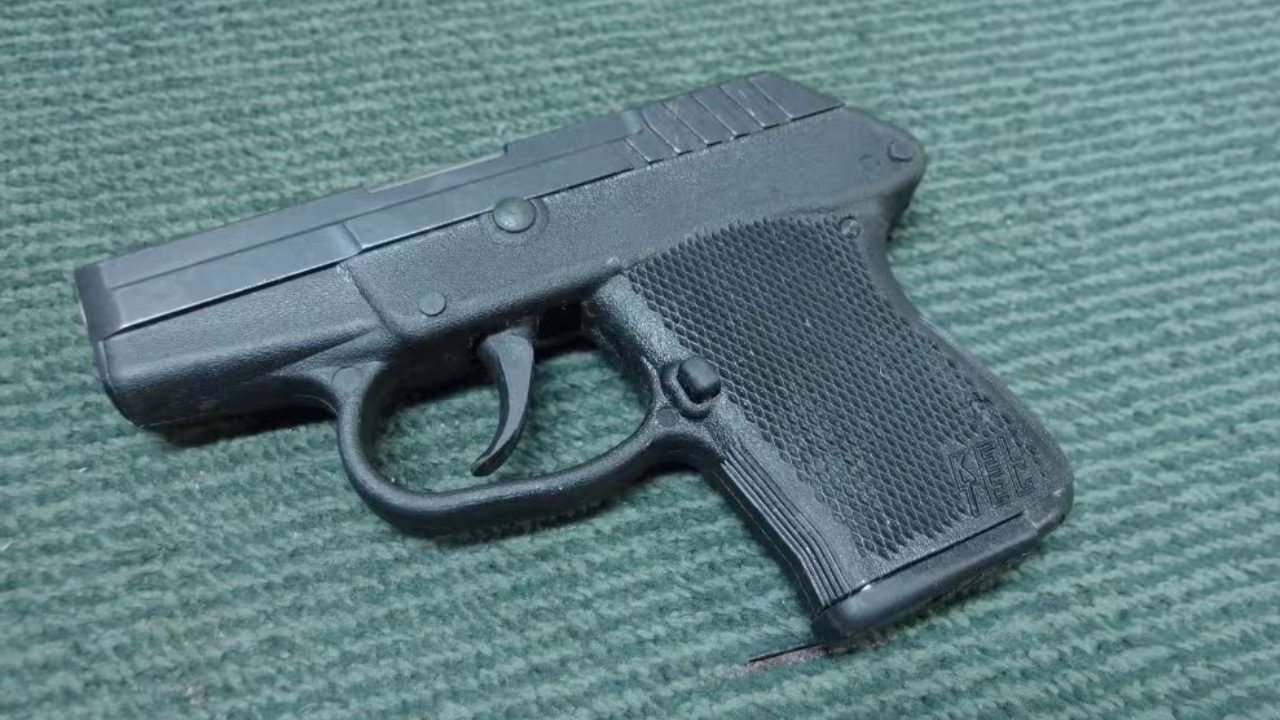
The P-32 has the same deep-carry design DNA, and the sighting system reflects it. Small sights (or essentially minimal indexing features) are common on this class of pistol, and it makes rapid, repeatable accuracy harder than it should be. One slow mag can be fine; anything faster turns into guesswork for a lot of shooters.
If you want to actually train with the P-32, give yourself a better visual reference. Paint, a laser, or simply committing to the gun’s intended distance with strict practice can help. The problem isn’t that it can’t work—the problem is that the stock sighting setup doesn’t encourage good shooting habits.
SCCY CPX-2

SCCY pistols are often bought as budget carry options, and the sights are part of why people have mixed experiences. They’re functional, but not always easy to pick up quickly, and they don’t tend to inspire confidence at speed—especially when you combine that with a heavier trigger feel that already demands more focus.
If you want to make a CPX-2 easier to shoot well, sights are a smart first move. A high-vis front helps you stay honest on the trigger press, and it speeds up follow-ups because you can actually see what the gun is doing. On a carry pistol, visibility matters more than people want to admit.
Hi-Point C9

Hi-Points are what they are: budget, bulky, often surprisingly reliable, and not refined. The sights tend to be basic and not especially crisp, and the sight picture can feel vague compared to more modern pistols. That makes it harder to shoot well quickly, even if the gun goes bang every time.
If you own one and you actually want to train with it, improving the sight picture is one of the easiest ways to make range time less frustrating. Even simple paint can help. You’re not making it into a premium pistol—you’re making it easier to confirm what you’re doing and get repeatable hits without fighting your own equipment.
Diamondback DB380

The DB380 is small and easy to carry, but the stock sights are not what most people would call “easy mode.” They’re small, and on a snappy little .380, small sights make your errors harder to diagnose because you’re not seeing enough to correct in real time. That’s how people end up with inconsistent groups and no clear reason why.
If you want a DB380 to be something you trust, don’t leave it with a sight picture you can barely track. Add contrast, upgrade sights if your model supports it, and make the gun easier to shoot. A carry pistol should not feel like a guessing game every time you speed up.
Kahr CW380

Kahr’s tiny .380s carry extremely well, but the sights are often small and the whole platform tends to reward slower, deliberate shooting. That’s not how most people want to train a carry gun. When you try to run it faster, the sight picture can disappear on you, and the gun’s small size magnifies that problem.
If you carry a CW380, give yourself a front sight you can actually pick up. Paint helps. A more visible setup helps more. The goal is not “tiny groups at 25.” The goal is fast, reliable hits at realistic distances without your eyes fighting the pistol the whole time.
Taurus TCP .380

The TCP is a classic budget pocket .380 and it carries well. The sight picture is basic and often hard to pick up fast, especially for shooters whose eyes aren’t perfect. That’s a real-world issue because carry guns tend to get used in imperfect light and imperfect angles—exactly where small, low-contrast sights fail.
If you plan to keep a TCP for carry, improve the front sight visibility at minimum. The gun can do its job, but the stock sighting setup encourages “I’ll just point it” habits. That’s how you end up surprised at the range when your hits aren’t where you thought they’d be.
NAA Guardian .380

The Guardian is built for deep concealment, and the sights match that mission: minimal and not friendly for speed. On the range, most shooters quickly find themselves working harder than they should to see what they need to see. When your sights aren’t clear, your trigger press gets sloppier because you’re not getting good feedback.
If this is a gun you carry, you want a consistent aiming solution. That might be paint. That might be a laser. That might be accepting its niche and training accordingly. But leaving it stock and hoping you’ll “figure it out” is how deep-carry pistols become deep-neglect pistols.
Like The Avid Outdoorsman’s content? Be sure to follow us.
Here’s more from us: