Photo credit: Lucky Gunner Ammo/YouTube
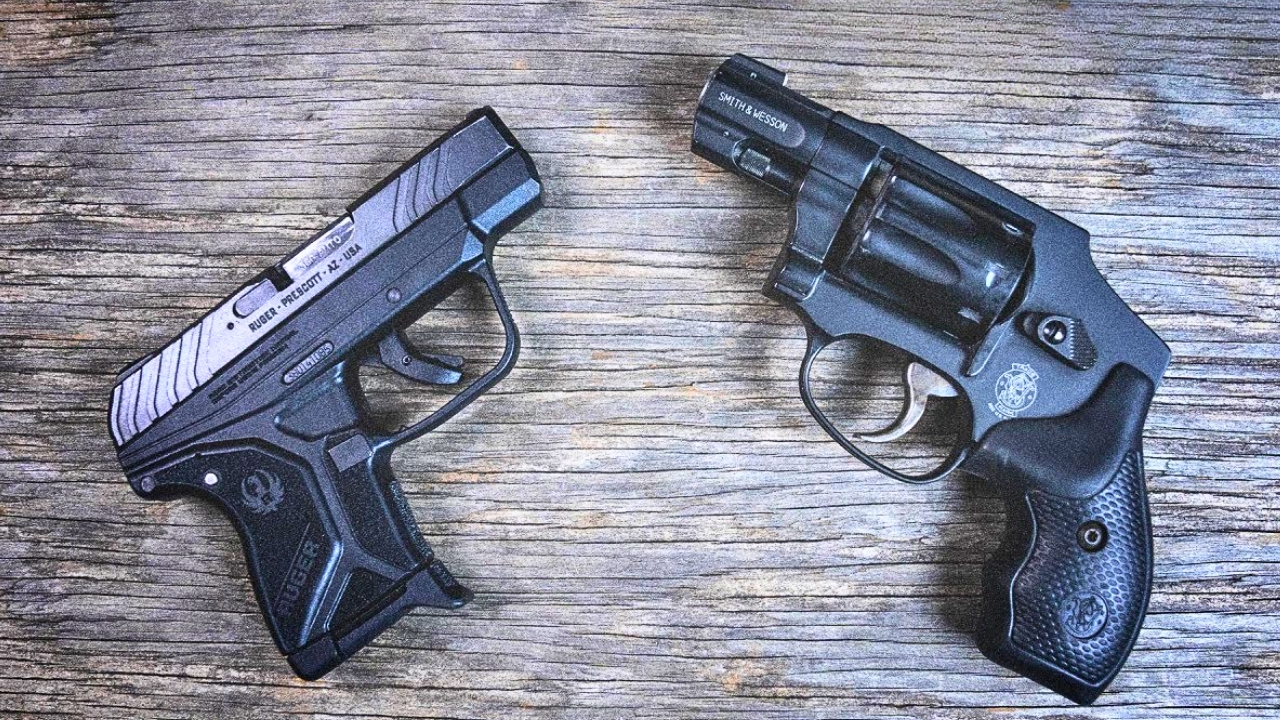
After a year of watching how people actually carry and shoot small guns—not just what they say online—the pocket pistol vs. snub revolver debate looks a lot less like “one is better” and a lot more like “each solves different problems, and both punish lazy choices.” Tiny semi-autos offer more capacity, faster reloads and better sights in most cases, but they are more sensitive to grip, ammo and maintenance. Snub-nose revolvers give you a short, simple manual of arms and almost complete indifference to holster lint or a slightly off grip, but they are harder to shoot well past a few yards and reload slowly unless you practice. The pattern that shows up in classes is simple: the shooter who trains with whichever one he picked tends to do fine; the one who picked based on a spec sheet and never trained struggles no matter what’s in his pocket.
Where the snub quietly keeps its edge
The snub’s real advantage shows up when conditions are ugly and user error creeps in. A decent small-frame .38 will usually fire when the trigger is pressed, even with hard primers, awkward grips or the muzzle pressed into clothing in a true contact-distance fight, and you don’t have to worry about it being knocked out of battery by a jacket or a bad index. It shrugs off pocket lint, sweat and a surprising amount of benign neglect so long as you occasionally clear under the extractor star and check screws, which is why older detectives and instructors who’ve seen a lot of real incidents still keep one around. The flip side is that heavy double-action pulls, short sight radius and tiny notches make it unforgiving past a few yards, so anyone who chooses a snub has to accept that dry-fire reps and dedicated live-fire practice are the price of actually being able to hit with it under stress.
Where the pocket pistol pulls away
Modern micro-9s and .380s have changed what “pocket-sized” means compared with the old days of tiny .25s and clunky blowbacks. Today’s small pistols often come with usable sights, better triggers, more ergonomic frames and magazines that hold somewhere between eight and twelve rounds, which gives most competent shooters more hits, faster follow-ups and more chances to solve a problem without reloading. They tend to be flatter, easier to hide in light clothing and easier to adapt to appendix or IWB carry if you move away from strict pocket use, and aftermarket support for holsters and sights is usually stronger than it is for snubs. The catch is that they demand more from the shooter: weak grips, poor ammo choices and lack of maintenance show up quickly as failures to feed or eject, and the people who run them successfully are almost always the ones who have put in a few hundred rounds of their chosen load to vet the gun before trusting it.
Training and drawstroke matter more than platform
Across force-on-force classes and live-fire courses, the shooters who actually get the gun into the fight efficiently are the ones who committed to a consistent draw and carry method, not the ones who picked the “right” platform on paper. Snubs often draw cleanly from deeper pocket holsters because there’s no slide to snag and the grip shape can be easier to index, while small autos can come out of slim appendix rigs faster and with better initial grip, which pays off on follow-up shots. Where things go wrong is when people split time between pocket, ankle, off-body and inconsistent holsters, or when they never test their draw against a timer or in realistic cover garments. The truth after a year of watching both sides is that you can make either format work if you pick quality gear, vet it, and train; you can also make either fail badly if you shortcut those steps and expect the gun to do the work for you.
How most serious carriers end up deciding
For most serious carriers, the choice eventually comes down to lifestyle and honesty about practice. If recoil and arthritic hands are a concern and you know you won’t shoot often, a good snub with sensible .38 +P loads and a real holster is still a strong answer up close. If you’re committed to regular range time and want better sights, higher capacity and quicker reloads, a vetted micro-9 in a quality rig is usually the better long-term tool. Very often, the compromise people land on is a primary compact pistol on the belt when clothing and life allow, with a snub or tiny semi-auto used as a true backup or deep-concealment option. The “truth” isn’t that one kills the other; it’s that both ask you to take them seriously if you expect them to work when everything goes sideways.
Like The Avid Outdoorsman’s content? Subscribe to our newsletter so you never miss an article.
Here’s more from us: