Photo credit: The Avid Outdoorsman
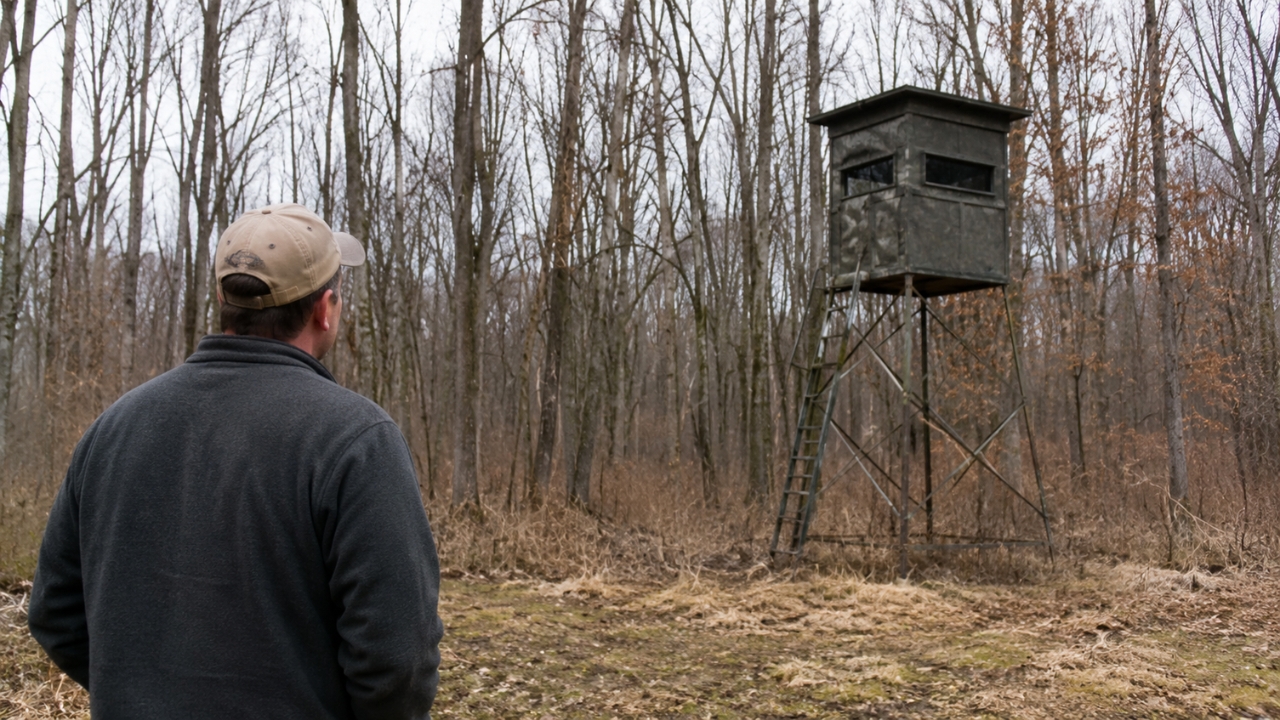
The property owner said he was used to finding deer stands on his land, but this one was different. According to the Reddit post, he owned a few hundred acres of woodland in Wisconsin, and the property was clearly posted with signs, gates, and fencing.
The Reddit thread can be found here: https://www.reddit.com/r/legaladvice/comments/q5xerv/can_i_destroy_free_standing_deer_stands_on_my/
He said most of the stands he removed were cheap handmade stands attached to trees. Those did not bother him in the same way. They were nailed or bolted into trees on posted private land, and he already believed he could remove and destroy them.
But this year, he found a freestanding stand.
That changed the question. The stand was not nailed into a tree. It was apparently a large structure sitting on the property, and someone suggested that because of its value, the owner might not be able to simply pull it down with chains or destroy it. If he removed it, he might need to do it carefully, disassemble it, or handle it in a way that did not create a new civil dispute.
That is where the frustration comes in for landowners. Someone else had no business putting a hunting stand on posted land in the first place. The property had signs at road entrances, signs around the edges, and fencing on one side. The owner was not describing an unmarked boundary in the middle of nowhere. He was describing land that had already been made clear to outsiders.
Authorities had already been notified. The owner said they would add extra patrol in the area where they believed the trespassers entered, and they posted a notice on the stand. But when he asked what would happen if he removed it, he said he was told it was a civil matter.
That answer left him in the awkward middle. On one hand, the stand was on his private land without permission. On the other hand, the stand itself likely belonged to someone else. Destroying it out of anger might feel fair, but it could create a separate argument over property damage.
The bigger concern was what the stand represented. A deer stand is not just litter. Someone likely carried it in, picked a hunting location, and planned to use the land. If the property is posted and gated, that suggests a person either ignored the boundaries or intentionally crossed them. Either way, the landowner had a right to take it seriously.
Several commenters pushed him toward the game warden or Wisconsin DNR, not because police could not help at all, but because hunting trespass is exactly the kind of issue wildlife officers handle. They know the difference between a lost hiker, a property-line mistake, and someone setting up to hunt where they do not have permission.
There was also a practical suggestion: document it, post notice, and possibly use a trail camera to identify whoever came back. If the stand owner returned to hunt or retrieve it, that would give the landowner better proof of who was using the property.
Commenters repeatedly told him to contact the game warden, DNR, or state wildlife resources. One commenter said wildlife officers know these laws well and can help with the right course for removal and handling possible poachers.
Others said taking the stand down and turning it in could be cleaner than destroying it. One suggestion was to remove it, bring it to police, and leave a sign saying the stand had been removed from private property and could be reclaimed there.
Some commenters warned that just because something is on your land does not automatically make it yours to destroy. One person compared it to someone parking a car in your driveway. It should not be there, but that does not mean you can smash it.
A few people said the repeated stand problem sounded like trespass and possible poaching, especially because the property was posted. They recommended letting the game warden know this was a continuing issue and using trail cameras to see who was installing or checking the stands.
The post ended with the landowner stuck between anger and caution. He had every reason to want the stand gone. But the smarter move was not dragging it down with chains in frustration. It was documenting the stand, involving the DNR or game warden, and making sure the person who placed it had to answer for hunting on posted private land.
Like The Avid Outdoorsman’s content? Be sure to follow us.
Here’s more from us: