Photo credit: Theavidoutdoorsman.com
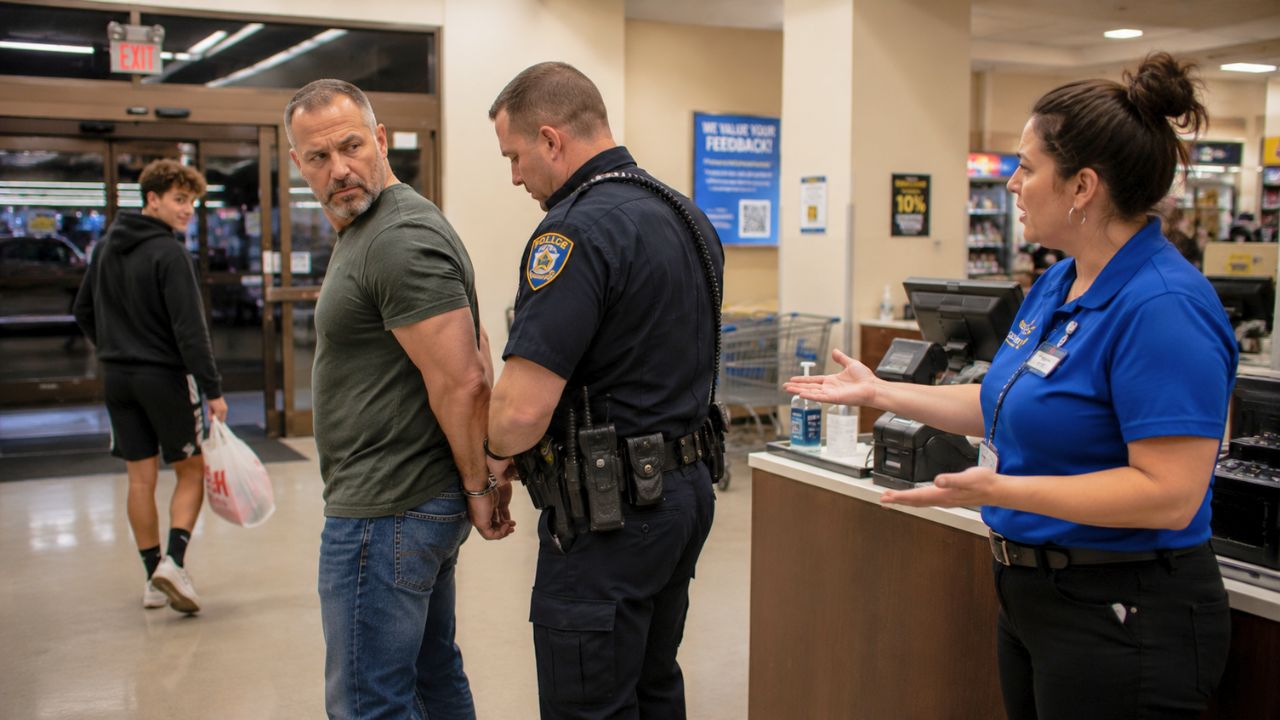
A guy does everything “right” in the moment—keeps his cool, keeps his distance, calls the cops, and stops a theft from turning into a foot chase through a parking lot. Then, when the patrol car finally rolls in, he’s the one who ends up in handcuffs while the suspected shoplifter heads out the door.
That’s the kind of mess that leaves concealed carriers shaking their heads, not because they want trouble, but because they’re trying to avoid it. And it’s a reminder that the line between “helpful citizen” and “liability” can get drawn fast when a store decides it wants no part of the aftermath.
The stop happened in that awkward space between “employee” and “bystander”
The situation started like most retail thefts do—somebody stuffing items, looking over their shoulder, and making a beeline for the exit like they’ve got a hot date. A store employee noticed, but like a lot of places these days, staff weren’t exactly eager to go hands-on.
Out in the front area, another customer—licensed and carrying concealed—picked up on the commotion. He didn’t draw a gun. He didn’t chase anyone through aisles. Instead, he stepped into the shoplifter’s path near the doors and used plain, firm commands to get the person to stop and sit tight.
From the way it was described, it wasn’t some “hero moment.” It was more like what you’d do if you saw someone trying to slip a four-wheeler off a trailer at the feed store. Keep it from getting worse until the people paid to handle it arrive.
Holding someone for police is where things get legally touchy
Depending on the state, a “citizen’s arrest” can be a real thing—or a fast way to catch charges if you don’t meet the exact conditions. Even in places where it’s allowed, you usually need clear authority: witnessing a crime, having probable cause, and using only reasonable force.
That last part is where regular folks get burned. What feels “reasonable” to you in the moment—standing in front of a door, grabbing a wrist, blocking someone from leaving—can get spun as unlawful restraint if the wrong person complains or if a store later decides it never wanted your help.
The concealed carrier in this case reportedly kept the suspected thief in place until police arrived. That’s the key phrase: “kept in place.” If that involved physical control, even minimal, you can see how the responding officer might treat it as more than just “I asked him to wait.”
When the store flipped, the responding officer’s options narrowed
The real twist was the store’s reaction once law enforcement showed up. Instead of backing the person who stopped the theft, management didn’t want to be involved. No statement. No willingness to sign a complaint. No desire to testify. And—this is the part that matters—they reportedly asked that the concealed carrier be arrested.
At street level, cops don’t get to freestyle a resolution. If the “victim” business won’t cooperate on the theft and the detained person says they were unlawfully held, you can end up with a situation where the easiest provable charge is the one tied to physical restraint.
That’s how you get the backwards outcome: the suspected shoplifter leaves because nobody wants to pursue the case, while the person who intervened gets booked because there’s a complainant and a clear set of actions that can be written up in a report.
It’s not that theft suddenly becomes legal. It’s that prosecution takes a willing victim and clean facts, and businesses often calculate that it’s cheaper to eat the loss than to deal with court dates and liability claims.
Why retailers often don’t want “help,” even when they need it
If you’ve spent any time around a big-box store, you’ve seen the quiet shift over the last decade. More cameras. More passive “customer service” greetings. Less direct confrontation. The reason is simple: lawsuits.
A retailer’s worst-case scenario isn’t a cart of stolen goods. It’s an injured suspect, a scuffle on video, a bystander getting knocked down, or a gun showing up in the story—even if it never leaves the holster. Once that happens, the risk meter pegs out.
So a lot of stores train employees to observe and report, not stop. And when a regular citizen decides to stop it anyway, the store may treat that person like an unapproved contractor who just created a liability problem.
From an outdoorsman’s perspective, it feels upside down. On the land, if somebody’s stealing from your shop or cutting a fence, you handle it or you call the sheriff. In a retail environment, the “handle it” part is often actively discouraged.
What people latched onto: the gun, the detention, and the “no good deed” lesson
Most folks didn’t fixate on the stolen merchandise. They focused on the fact that a concealed carrier got arrested in a situation where he never fired a shot and, by all appearances, was trying to prevent a bigger public-safety mess.
Some argued the carrier shouldn’t have gotten involved at all. That’s a fair point, especially if the stolen items were low-dollar and the suspect wasn’t threatening anyone. A concealed handgun isn’t a badge, and being armed doesn’t turn a customer into store security.
Others leaned the opposite direction: if society wants theft handled, somebody has to intervene, and police can’t be everywhere. They saw the store’s decision as the real problem—management choosing corporate risk control over consequences for theft.
But the practical takeaway most carriers ended up circling is this: once you put hands on someone, you’re in a different world. It doesn’t matter that you did it calmly. It doesn’t matter that your intentions were good. Now it’s a use-of-force event, and you may be the only one left holding the bill.
The practical options concealed carriers actually have in a store theft scenario
If you carry a gun daily, you’ve probably already made peace with one hard truth: you’re not carrying to protect a store’s inventory. You’re carrying to protect life—yours, your family’s, and the innocent person who gets targeted in the aisle or the parking lot.
That doesn’t mean you have to ignore everything. It means you pick actions that don’t trap you in legal quicksand. Being a good witness is underrated: get a description, note the vehicle, and call 911 early. If you can do so safely, record from a distance without escalating the situation.
If a theft turns into a robbery—force, threats, a weapon—now you’re in a different lane, and the decision-making changes fast. But the in-between situations, where it’s “just shoplifting,” are where armed citizens tend to get burned.
There’s also a real-world safety angle outdoorsmen understand: cornered animals fight. Cornered people do too. Blocking the exit can turn a petty theft into a hands-on fight in a crowded storefront, and that’s the last place you want a wrestling match when you’ve got a holstered pistol on your belt.
The best-case scenario is boring. The cops arrive, you point, you report, and you go back to buying your ammo and socks. The moment you become the one physically “holding” someone, you may be the person everyone points to when it’s time to assign blame.
Stories like this don’t make me think less of carrying. They make me think more carefully about when to act, what “reasonable” really looks like in public, and how quickly a well-intended move can turn into a legal headache when the business decides it wants to wash its hands of the whole thing.
Like The Avid Outdoorsman’s content? Be sure to follow us.
Here’s more from us: