Photo credit: The Avid Outdoorsman
A property owner said he found something strange on private land: a game camera that he did not put there and did not authorize anyone else to install.
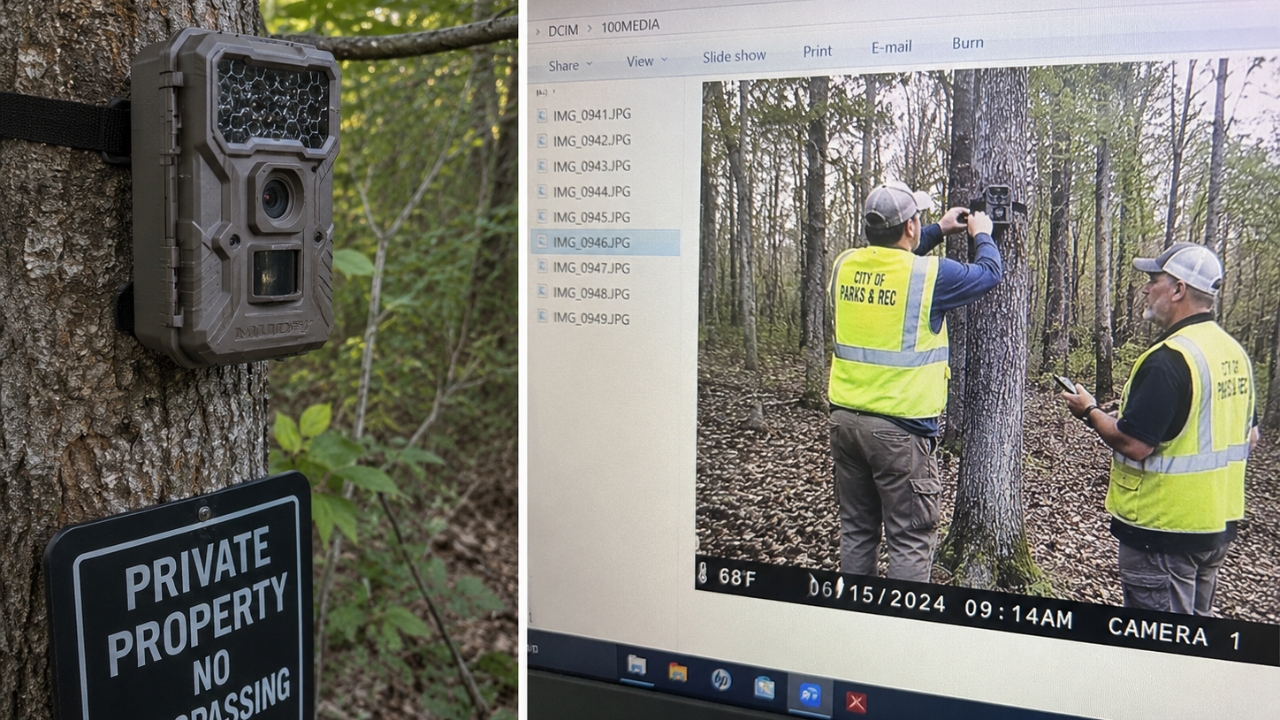
According to the Reddit post, the camera had been placed on private property by city workers. The twist was that the camera itself apparently captured evidence of who installed it. When the owner checked the SD card, he said it showed the workers setting it up.
That turned the situation from suspicion into something much more direct. The landowner was not just guessing who had been on the property. He believed the camera contained proof.
He explained the situation in a Reddit thread and asked what he could do after city workers allegedly trespassed and placed a camera on his land: https://www.reddit.com/r/legaladvice/comments/prgxjq/city_workers_trespassing_on_private_property_and/
The camera was the first problem
Trail cameras and game cameras are common on rural or wooded property.
Landowners use them to monitor deer, trespassers, livestock, gates, driveways, equipment, or remote areas where people do not pass every day. But when a camera appears without permission, it raises immediate questions.
Who put it there? Why was it placed there? What was it recording? How long had it been there? Was it pointed at wildlife, private activity, or something else?
For this property owner, the answer allegedly pointed back to city workers.
That made the situation more uncomfortable because the people involved were not random trespassers or hunters. They were government employees.
The SD card made the story harder to deny
The key detail was the SD card.
The poster said the camera recorded the workers installing it. That kind of evidence matters because trespassing complaints often turn into one person’s word against another’s.
A landowner might suspect who walked onto the property, but without photos, video, or witnesses, it can be hard to prove.
Here, the device itself allegedly provided the proof. If the images or video showed city workers placing the camera, the landowner had something concrete to bring to the city, police, an attorney, or whoever handled complaints about municipal employees.
That made documentation the center of the whole case.
City workers are not automatically allowed onto private land
One of the biggest issues was authority.
City workers may have reasons to enter certain areas in some situations. Utility work, easements, inspections, drainage issues, code enforcement, emergency repairs, and public infrastructure can all create complicated access questions.
But that does not mean city employees can freely walk onto any private property and install surveillance equipment without permission.
The legal answer would depend on whether there was an easement, right-of-way, municipal purpose, warrant, code issue, or some other authority.
That is why commenters focused on finding out why the workers were there and who authorized the camera.
The landowner needed to preserve the footage
The smartest first step was to make copies of the SD card.
If the camera captured city workers installing it, the owner needed to preserve that evidence before anything happened to the card, the camera, or the files.
That means saving the photos or videos in multiple places, keeping the original card if possible, and writing down the date and time the camera was found.
The owner should also take pictures of the camera in place before moving it, showing where it was mounted, what direction it faced, and how far onto the property it was.
Evidence is strongest when the whole scene is documented, not just the most dramatic clip.
The camera’s angle mattered
Where the camera was pointed could change the seriousness of the complaint.
If it was aimed at a drainage ditch, utility access point, or public-facing area, the city might claim it had some municipal purpose. If it was pointed toward a home, yard, driveway, private building, or area where the owner expected privacy, the situation would feel much more invasive.
That is why the landowner needed photos showing the camera’s field of view.
A city employee installing a camera on private property is already questionable if there was no permission. A city employee installing a camera that captures private family activity or the inside edge of a home would raise even more concern.
The owner needed to know exactly what the camera could see.
Commenters wanted him to check for easements
A lot of property disputes involving cities come down to easements.
A utility easement, drainage easement, sewer easement, road right-of-way, or maintenance access area can give a city some rights on private land. Those rights can be broad or narrow depending on the documents.
If the camera was placed inside an easement, the city might argue it had a reason to be there. But even then, installing a camera may not automatically fall within the allowed use.
The landowner would need to check the deed, survey, plat, property records, or city documents to see whether any easement existed where the camera was found.
That would help separate an ordinary trespass from a more complicated government-access dispute.
Calling the city directly could create a paper trail
One practical move was to contact the city in writing.
The landowner could ask why city employees entered the property, who authorized the camera, what the camera was intended to record, how long it had been there, and whether the city claimed any legal right to place it there.
Doing that in writing matters.
A phone call can disappear. An email, certified letter, or written complaint creates a record. It also forces the city to either explain the action or avoid answering.
If the city admits it placed the camera, that is useful. If the city denies it despite footage showing workers installing it, that creates a different problem.
Police might not be the only route
Some commenters likely would have suggested calling police for trespassing.
That may be reasonable, especially if the city had no authority to be there. But when the alleged trespasser is a city employee acting during work, police may not treat it the same way they would treat a random person sneaking onto land.
That does not mean the owner has no options.
A complaint to the city manager, mayor’s office, public works department, code enforcement supervisor, city attorney, or inspector general-style office may be more effective depending on the local setup.
If the city refuses to explain itself, a private attorney may be the next step.
A lawyer could help if the city stonewalls
When a private person trespasses, the path is often more straightforward.
When a government employee does it, the process can be more complicated. There may be notice requirements, municipal immunity rules, public records issues, easement claims, and internal complaint procedures.
That is why commenters often point people toward a local attorney when city action is involved.
A lawyer could review the property documents, determine whether the city had access rights, send a demand letter, and request records showing who approved the camera.
The landowner did not need to guess whether the city was allowed to do it. He needed someone who could read the documents and push for answers.
Public records requests might reveal the reason
Another useful angle was a public records request.
If the camera was placed by city workers, there may be emails, work orders, complaints, reports, photos, code enforcement notes, or department instructions explaining why they were there.
A records request could reveal whether the city was investigating something, monitoring drainage, responding to a neighbor complaint, or acting without proper authorization.
That information could help the landowner decide whether this was a mistake, an overreach, or part of a larger dispute.
It could also show who was responsible.
The landowner should avoid damaging the camera
The camera being on private land may make the owner angry, but smashing it would be a mistake.
If the camera belonged to the city, destroying it could create a new argument and shift attention away from the alleged trespass. The smarter move would be to photograph it, preserve the footage, remove it carefully if appropriate, and store it safely while asking the city to explain.
That keeps the landowner in the stronger position.
He can say he found unauthorized equipment on his land, documented it, and asked for an explanation. That sounds much better than admitting he destroyed government property in frustration.
The story was about boundaries and authority
The most unsettling part was not simply that a camera appeared.
It was who allegedly placed it.
A random trespasser with a game camera is annoying. City workers placing a camera on private land without clear permission raises bigger questions about authority, privacy, and whether government employees stayed within their lane.
The practical advice was to preserve the SD card, photograph the camera and its location, check for easements, contact the city in writing, consider a public records request, and talk to a local attorney if the city cannot give a clear legal reason.
Because private land does not stop being private just because the person crossing the line is wearing a city uniform.
Like The Avid Outdoorsman’s content? Subscribe to our newsletter so you never miss an article.
Here’s more from us: