Photo credit: The Avid Outdoorsman
The 1911 jammed.
That was the first problem.
The second problem was what the shooter did next.
In a Reddit thread, gun owners were talking about the dumbest things they had seen at a range, and one story involved a shooter whose 1911 jammed. Instead of keeping the muzzle pointed safely, asking for help, or clearing the malfunction at the bench, he threw the gun downrange.
Then he started walking after it.
While people were still shooting.
That is not a small range mistake. That is the kind of thing that can shut a whole line down instantly because it breaks several layers of safety at once. A jammed gun is still a gun. It may have a live round in the chamber. It may have a round partially fed. It may be under spring tension. It may be one careless movement away from firing if someone handles it wrong.
Throwing it downrange does not make it safer.
It makes the whole situation more chaotic.
A firearm malfunction can frustrate people, especially new shooters. A slide locks up. A round does not feed. A case wedges somewhere ugly. The shooter feels embarrassed because other people are around, maybe watching. The instinct is to make the problem go away fast. But range safety depends on doing the opposite: slow down, keep the muzzle in a safe direction, finger off the trigger, and get help if you do not know what to do.
That shooter skipped all of that.
Throwing the pistol downrange created a new problem for everyone else. Now there was a gun sitting out in front of the firing line, and the person who threw it apparently decided to walk out and retrieve it before the range was cold. That is where the story goes from foolish to dangerous.
Nobody walks downrange while the line is hot.
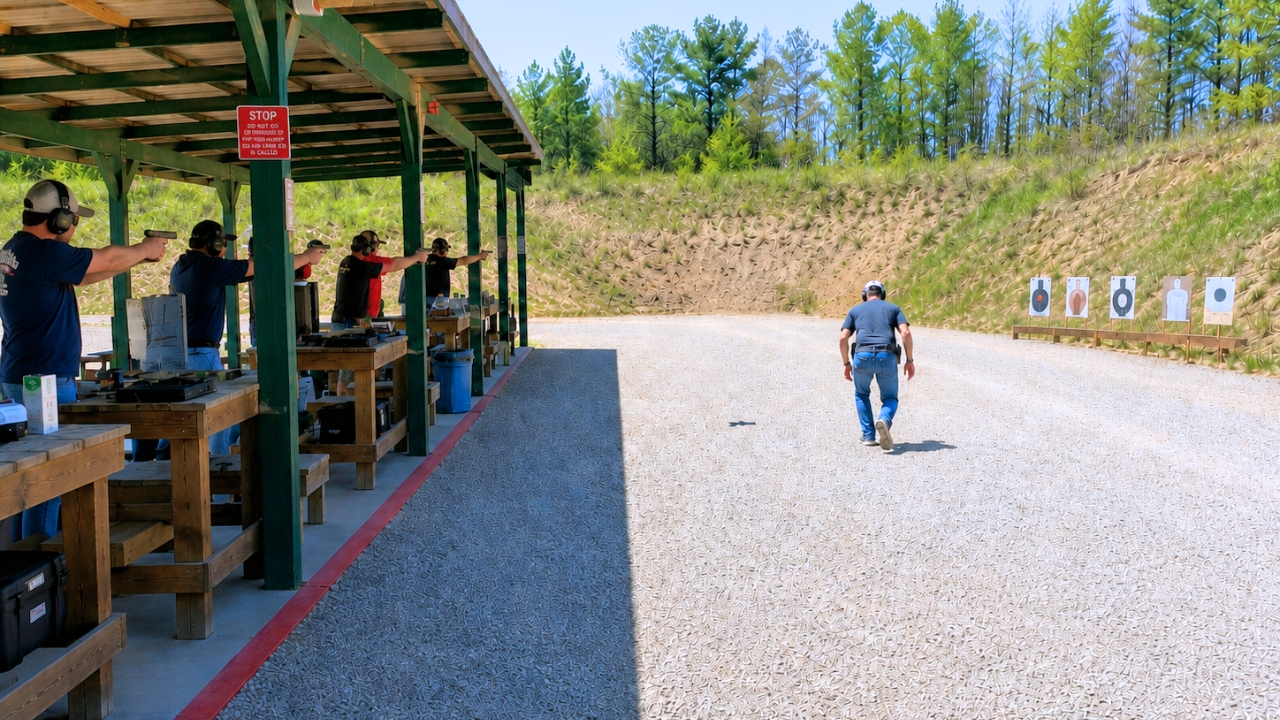
That is one of the clearest range rules there is. If people are still shooting, the area downrange is off-limits. It does not matter if you dropped a magazine, left a target, lost a hat, or threw your own jammed 1911 out there in a moment of panic. The answer is not to step in front of active shooters. The answer is to call for a ceasefire and wait until the range is safe.
A person walking downrange during live fire puts every shooter on the line in a terrible position. Some may notice immediately. Some may have ear protection on and be focused through sights. Some may be mid-string. Some may not see him until he is already where no one should be. That is how a dumb decision becomes a tragedy before anyone has time to argue about it.
The fact that this happened over a jammed pistol makes it even more frustrating.
Malfunctions are normal. Every shooter should expect them eventually. Semi-autos can fail to feed, fail to eject, stovepipe, double-feed, or lock up. A 1911 can be picky with magazines, ammo, lubrication, or extractor tension. None of that is rare enough to justify panic. It is part of shooting.
But the shooter’s reaction showed he was not prepared for the malfunction.
That is one of the first things people should learn before live fire. If the gun stops unexpectedly, keep it pointed downrange. Do not turn around with it. Do not wave it at a buddy. Do not set it down pointed sideways. Do not start picking at it with your finger near the trigger. And definitely do not throw it past the firing line like it became radioactive.
A range officer, instructor, or experienced shooter can help clear a stuck gun safely. But they can only help if the shooter keeps control of it.
The scene must have been wild for everyone nearby. One second, people are shooting. The next, a pistol goes flying downrange, and the owner starts heading after it like he dropped a set of keys. You can almost feel the collective panic from the line. Someone had to yell. Someone had to call ceasefire. Someone had to stop him before he walked into a place where bullets were going.
That is the kind of thing that makes range officers age five years in 10 seconds.
The safer lesson is simple: embarrassment is not an emergency. If your gun jams, you can be embarrassed and still safe. You can raise your support hand, keep the muzzle pointed downrange, and ask for help. You can step back if allowed while keeping the firearm in a safe direction. You can wait for a range officer. Nobody worth listening to is going to mock a shooter for asking how to safely clear a malfunction.
They will absolutely judge a shooter for throwing a gun and walking downrange hot.
The story also shows why ranges are strict. Some people think range commands are overkill until they see what happens when one person improvises. Hot range, cold range, ceasefire, fingers off triggers, actions open, firearms benched — those rules exist because one confused person can put everyone at risk.
A jammed 1911 is fixable.
A person walking into active fire may not be.
The shooter probably learned the hard way that panic handling is worse than a mechanical problem. The gun could have been cleared. The range could have gone cold. Someone could have retrieved it safely. Instead, his reaction turned one malfunction into a full-line safety scare.
The pistol jammed.
The shooter’s judgment jammed worse.
Commenters treated the story as one of the clearest examples of why range rules exist.
Several people said a jammed gun should stay pointed in a safe direction while the shooter gets help. A malfunction does not make the firearm harmless, and it definitely does not justify throwing it downrange.
Others focused on the downrange walk. Nobody should step in front of the firing line until a ceasefire is called and confirmed. Even if the gun, magazine, or target is sitting right there, the line has to be cold first.
A lot of commenters pointed out that embarrassment makes people do stupid things. The right response is to slow down, not rush. Ask for help before turning a mechanical issue into a safety emergency.
Some also said range officers are there for exactly this kind of moment. If a shooter does not know how to clear a malfunction, getting help is responsible, not shameful.
The main lesson was simple: a jammed gun is a problem. Throwing it downrange and walking after it during live fire is a whole new level of dangerous.