Photo credit: Elena Perova/istock.com
You can tell pretty fast when somebody’s outdoor confidence depends on the little signal bars in the corner of a screen. Everything seems fine while service is strong. They’re checking apps, pulling up maps, texting updates, watching weather, and acting like they’ve got the whole day covered. Then the signal drops, and all of a sudden the whole rhythm changes. Now they’re unsure, slower, more irritated, and a whole lot less certain about what comes next. That’s usually when I start thinking this person has never really had to do any of this without cell service before. I don’t mean they’ve never been somewhere remote. I mean they’ve never had to rely on their own planning, awareness, and judgment once the phone stopped being useful. There’s a difference. Plenty of people go outdoors now with a phone in their pocket. Nothing wrong with that. The problem shows up when the phone is not just a helpful tool but the main support beam holding up everything from navigation to confidence to basic decision-making.
The first clue is panic when the map won’t load
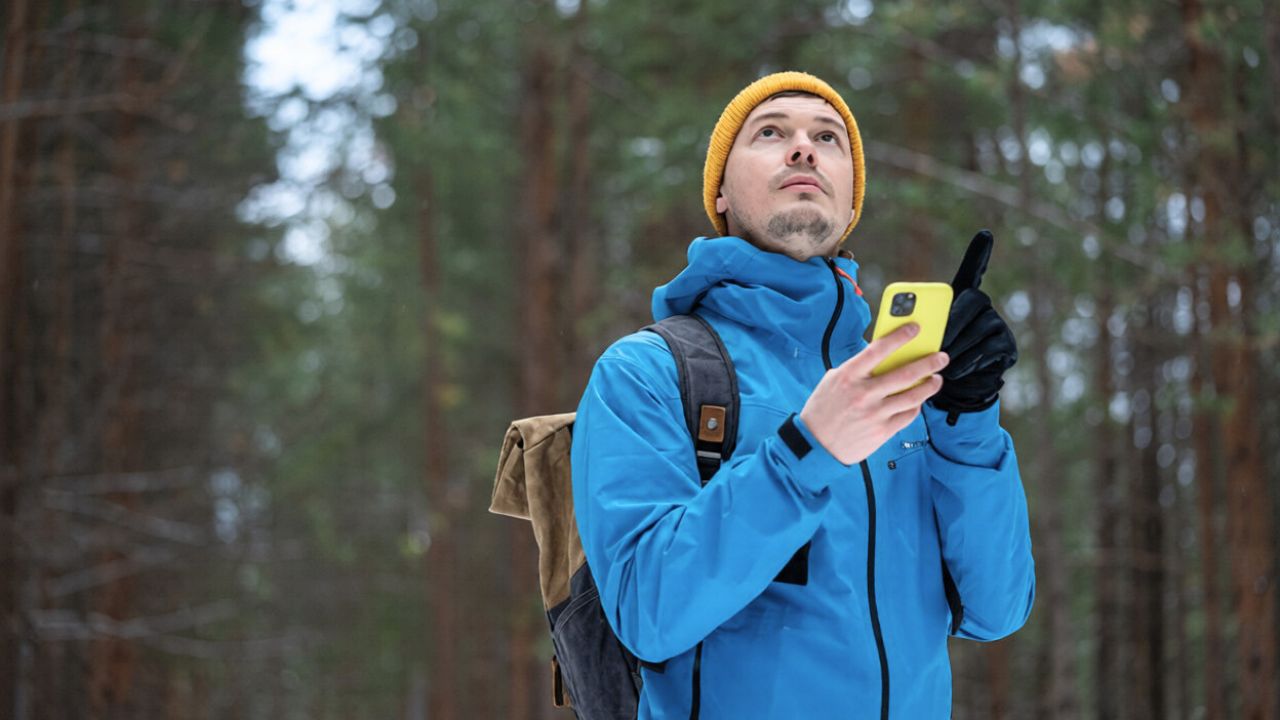
One of the clearest signs is how fast somebody gets uneasy when their digital map stops loading. If a man can’t make sense of where he is without pinching and zooming a blue dot, that tells me he’s been outsourcing too much of the job. I’m not against map apps. I use them. They’re useful. But they work best when they support awareness, not replace it. A person who has really spent time in low-service country usually keeps a mental picture of access points, terrain features, direction of travel, landmarks, and backup routes. He pays attention while moving. He doesn’t just follow a screen like a delivery driver in the woods. When service cuts out, he may be annoyed, but he doesn’t emotionally come apart. The guy who’s never had to do this without a phone gets different fast. He starts second-guessing easy decisions, looking around like the trees moved, and acting like the whole world suddenly became unfair because his digital crutch quit talking to him. That’s not wilderness savvy. That’s dependence wearing a camo jacket.
If your whole weather plan lives on your phone, you’re underprepared
Another giveaway is when somebody has no weather awareness beyond whatever the app said a few hours ago. The minute there’s no service, they stop thinking like the sky might still be sending signals they could read without a touchscreen. Wind changes, cloud buildup, pressure shifts, temperature drops, and that certain feeling the woods get before weather rolls in all still matter when the bars disappear. Men who’ve spent enough time outside without cell service learn to watch that stuff because they had to. They got used to reading conditions directly instead of waiting for a phone to summarize them. The service-dependent crowd tends to treat weather like a streaming update instead of a physical reality happening around them. That’s how you end up underdressed, caught out too far, or surprised by something the woods had been hinting at for an hour. Good rain gear, an extra insulating layer, and a light emergency tarp from a place like Bass Pro all help, but the real habit that matters is expecting to think for yourself once the forecast goes silent. Some people still haven’t built that reflex.
Men who need to “just call somebody” tell on themselves fast
I also notice how often some people default to communication as their first solution to every inconvenience. They get turned around, a vehicle acts up, they’re running late, a route changes, or they need a decision made, and the first thing out of their mouth is basically, “I’ll just call.” Again, there’s nothing wrong with using a phone when you’ve got one. But when that’s your only real plan, it shows. No signal means no backup from somebody smarter, no easy handoff, no quick reassurance, and no outside voice telling you what you’re supposed to do next. Men who’ve actually had to operate without service learn to build more into themselves before the trip begins. They leave clearer plans. They carry more of the basics. They think through timing and contingencies. They know that once the signal goes away, the next good decision probably has to come from inside the truck, tent, boat, or treeline they’re already standing in. That changes the way you pack and the way you move. If a man has never had to live by that, it becomes obvious as soon as “just call somebody” stops being available.
Low-signal country punishes lazy planning
The hard truth is that no-service situations don’t create weakness so much as expose it. If a man packed carelessly, failed to note landmarks, skipped the paper map, ignored time, and relied on constant connectivity to smooth over the details, then losing service just reveals what was already true. That’s why I’ve become such a believer in basic redundancies. A printed map. A compass you actually know how to use. Offline maps downloaded ahead of time. A written meeting point. A flashlight that is not dependent on the phone battery you’re draining with every anxious screen check. A small power bank helps, sure, but it’s not a substitute for having a brain and a backup plan. The people who struggle most without service are usually not unlucky. They’re just underprepared in a way modern convenience allowed them to hide. Years ago, more men expected to be out of touch by default. Now some people act like losing signal is a freak emergency, when really it’s just a normal part of being far enough out that the place still deserves respect.
Real confidence gets quieter when the phone quits working
One thing I’ve noticed over and over is that genuine field confidence and phone-based confidence feel different. Phone-based confidence is chatty. It’s always checking, confirming, sending, pulling up one more thing. Genuine confidence is quieter because it’s built on observation, habit, and planning rather than constant access to answers. That doesn’t mean the calmest guy knows everything. It means he knows enough to keep moving without melting down when the screen stops helping. He notices drainages, roads, trail cuts, sun position, wind, and time. He pays attention to how long the walk in actually took, not just what the app claimed. He watches for what could become a problem before it becomes one. The guy who’s never had to do this without service usually doesn’t have those muscles built yet. Once the phone gets weaker, so does he, and everybody around him can feel it. That’s not me being harsh. It’s just the truth of how fast modern tools can cover for missing old-school habits until those tools suddenly go quiet.
Cell service is great, but it should never be your backbone
I’m glad we’ve got better tech now. I like good mapping tools, weather apps, texts that keep family updated, and the peace of mind that comes from a quick check-in when service is there. I’m not trying to romanticize being disconnected for its own sake. But I do think a lot of people have let convenience become backbone, and those are not the same thing. Backbone is what still works when the battery dies, the service drops, and the easy answers disappear. It’s the part that remembers where the truck is, what ridge you crossed, how much daylight is left, and what the original plan was supposed to be. A man doesn’t need to reject modern tools to build that. He just needs to stop treating them like they are the only thing standing between him and confusion. If I’m around someone who gets visibly shaky the moment the bars disappear, I know I’m looking at a guy who’s had plenty of signal and not enough practice doing the hard part with his own head. That lesson gets expensive faster than most people think once real distance, darkness, weather, or bad timing join the conversation.
Like The Avid Outdoorsman’s content? Subscribe to our newsletter so you never miss an article.
Here’s more from us: