Photo credit: Burn Casanova/YouTube
The .40 S&W is not the hot cartridge anymore. A lot of police departments moved back to 9mm, ammo costs more than 9mm, and modern defensive loads have made the old caliber arguments less convincing than they used to be. That does not mean .40 suddenly stopped working.
For shooters who still like it, the key is choosing the right pistol. The best .40s usually have enough size, weight, grip, and spring setup to control the sharper recoil impulse. Tiny .40s can be unpleasant, but a well-built service pistol in .40 can still shoot flat, hit hard, and make a lot of sense for people who already own the caliber.
Smith & Wesson M&P40 M2.0
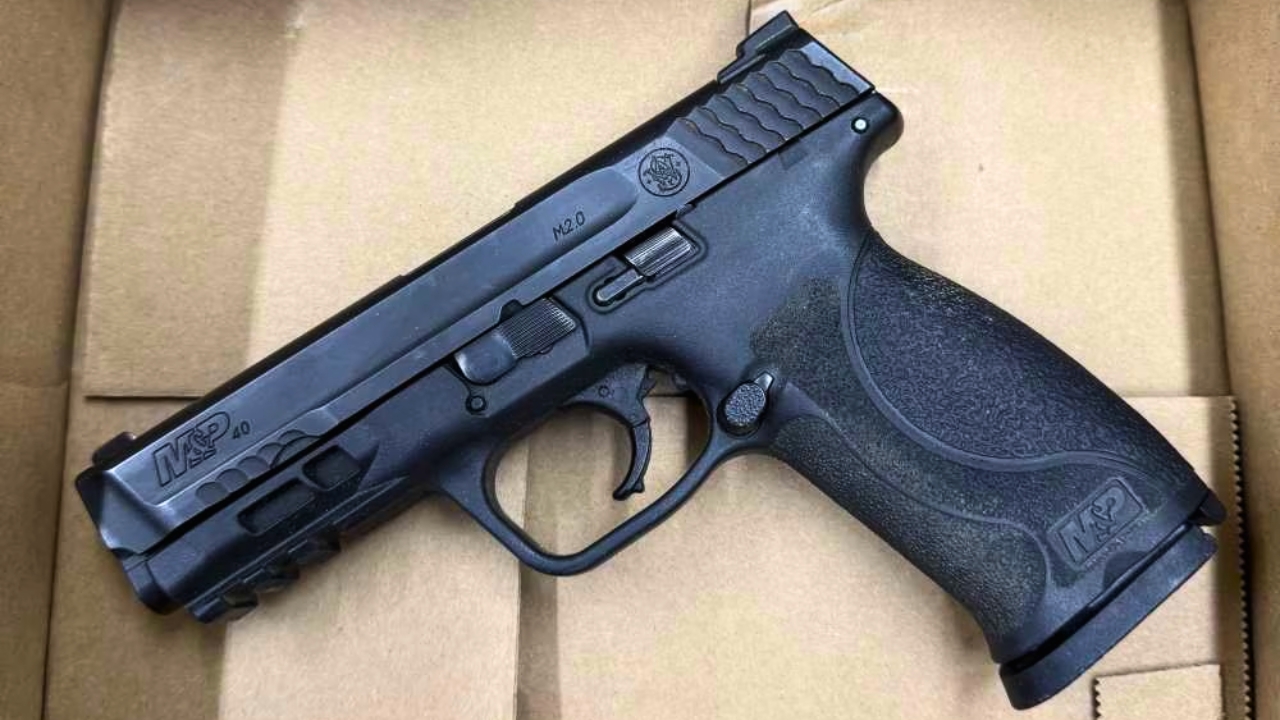
The M&P40 M2.0 is one of the easiest .40 S&W pistols to recommend because Smith & Wesson built the M&P line during the years when .40 still mattered. This was not an afterthought chambering added just to fill a catalog slot.
The grip texture helps control recoil, the frame shape fits a lot of hands, and the pistol feels like a serious duty gun. The M2.0 trigger is better than the older models, and the platform has strong holster and magazine support. If you still believe in .40, this is one of the most practical ways to own it.
Glock 23

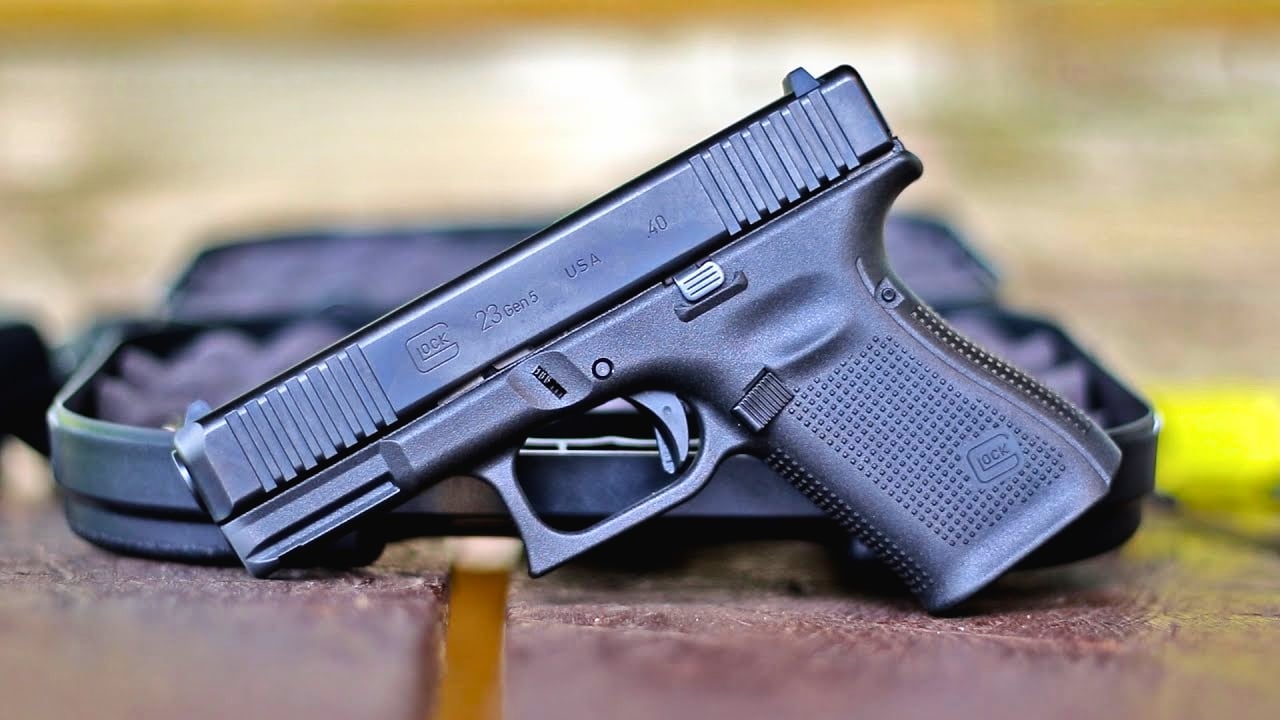
The Glock 23 has always been one of the classic compact .40 pistols. It gives you Glock 19 size with .40 S&W power, which is exactly why it was popular with law enforcement and concealed carriers for so long.
The Gen 5 version is the best one to buy if you want a modern Glock in this caliber. It has better recoil control than many older compact .40s, no finger grooves, and the updated Gen 5 features. It is still snappier than a Glock 19, but it is also one of the most supported .40 pistols ever made.
Glock 22 Gen 5

The Glock 22 is the full-size .40 pistol most people picture first. It was everywhere during the .40 duty-gun era, and that history still matters if you want magazines, holsters, parts, and familiarity.
The full-size frame helps tame the cartridge better than smaller guns do. A Glock 22 is not fancy, but it is simple, rugged, and easy to keep running. For home defense, range use, or anyone who wants a straightforward .40 that does not feel cramped, the Glock 22 still makes a strong case.
SIG Sauer P229 .40

The SIG P229 may be one of the best .40 S&W pistols ever made. It was built around the pressure and recoil of .40 and .357 SIG, and it feels more settled than many pistols that were simply converted from 9mm.
The alloy frame gives it enough weight to calm the cartridge without making it unbearable to carry. The double-action/single-action trigger takes practice, but it gives the pistol a serious duty-gun personality. If you want a .40 that feels like it was made for the round, the P229 belongs near the top.
SIG Sauer P226 .40

The SIG P226 in .40 S&W is bigger than the P229, and that extra size helps on the range. It is heavy enough to shoot comfortably, accurate enough for serious practice, and durable enough for high round counts if maintained properly.
It is not the cheapest .40 to buy, but used examples can be very appealing. The P226 gives .40 S&W a stable platform with excellent balance and a proven duty history. Shooters who dislike snappy polymer .40s often change their tone after running the cartridge through a full-size SIG.
Beretta 96A1

The Beretta 96A1 is a smart .40 choice because it gives the cartridge a full-size metal pistol to work with. That matters. The extra weight and Beretta’s familiar open-slide design make the pistol feel smoother than many lighter .40s.
The 96A1 also has a rail and replaceable front sight, which makes it more useful than older 96 variants. It is not as common as the 92 series, and .40 Berettas never got the same love as their 9mm brothers. But for someone who still likes .40, the 96A1 is one of the better-shooting options.
HK USP40

The HK USP40 is one of the most important .40 S&W pistols because the platform was built during the cartridge’s prime. It is big, rugged, and overbuilt in the way HK fans appreciate.
That size works in its favor. The USP40 handles the cartridge with confidence, and the recoil reduction system helps keep it from feeling as harsh as many smaller .40s. The controls are not for everyone, and the pistol feels large by modern standards, but that is part of why it works. It gives .40 the room it needs.
HK P2000 .40
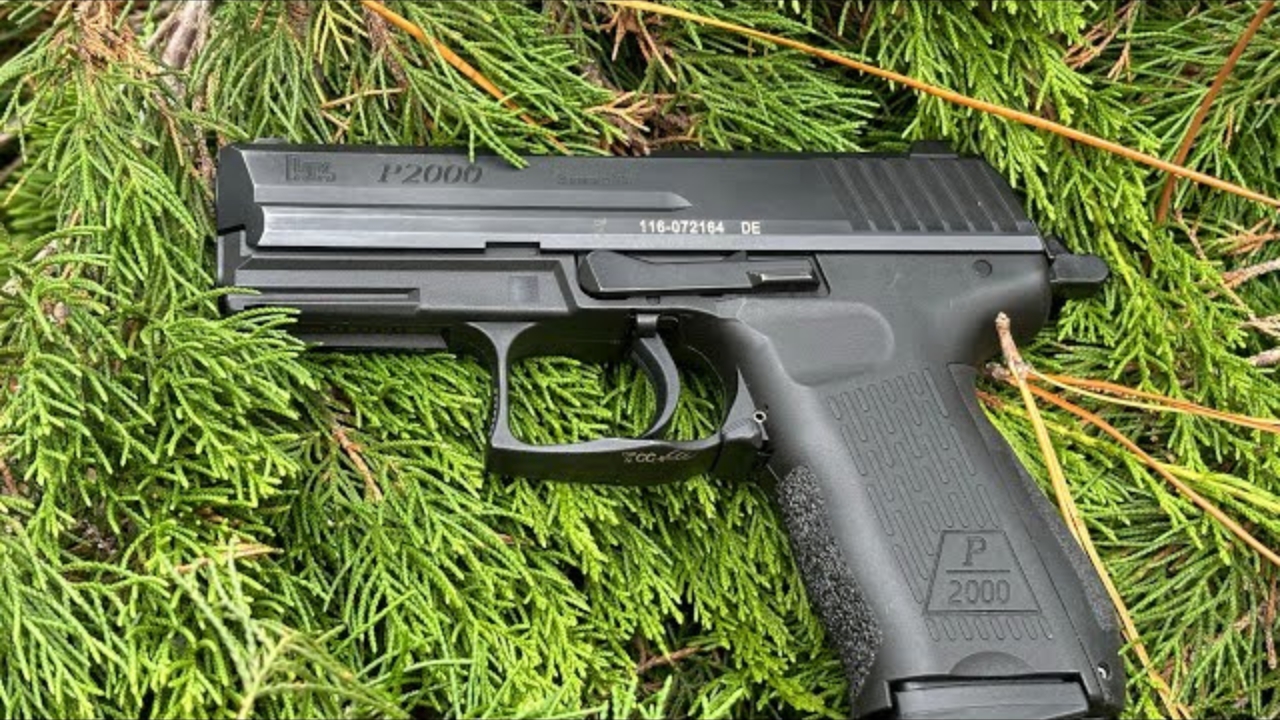
The HK P2000 in .40 S&W is a strong choice for people who want something more carry-friendly than a USP but still built with serious duty use in mind. It has a better grip shape for many hands and a more compact profile.
The P2000 does not get as much attention as newer striker-fired pistols, but it is a very solid .40 platform. The recoil is sharper than the 9mm version, obviously, but the pistol feels durable and well-sorted. For shooters who like hammer-fired carry guns, this one deserves respect.
HK P30 .40

The HK P30 in .40 S&W is for shooters who care about grip fit. The interchangeable side panels and backstraps let you tune the pistol to your hand better than many older duty guns.
That matters with .40. A pistol that locks into your hand makes the sharper recoil impulse easier to manage. The P30 is not cheap, and the trigger system may not impress striker-fired shooters at first. But as a comfortable, durable, hammer-fired .40, it is one of the better modern choices.
Springfield Armory XD-M .40

The XD-M .40 gives .40 S&W a platform with enough grip, capacity, and weight to feel practical. The XD-M line was popular during the tail end of the .40 era, and the pistol still makes sense for people who like Springfield’s grip safety system.
The match-style barrel, decent trigger, and full-size frame help the pistol shoot better than smaller .40s. It is not as trendy as newer striker-fired options, but it handles the round well. If you already like XD pistols, the XD-M is one of the better ways to stay in .40.
Springfield Armory XD Service Model .40

The original XD Service Model in .40 S&W earned plenty of fans because it was affordable, rugged, and easy to shoot well enough for defensive use. It also came along when .40 still had a strong following, so it was not treated like an oddball chambering.
The grip angle, simple controls, and 4-inch barrel give it a practical balance. Some shooters dislike the grip safety, but others appreciate the extra layer of familiarity. It may feel dated today, but the XD .40 still fills the role of a straightforward working pistol for people who do not need the newest option.
Walther PPQ M2 .40

The Walther PPQ M2 in .40 S&W is one of the better-shooting striker-fired .40 pistols because of the trigger and ergonomics. The PPQ trigger was a major selling point, and that helps with a cartridge that punishes sloppy fundamentals.
It is snappier than the 9mm PPQ, but the grip shape and trigger make it easier to shoot accurately than many competitors. The pistol is discontinued in many forms now, but used examples are worth watching. If you want a .40 that still feels refined, the PPQ M2 deserves a look.
CZ 75B .40

The CZ 75B in .40 S&W gives the cartridge a steel-frame home, and that is exactly what .40 benefits from. The extra weight helps reduce snap, while the CZ grip shape keeps the pistol planted.
It is heavier than most carry guns, but that is not a downside on the range or nightstand. The .40 version does not get the same love as the 9mm CZ 75B, but it may be one of the better choices for shooters who already like the cartridge. A steel CZ makes .40 feel more civilized.
CZ 75 SP-01 .40
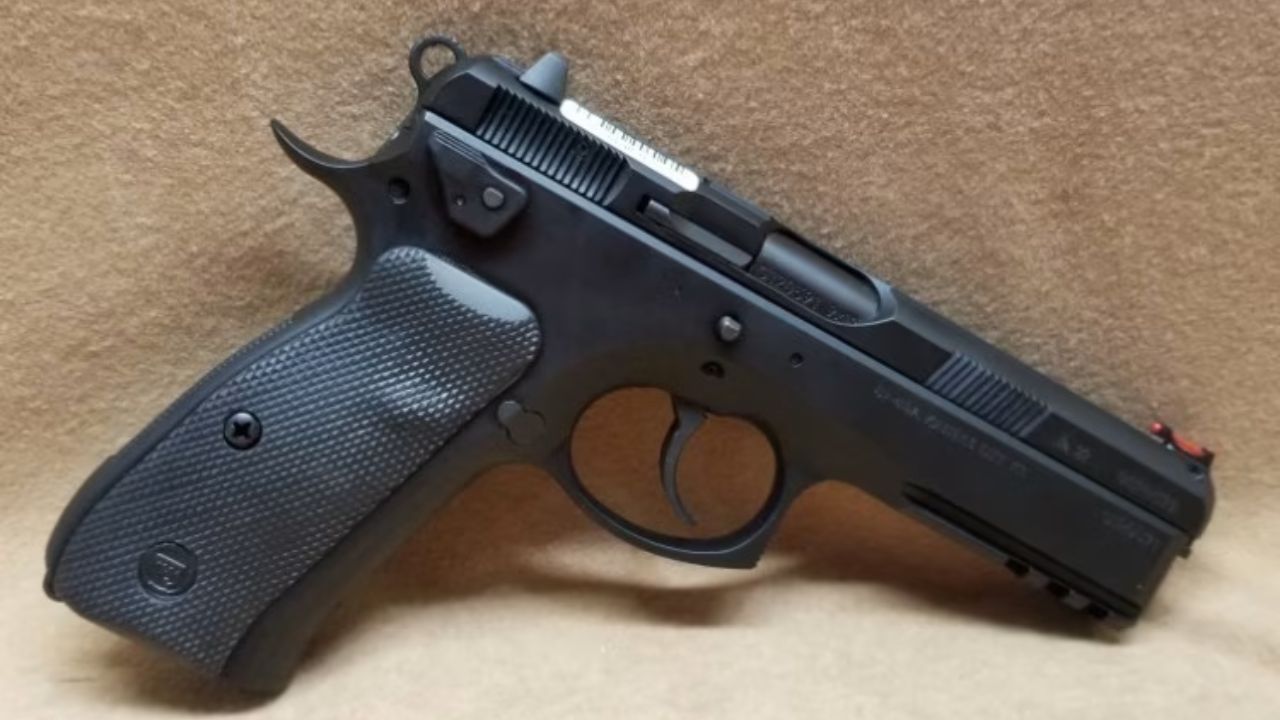
The CZ 75 SP-01 in .40 S&W is even more appealing if you want a heavier, softer-shooting .40 pistol. The full dust cover, rail, and steel frame give it the mass needed to keep recoil manageable.
This is not a lightweight carry gun. It is a range, home-defense, or competition-style .40 for people who want control. The SP-01 platform points naturally and shoots well, and in .40 it makes a lot more sense than people might expect. If you hate snappy .40s, this is the kind of pistol that can change your mind.
Glock 35

The Glock 35 was built for competition and duty shooters who wanted a longer-slide .40. It gives you a longer sight radius, more barrel length, and better tracking than the compact and standard full-size Glocks.
It is one of the best .40 Glocks if you actually want to shoot the caliber well. The size makes it less practical for concealed carry, but that is not the point. For range work, competition, and home defense, the Glock 35 gives the cartridge enough platform to behave. It is a reminder that .40 works better when the gun is not too small.
Smith & Wesson 4006
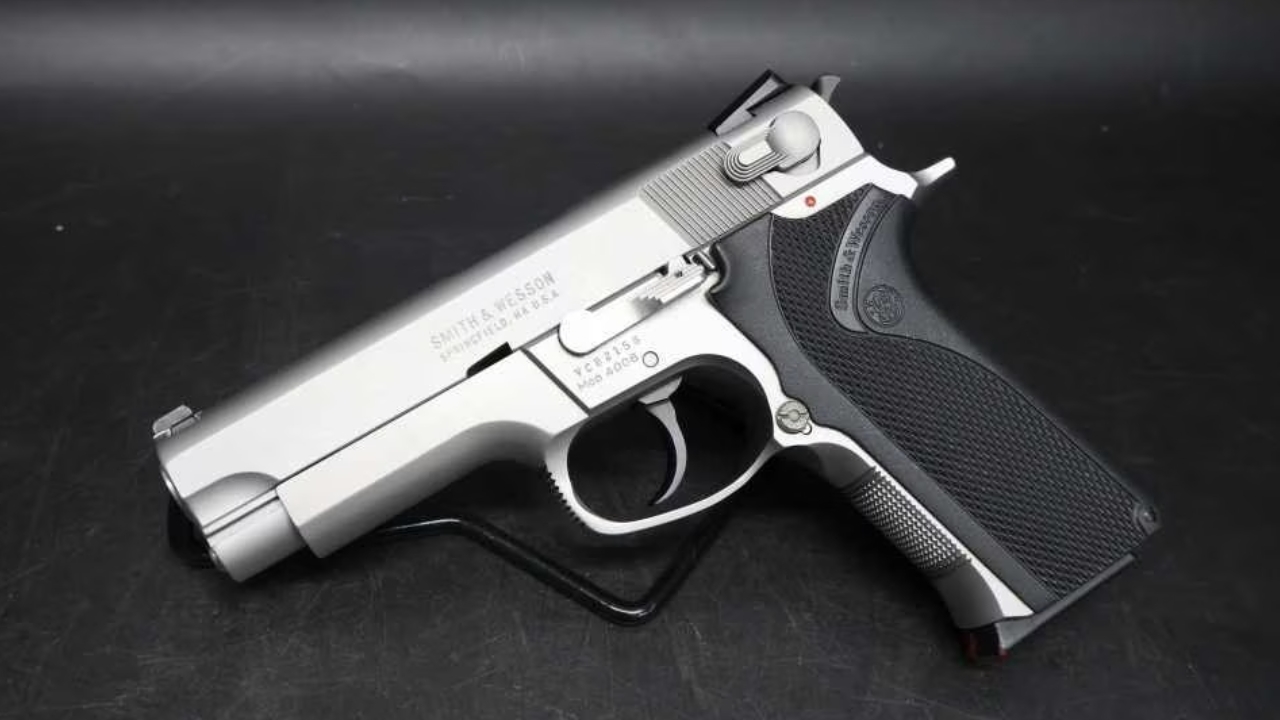
The Smith & Wesson 4006 is old-school, heavy, and built like a stainless tank. That is exactly why it still belongs on a list of great .40 pistols. It was made during the era when .40 was a serious law-enforcement cartridge, and it feels like it.
The weight makes recoil easy to manage, the construction inspires confidence, and the pistol has a duty-gun feel that newer polymer guns often lack. It is not something most people want to carry concealed, but as a range or home-defense .40, it is excellent. The 4006 makes the cartridge feel stable instead of snappy.
Smith & Wesson 4013

The Smith & Wesson 4013 gives you the third-generation Smith feel in a more compact .40 package. It is slimmer and handier than the 4006, but still has enough metal-frame confidence to feel serious.
It is not as soft-shooting as the bigger Smiths, but it carries better and still handles the cartridge with more class than many lightweight polymer compacts. For people who like traditional double-action pistols, the 4013 has a lot of appeal. It is one of those older .40s that feels better than the spec sheet suggests.
Beretta PX4 Storm .40

The Beretta PX4 Storm in .40 S&W is one of the most underrated pistols in the caliber. The rotating barrel system helps smooth out the recoil impulse, which makes a real difference with .40.
The full-size PX4 is especially good here because it gives the system more gun to work with. It may look strange, and the styling never won everyone over, but it shoots better than many people expect. If there is one polymer .40 that can make skeptics reconsider the cartridge, the PX4 is on the short list.
FN FNS-40

The FN FNS-40 is a practical striker-fired .40 that never got the same attention as Glock, M&P, or SIG. That does not mean it was weak. FN built it as a duty-style pistol, and it feels like one.
The grip texture, controls, and full-size frame make it manageable with .40 S&W. It is not fancy, but it is reliable, straightforward, and easier to shoot than many compact .40s. Used examples can be especially interesting for buyers who want a serious pistol without paying collector prices.
Steyr M40-A1

The Steyr M40-A1 is a strange-looking pistol, but it handles .40 better than many shooters expect. The low bore axis and grip angle help keep the muzzle under control, which matters with this cartridge.
The trapezoid sights are not for everyone, and holster support is not as broad as the bigger brands. But as a shooter, the M40-A1 has a lot going for it. It feels different in a useful way, and the recoil impulse is less unpleasant than people might assume. If you like oddball pistols that actually perform, this is a strong .40 option.
Like The Avid Outdoorsman’s content? Subscribe to our newsletter so you never miss an article.
Here’s more from us: