Photo credit: Thomas Torget/Shutterstock.com
Coyotes and nuisance critters make you care about two things fast: hit probability and what happens after the hit. You want a cartridge that lets you spot impacts, correct quickly, and still put animals down cleanly when the shot angle isn’t perfect. You also want a round that fits how you actually hunt—tight cover and quick shots, open fields with wind, night work with a light, or calling where you might shoot prone one day and off sticks the next.
The “best” caliber isn’t one answer. It’s the one that matches your distances, your terrain, and how much recoil you can shoot well. The options below have earned their place because they’re practical, accurate, and supported with real bullets and real rifles you can buy today.
.22 LR (Ruger American Rimfire)

If most of your work is close-range pests—raccoons in the barn, ground squirrels, or the occasional fox at sane distances—.22 LR still has a role. A Ruger American Rimfire with good ammo will let you practice constantly and place shots precisely without noise and recoil running your life.
Coyotes are where you stay disciplined. .22 LR is not a broad “coyote round,” and it does not give you much margin. You keep it for very close shots, calm conditions, and careful placement, or you step up to centerfire. As a nuisance tool for small critters, it’s hard to beat. As a coyote plan, it’s narrow and unforgiving.
.22 WMR (CZ 457)

.22 WMR gives you more reach and more punch than .22 LR while staying easy to shoot. In a CZ 457, you can be surgical on smaller pests and stretch distance in calm air without turning the rifle into a loud, hard-kicking experience.
For coyotes, .22 WMR can work when you keep it realistic. Inside closer ranges, with the right loads and good placement, it can put them down. Past that, it starts running out of penetration and consistency on tough angles. It’s best when you want a quieter rimfire that hits harder for nuisance work, but you still respect that it’s a rimfire doing centerfire chores.
.17 HMR (Savage A17)

.17 HMR is a laser on small targets, and it’s a fun way to get extremely precise without recoil. A Savage A17 makes it easy to stay on target, call your shots, and learn wind the hard way, which pays off in predator hunting.
Coyotes are where you keep your ego in check. The .17 HMR shines on prairie dogs, squirrels, and similar pests, but it’s not a dependable coyote stopper outside narrow conditions. Light bullets and wind drift can turn a “perfect” plan into a bad hit quickly. If your nuisance list is mostly small-bodied critters and you value precision, .17 HMR is excellent. If coyotes are the main problem, centerfire makes life easier.
.17 Hornet (Savage 25)

.17 Hornet is the small, fast centerfire that feels like a rimfire with teeth. In a Savage 25, it’s low recoil, quiet compared to bigger varmint rounds, and accurate enough that you start treating 200-yard pests like routine work.
It’s also a strong pick when you care about pelt damage and you’re shooting lighter-bodied targets. On coyotes, it can be effective with smart bullets and smart angles, but it still isn’t a shoulder-buster. You keep shots clean, avoid heavy bone, and let the cartridge do what it does best—quick, flat hits on varmints and smaller predators. It’s a great “nuisance specialist” round that won’t beat you up or burn barrels fast.
.204 Ruger (Ruger American Predator)

.204 Ruger is one of the easiest ways to get flat trajectory without recoil drama. In a Ruger American Predator, it’s common to see excellent accuracy, fast follow-up shots, and enough speed that holds stay manageable in open country.
For coyotes, .204 can be a hammer when you pick the right bullets. It works best when you want fast expansion and quick anchors without heavy recoil. Wind still matters, and bullet construction matters even more, because many loads are designed for varmints first. For nuisance work—groundhogs, fox, and coyotes in fields—it’s a practical, modern choice. You get speed, precision, and a cartridge that encourages you to practice, which is what keeps your hit rate high.
.223 Remington (Tikka T3x Varmint)

.223 Remington is the workhorse predator round because it’s accurate, affordable, and easy to shoot well. A Tikka T3x Varmint will show you how consistent .223 can be when you’re calling shots and stacking groups past 200.
On coyotes, .223 gives you real flexibility. You can run lighter, fast bullets for flatter shooting or heavier loads for better wind performance and penetration. It also makes sense for high-volume nuisance control because recoil stays low and barrels last. The key is matching the bullet to the job and your local rules. When you do, .223 stays practical in the field and forgiving on the shooter, which is why so many experienced callers keep coming back to it.
5.56 NATO (Daniel Defense DDM4 V7)

5.56 NATO earns its spot because it’s everywhere, it’s consistent in good rifles, and it lets you run fast when coyotes come in hot. A Daniel Defense DDM4 V7 gives you a reliable platform for night work, quick follow-ups, and carrying across big properties.
Ballistically, 5.56 and .223 overlap, but you still treat the ammo choice seriously. Some loads are built for targets, some for barriers, and some for hunting. Coyotes reward the loads that expand reliably and still penetrate enough when the angle isn’t perfect. For nuisance work, the big advantage is handling. An AR in 5.56 stays controllable, stays quick, and makes it easy to run lights, optics, and suppressors where legal.
6mm ARC (Springfield Armory Saint Victor 6mm ARC)

6mm ARC brings a real downrange upgrade in an AR-sized package. In a Springfield Armory Saint Victor 6mm ARC, you get better wind performance and more retained energy than typical 5.56 loads, without stepping into heavy recoil.
For coyotes, that matters when you’re shooting across open ground or dealing with gusty days. The ARC gives you a flatter, steadier flight path with bullets that carry well, and it tends to hit with more authority at distance. It also keeps follow-up shots manageable, which is important when you call in multiples. If your nuisance work includes longer shots on coyotes and you want to stay on an AR platform, 6mm ARC is one of the smartest modern options.
6.5 Grendel (Alexander Arms Grendel Hunter)
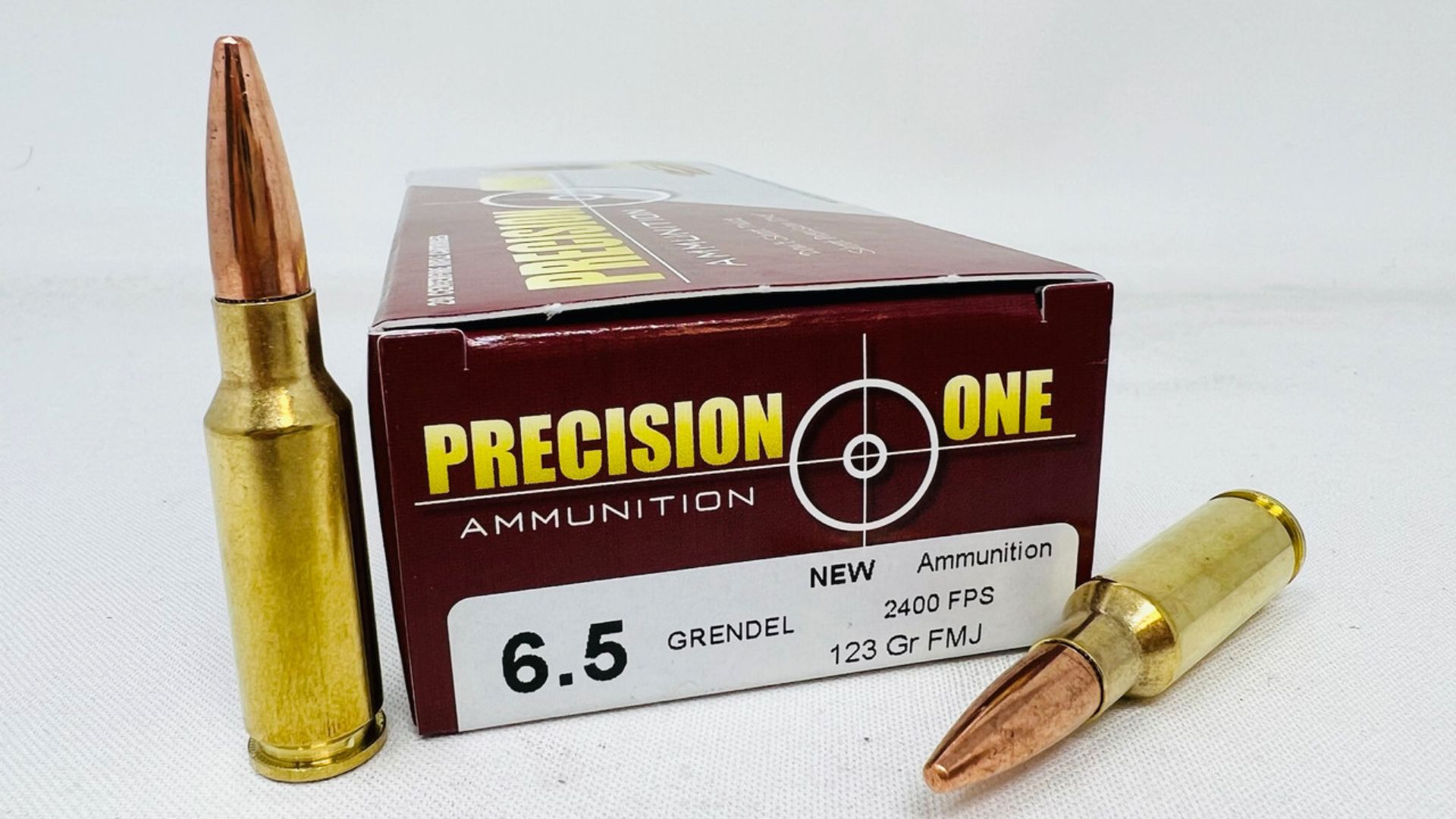
6.5 Grendel has become a favorite for shooters who want more reach and more punch than 5.56 without jumping to a bigger rifle. In an Alexander Arms Grendel Hunter, it’s common to see excellent practical accuracy and solid performance when the wind starts acting up.
For coyotes and nuisance work, Grendel shines at medium-to-long distances. It carries energy well and handles heavier bullets that drift less in wind, which helps you make cleaner hits when conditions aren’t perfect. It’s more than you need for close-range pests, but it’s a strong answer for open country calling, pasture work, and shots that stretch past 300. It’s also a cartridge that rewards a good dope chart and disciplined shooting instead of guesswork.
.22-250 Remington (Remington 700 Varmint SPS)

.22-250 Remington is classic coyote medicine because it’s fast, flat, and accurate. A Remington 700 Varmint SPS in .22-250 gives you the kind of trajectory that makes 250- to 350-yard shots feel far less complicated than they do with slower rounds.
It also hits coyotes hard and tends to anchor them when you place the shot well. The trade is barrel heat and muzzle blast, especially if you’re shooting strings. You manage that with pace and a rifle that can handle sustained shooting. For nuisance work where you might take longer shots across fields, .22-250 is one of the most proven answers ever made. It’s not subtle, but it’s effective.
.220 Swift (Winchester Model 70 Heavy Varmint)

.220 Swift is the high-speed old-school round that still earns respect. In a Winchester Model 70 Heavy Varmint, you get excellent accuracy and blistering velocity that keeps your holdovers small and your impacts decisive on coyotes at longer ranges.
Swift does demand some discipline. It can heat barrels quickly, and it pushes bullets fast enough that you want the right construction for consistent performance. When you treat it correctly, it’s a serious open-country cartridge for coyotes and nuisance critters that need to be hit hard and fast. If your style is spotting, dialing, and making longer shots across big ground, Swift stays relevant because it does what it has always done: fly flat and hit with authority.
.243 Winchester (Sako 85)

.243 Winchester is a strong crossover cartridge when “nuisance” includes coyotes that don’t stand still and shots that don’t always land perfectly broadside. In a Sako 85, .243 gives you low recoil for its class and accuracy that makes longer shots feel calm.
On coyotes, .243 hits harder than the small .22 centerfires, and it tends to handle imperfect angles better. It also reaches well when wind and distance start stacking against you. The trade is that it can be more destructive on pelts, and it’s more cartridge than you need for small pests. If you want one rifle that can handle coyotes confidently and still stretch farther without feeling marginal, .243 is one of the cleanest answers.
6mm Creedmoor (Bergara B-14 HMR)
6mm Creedmoor is a modern predator favorite because it combines low recoil with excellent downrange behavior. In a Bergara B-14 HMR, it’s easy to spot impacts, make fast corrections, and stay consistent when you’re shooting past 300 in real wind.
Coyotes don’t always offer perfect conditions, and that’s where 6mm Creedmoor shines. It carries sleek bullets that drift less than many traditional varmint rounds, and it delivers enough terminal performance to keep hits decisive without requiring magnum recoil. It’s also a cartridge that encourages practice because it’s comfortable to shoot well. If you want a setup that feels like cheating on windy days, 6mm Creedmoor is hard to argue against.
.25-06 Remington (Weatherby Vanguard)

.25-06 Remington is a flat-shooting hammer that works well when coyotes show up at awkward distances in open country. A Weatherby Vanguard in .25-06 gives you speed, reach, and enough bullet weight to stay effective when angles aren’t perfect.
For nuisance work, it’s more cartridge than you need for most small pests, but it’s excellent for coyotes when you want decisive performance past 300. It also handles wind better than many small-caliber varmint rounds because it can run heavier bullets with good BC. The trade is recoil and the fact that it can be hard on pelts. If your priority is dropping coyotes cleanly at distance, and you don’t want to feel undergunned, .25-06 earns its place.
.308 Winchester (FN SCAR 17S)

.308 Winchester isn’t a traditional “varmint” round, but it’s a practical nuisance cartridge when coyotes are big, shots are mixed, and you want maximum authority. An FN SCAR 17S gives you a reliable semi-auto platform that can handle rough conditions and fast follow-ups.
For coyotes, .308 can be decisive, especially on longer shots and challenging angles. It also gives you flexibility if your nuisance list includes larger feral animals where legal and appropriate. The downside is recoil, cost per shot, and the fact that it’s not friendly to pelts. If you’re doing high-volume small pest control, .308 is overkill. If you want a cartridge that stays effective in ugly wind and still hits hard when the target isn’t cooperating, .308 stays honest.
Like The Avid Outdoorsman’s content? Subscribe to our newsletter so you never miss an article.
Here’s more from us: