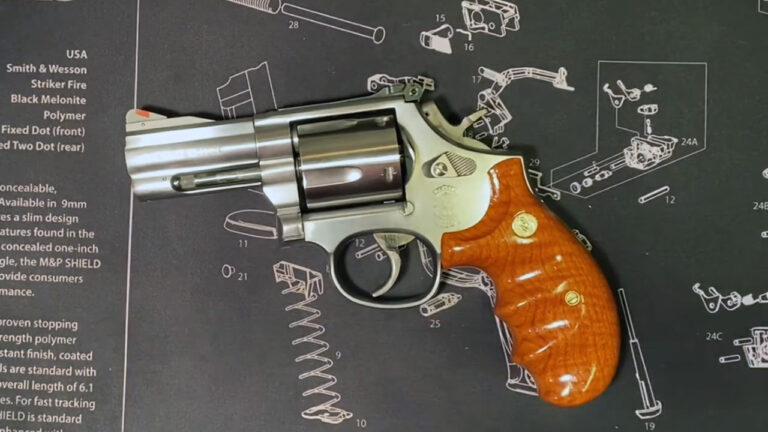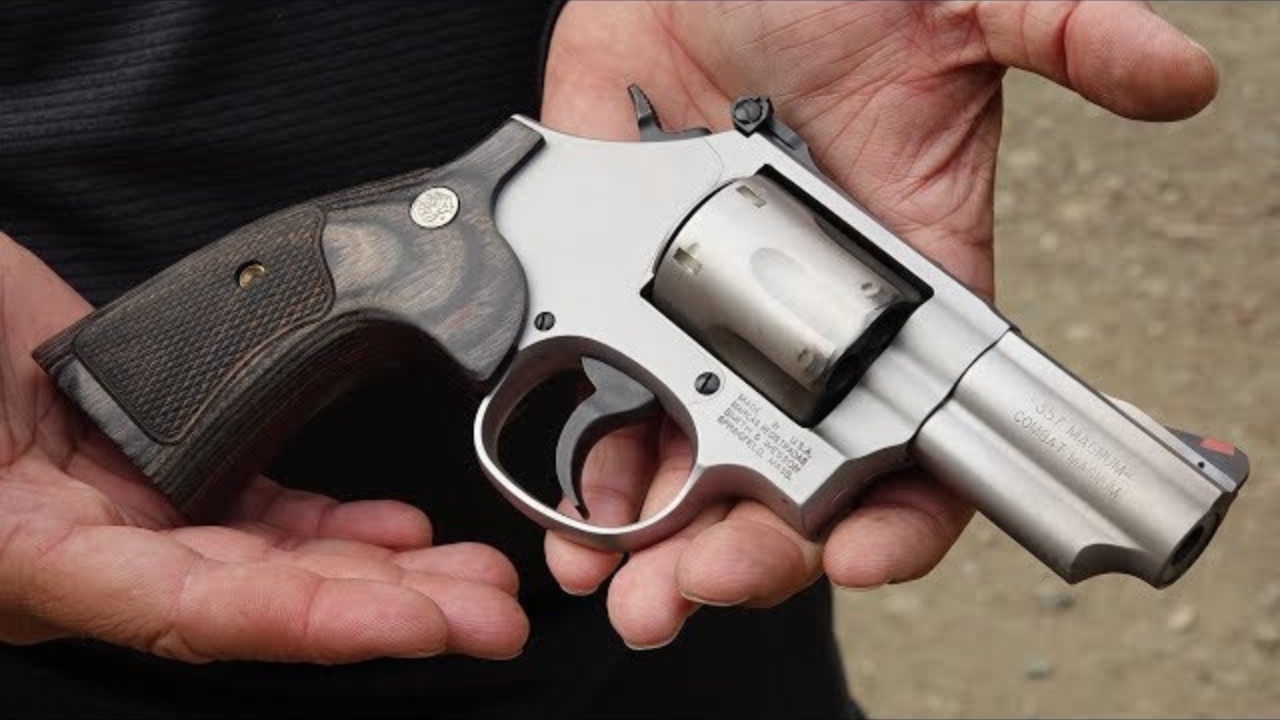
Photo credit: BERETTA9mmUSA/YouTube
When you stack a defensive revolver against a bargain-bin semi-auto, the fight isn’t about fashion or internet opinions. It’s about what works when you’re half awake, your hands are slick, and the gun has been riding in a holster for months without drama. Cheap semi-autos can run fine on a clean range day, then turn into a jam-prone project when you feed them mixed ammo, limp the grip, or let pocket lint and sweat build up.
A good revolver cuts through a lot of that. You press the trigger and it cycles itself. If a round doesn’t light, you press again. There’s no magazine to seat, no slide to bump out of battery, and no mystery malfunction you have to diagnose in the dark. Revolvers aren’t perfect, and they aren’t magic, but the right models still give you a level of real-world forgiveness that a lot of low-end semi-autos can’t match.
Smith & Wesson 642 Airweight

The 642 has been saving people from bad decisions for a long time. It rides light, it doesn’t snag, and it disappears in places where a chunky pistol prints or drags your belt down. When you’re carrying every day, that matters more than most folks admit. You end up with a gun you actually keep on you instead of leaving in the truck.
In real use, the 642 also shrugs off the stuff that trips up cheap semi-autos. Pocket lint doesn’t stop a long double-action pull. A weak grip doesn’t short-stroke anything. You can shoot from awkward angles without worrying about a slide getting pushed out of battery. Feed it quality .38 Special loads, practice enough to run that trigger clean, and it stays a hard-working tool.
Smith & Wesson 442 Airweight

The 442 gives you the same practical layout as the 642, with a finish that hides holster wear and daily scuffs better. It’s a carry gun that doesn’t demand pampering. If you’re the type who sweats through shirts in July and still carries, this one tends to keep its attitude.
A budget semi-auto can be picky about magazines, recoil springs, and grip pressure. The 442 doesn’t care. It keeps working when your support hand is busy, when you’re shooting one-handed, or when you’re jammed up close. The trade is the trigger pull, and you earn your performance with practice. Once you do, you’re carrying a revolver that stays reliable without needing constant tinkering.
Smith & Wesson 638 Bodyguard Airweight

The 638 is one of the most practical compromises ever put in a pocket holster. You get a mostly enclosed hammer that stays snag-free, plus the option to thumb-cock when you’re taking a careful shot at distance. That flexibility is real, and it doesn’t add bulk you’ll hate by the end of the day.
Cheap semi-autos often choke when they get pushed into clothing or you don’t lock your wrist like a vise. The 638 keeps firing in those messy positions. It also handles contact-distance problems without the slide issues that can shut down an auto. Carry it with a grip you can control and sights you can actually see, then run it often enough that the double-action pull feels natural. It rewards real-world habits.
Smith & Wesson 640 Pro Series

The 640 Pro is a heavier J-frame that earns its keep when you want pocket-size power without the featherweight sting. The extra steel tames recoil, helps you track sights, and keeps practice sessions from turning into a punishment. The Pro-series sight setup is also a step up from the typical gutter-sight experience.
In defensive use, the 640 Pro brings the same revolver advantages with fewer compromises. It’s less sensitive to sweat, lint, and neglect than most cheap autos, and it won’t choke because your grip got sloppy. You also avoid a lot of the bargain-pistol problems like mushy triggers, questionable magazines, and hit-or-miss extraction. It’s not light, but it carries well in a proper holster and shoots like a gun you can build real skill with.
Ruger LCR in .38 Special +P

The LCR looks modern, but it’s built around an old idea: make a revolver that’s easier to carry and easier to run under pressure. The trigger is often smoother than you expect, and the grip design helps you keep the gun anchored when your hands are wet or cold.
Where it beats cheap semi-autos is consistency. You don’t deal with magazine roulette or a slide that hates being ridden. You can shoot it from odd angles without worrying about stoppages caused by contact or limp wristing. The LCR also tends to shrug off sweat because there’s less exposed steel to baby. Feed it dependable .38 +P loads, keep the front sight visible, and you’ve got a carry revolver that stays ready without living on the workbench.
Ruger LCR in .357 Magnum

The .357 LCR gives you the option to run anything from soft .38s to heavy magnums, depending on what you can control and what you expect to face. The frame weight goes up compared to the .38 model, and that’s a good thing if you practice often. The gun feels steadier, and follow-up shots come quicker.
A lot of bargain semi-autos struggle with the wide spread of ammo types people actually buy. The LCR doesn’t care if the next cylinder is practice loads or defensive loads. If one round fails, you press through it. That kind of mechanical forgiveness is hard to replace with a cheap auto and a stack of questionable magazines. Carry it in a holster that protects the trigger and keeps lint out, and it stays a very real defensive option.
Ruger SP101 (2.25-inch)

The SP101 is a small revolver that doesn’t feel fragile. It’s heavy enough to shoot well, strong enough to handle real .357 loads, and tough enough to take daily carry without turning into a rust experiment. If you want a snub that you can practice with weekly, this one is usually near the top of the list.
Against cheap semi-autos, the SP101 wins with durability and tolerance. It doesn’t need a perfect grip to cycle. It doesn’t depend on a magazine spring that may or may not be heat-treated right. You can fire it from retention positions without worrying about the slide getting bumped. Put good grips on it, learn the double-action pull, and you end up with a defensive revolver that keeps doing its job when the easy pistols start acting temperamental.
Ruger SP101 (3-inch)

The 3-inch SP101 is the version that converts people. You get a longer sight radius, a little more velocity, and a balance that feels steadier in the hand. It still carries compact, but it shoots closer to a service revolver than a tiny snub. For many shooters, that means better hits when speed matters.
Cheap semi-autos often feel “good enough” until you start shooting fast and your grip gets imperfect. The 3-inch SP101 stays predictable. There’s no slide timing to disrupt, no stovepipe waiting for a weak wrist, and no magazine to half-seat when you’re rushed. You can load it with .38 +P for control or .357 for extra punch, and it keeps functioning the same way. It’s a solid bridge between carry comfort and real shootability.
Ruger GP100 (3-inch)

The 3-inch GP100 is a defensive revolver with real heft. That weight makes it easier to control, easier to practice with, and easier to shoot well when you’re not at your best. The frame feels overbuilt, and that’s exactly why it has a loyal following.
When you compare it to a cheap semi-auto, the GP100 feels like a different class of tool. You don’t get the weird extraction issues and thin parts that show up in bargain pistols. You don’t get a slide that needs perfect lubrication and clean ammo. You get a revolver that can ride in a truck, carry in bad weather, and still work when your hands are numb. With .38 +P it’s extremely manageable, and with .357 it stays controllable in a way smaller guns struggle with.
Smith & Wesson Model 686 Plus (2.5-inch)

A short 686 Plus brings a lot of capability into a defensive package. The L-frame soaks up recoil, the sights are real, and the extra round in the cylinder is never a bad thing. It carries well in a belt holster and shoots like a revolver you can push hard without losing control.
Cheap semi-autos are often built to a price point that shows up in the small parts: extractor tension, magazine feed lips, slide stop fit, and spring life. The 686 Plus sidesteps those weak links. It keeps firing with inconsistent grip pressure, and it’s not picky about ammo profile. You do your part with practice, and it stays steady when you’re shooting fast. For a lot of people, it’s the revolver that feels like “training wheels” in the best possible way.
Smith & Wesson Model 66 (2.75-inch)

The 2.75-inch Model 66 is a defensive revolver that carries easier than a full-size duty gun but shoots like it means business. Stainless steel helps with sweat and humidity, and the K-frame shape tends to point naturally. It’s a revolver that feels lively without being jumpy.
In messy real-world handling, the Model 66 avoids many of the failures that haunt cheap autos. You don’t have to wonder if the magazine is seated or if the slide is fully in battery. You press through the trigger and the gun does what it’s supposed to do. The trade is recoil with full-power .357, so a lot of smart carriers run .38 +P or midrange .357 loads for control. Either way, the gun stays dependable and fast to get back on target.
Colt King Cobra (3-inch)

The 3-inch King Cobra is one of the better carry-sized revolvers Colt has put out in the modern era. The size is practical, the sights are usable, and the trigger feel tends to be clean once you learn it. It carries with a little more authority than a tiny snub, and that shows when you start shooting quickly.
Cheap semi-autos can be “good on paper” and still run rough when you’re working under stress. The King Cobra doesn’t need the same level of support from your grip and stance to keep operating. It also handles close-contact problems without the auto-pistol quirks that can shut the show down. With the right holster and a grip that fits your hand, it’s a revolver that stays controlled, stays ready, and keeps delivering shots when bargain pistols start asking for excuses.
Colt Cobra (2-inch)

The modern Colt Cobra is built for carry, not for show. It gives you six shots in a frame that still hides well, and the sights are better than what many snubs used to ship with. It’s a revolver you can actually train with instead of tolerating for a box of ammo.
In the real world, the Cobra’s advantage is that it keeps working through imperfect technique. Cheap semi-autos often punish you for small mistakes: a weak grip, a thumb riding the slide, a marginal magazine, or an odd shooting angle. A snub revolver doesn’t care about those details the same way. You can fire it from retention, you can fire it one-handed, and you can press again if a round fails. Keep it clean enough to avoid grit under the extractor star, and it stays a reliable defensive option.
Kimber K6s (2-inch)

The Kimber K6s caught plenty of people off guard because it’s a small revolver that shoots bigger than it looks. You get six rounds in a compact frame, solid sights, and a trigger that can be very workable once you’ve run it enough. It’s built for carry, and it carries comfortably in real clothes.
Compared to cheap semi-autos, the K6s shines in the “always ready” category. It doesn’t depend on a finicky magazine. It isn’t sensitive to how firmly you lock your wrist. It can sit in a holster for weeks, pick up lint and sweat, and still function when you draw it. The recoil is real in a small gun, so smart ammo selection matters. Run loads you can control fast, and the K6s gives you dependable performance without the bargain-pistol surprises.
Smith & Wesson Model 19 Carry Comp

The Model 19 Carry Comp is a modern take on a classic that still knows what a fighting revolver should feel like. You get a K-frame that carries well, sights you can track, and recoil that’s easier to manage than you’d expect for a compact .357. It’s a revolver that balances carry comfort with real shootability.
Cheap semi-autos often feel attractive until you start stacking little problems: inconsistent ejection, picky feeding, and controls that don’t inspire confidence. The Carry Comp avoids that whole mess. It’s not relying on a budget slide assembly to do everything right. It gives you repeatable trigger work and a straightforward manual of arms. Put in the time to master that double-action pull, and you end up with a defensive revolver that hits hard, carries well, and keeps running when bargain guns start showing their seams.
Ruger Security Six (2.75-inch, used market)

A clean Ruger Security Six is still one of the smartest defensive revolver buys out there. It’s older, but it’s built like a work tool, not a disposable consumer product. The size is practical, the frame is strong, and the design has a reputation for holding up to hard use over time.
Against cheap semi-autos, the Security Six wins with durability and consistency. You don’t have to chase aftermarket fixes to make it reliable. You don’t have to wonder if the next magazine will act up. You run the trigger, the cylinder turns, and the gun fires. The main “check” with used examples is timing, lockup, and general wear, but a good one can serve for decades. If you want a defensive gun that doesn’t feel like a gamble, this revolver still earns respect.
Like The Avid Outdoorsman’s content? Subscribe to our newsletter so you never miss an article.
Here’s more from us: