Photo credit: Krasula/Shutterstock.com
Cartridge trends come and go, but usefulness usually survives longer than hype. Every few years, a new round gets pushed as flatter, faster, cleaner, or more efficient than what came before. Some of them really are good. Some stick around. A lot of them also solve problems most hunters and shooters were not actually struggling with in the first place. Meanwhile, certain older cartridges keep doing what they have always done: filling tags, putting meat in the freezer, handling everyday range work, and making practical sense without needing a sales pitch.
That is why some cartridges never really lost ground, even when newer options got louder attention. They remain easy to find, easy to understand, and useful across the kinds of rifles and handguns people actually carry and shoot. A cartridge does not stay relevant by accident. It stays relevant because it keeps matching real needs better than trend cycles do. When a round works in the field, on the range, and in ordinary ownership without making life difficult, shooters tend to keep it around no matter what the market is trying to replace it with.
.30-06 Springfield

The .30-06 never lost its usefulness because it covers an enormous amount of real hunting ground without becoming overly specialized. Deer, hogs, black bear, elk, and a lot more still fall to it cleanly with the right load, and nearly every hunter already understands what it is supposed to do. That kind of familiarity matters. You are rarely searching for rifles chambered in it, and you are rarely left guessing whether factory ammunition will be available when you need it.
It also stayed useful because it never relied on novelty. The .30-06 simply kept doing honest work across different game, different terrain, and different generations of hunters. Plenty of newer rounds can beat it in one category or another, but very few make it feel unnecessary. When a cartridge stays broad enough to handle serious hunting without asking the shooter to accept oddball tradeoffs, it tends to keep its place for a long time.
.308 Winchester

The .308 never lost its usefulness because it remains one of the easiest centerfire rifle cartridges to live with. It offers practical recoil, strong ammunition availability, and enough performance for serious deer and hog hunting while still being capable of bigger jobs with proper bullets. That balance is what keeps it alive. It fits a wide range of rifle platforms and does not force most shooters to choose between shootability and field capability.
It also helps that the .308 is a cartridge people trust under ordinary conditions. It is not fussy, not obscure, and not built around a narrow audience. You can find rifles for it almost anywhere, and shooters from hunters to target shooters already know how it behaves. Cartridges stay useful when they make ownership easier instead of more complicated. The .308 has been doing that for decades, which is exactly why it never really slipped out of relevance.
.30-30 Winchester

The .30-30 never lost its usefulness because the kind of hunting it was built for never disappeared. Woods hunting, brush country, fast shots at ordinary distances, and practical lever-gun handling still matter to a huge number of hunters. The cartridge does not need to win long-range debates to stay important. It only needs to keep working where a lot of real deer hunting actually happens, and it still does that very well.
Part of its staying power comes from how honest it is. Nobody carries a .30-30 expecting it to be something it is not. Hunters know its lane, know its limits, and know it has enough authority inside those limits to keep making sense. That kind of clarity usually helps a cartridge last. When a round stays perfectly suited to a common kind of field use, it does not need trends to keep it alive.
.22 LR

The .22 LR never lost its usefulness because there is still no real substitute for what it offers. Cheap practice, small-game hunting, informal plinking, youth training, and basic marksmanship work all remain part of the shooting world, and the .22 LR still handles those jobs better than almost anything else. That level of practical reach is rare. It touches more types of shooters and more stages of shooting life than almost any other cartridge ever made.
It also survived because it makes it easy to shoot more. Less recoil, lower cost than centerfire ammo, and simple rifle and pistol options keep it relevant no matter what else the industry is doing. A cartridge that helps people build skills, spend time on the range, and put small game in the bag without burning through their budget is not going anywhere. The .22 LR stayed useful because it never stopped being needed.
.270 Winchester

The .270 never lost its usefulness because it still fits deer and open-country hunting extremely well. It offers enough reach to feel comfortable in bigger terrain, enough power for serious field work, and recoil that many hunters can still manage without dreading practice. That combination remains smart now for the same reason it was smart years ago. Most hunters do not need a cartridge to dominate every category. They need one that stays practical across normal conditions.
That is where the .270 keeps winning people back. It may not be the trendiest cartridge in the rack, but it does not leave many hunters feeling under-equipped either. It is well understood, supported by plenty of factory loads, and still very effective on the game it was always meant to handle. Cartridges that stay easy to trust usually stay easy to keep, and the .270 has been living in that spot for a long time.
.45-70 Government

The .45-70 never lost its usefulness because there are still plenty of hunting and field situations where a big, heavy bullet makes perfect sense. Thick timber, moderate-range hunting, hogs, black bear, and larger game in close country all keep the cartridge relevant. It is not trying to be flat shooting or all-purpose. It is trying to deliver authority in a specific set of conditions, and those conditions still exist.
That focused role is exactly why it lasted. A cartridge does not have to be universal to remain useful. It only has to keep doing one important job well enough that people still reach for it. Lever guns and certain single-shots in .45-70 still speak directly to hunters who value close-range confidence more than chart-friendly speed. That lane never went away, which is why the cartridge never really did either.
.243 Winchester

The .243 never lost its usefulness because shooters still benefit from a cartridge that is easy to shoot well. Light recoil matters. It usually means more practice, less flinch, and more confidence when the shot finally appears. For younger hunters, recoil-sensitive shooters, and people who simply like hitting what they aim at without getting hammered in the process, the .243 still solves a very real problem.
It also remains useful because it does not need to be overcomplicated. Inside its lane, it is accurate, practical, and fully capable on deer-sized game with good bullet choice and good shot placement. A lot of newer rounds try to improve on it in small ways, but the bigger truth stays the same: plenty of hunters shoot the .243 well, and cartridges that help people shoot well tend to stick around. That is exactly what happened here.
12 gauge

The 12 gauge never lost its usefulness because it still covers more real-world shotgun roles than almost anything else. Bird hunting, deer hunting in slug country, waterfowl, turkey, home defense, and general shotgun use all remain firmly inside its wheelhouse. That kind of versatility is hard to push aside. A lot of shooters can own one 12 gauge and handle an enormous amount of practical work without ever feeling under-gunned.
It also stayed useful because support for it never weakened. Ammunition options remain broad, guns are everywhere, and the role of a general-purpose shotgun did not vanish simply because newer products appeared. Yes, other gauges are excellent too, but the 12 gauge never stopped being the easy answer for people who wanted flexibility and seriousness in one package. When something keeps doing that much work that well, it stays relevant almost by default.
.357 Magnum

The .357 Magnum never lost its usefulness because it continues to bridge multiple roles better than many handgun cartridges do. In revolvers, it offers serious defensive and field capability. In lever guns, it becomes even more practical for close-range hunting, trail use, and general range enjoyment. That kind of crossover value keeps a cartridge alive. Shooters can still do a lot with .357 without needing to explain their choice or work around much inconvenience.
Another reason it lasted is that it is flexible without being confusing. Lighter loads, stronger defensive loads, and the ability to practice with .38 Special all make the platform easier to own and easier to shoot well. That matters. Cartridges remain useful when they help ordinary shooters get more from one gun or one system without forcing compromise in the wrong places. The .357 has been doing that for a long time, which is why it still holds ground.
.223 Remington

The .223 never lost its usefulness because it answers several practical needs at once. It is light recoiling, widely available, easy to shoot, and useful for training, varmint hunting, predator work, and general rifle use. A lot of rounds get attention because they do one thing exceptionally. The .223 stayed alive because it does a lot of ordinary rifle work very efficiently. That usually matters more in the long run than niche brilliance.
It also benefits from being tied to hugely popular rifle platforms and a training-friendly shooting experience. A cartridge that lets people practice more and shoot comfortably tends to stay around, even when louder options compete for attention. The .223 may not be glamorous anymore, but glamour is not the same thing as usefulness. Shooters still need a cartridge that is accessible, shootable, and practical, and the .223 still fills that role better than many alternatives.
.44 Magnum
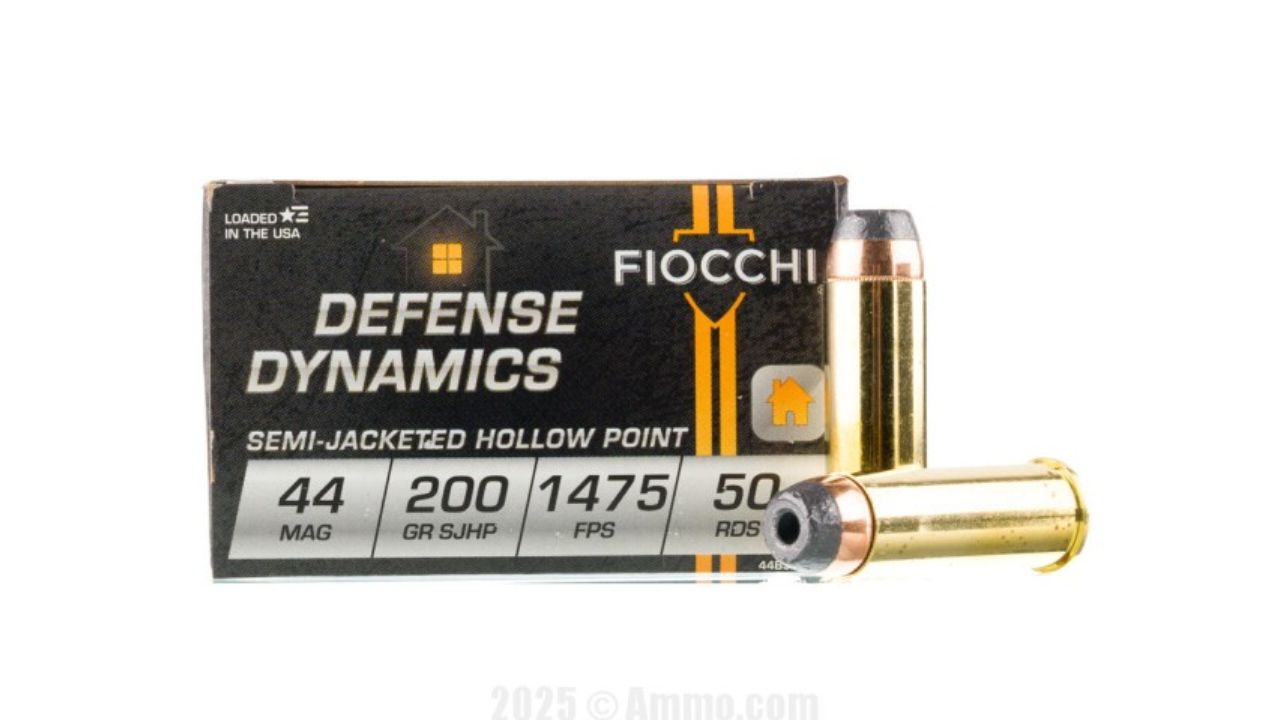
The .44 Magnum never lost its usefulness because power still has a place when it is tied to a clear purpose. For revolvers, trail carry, hunting handguns, and even certain carbines, it remains a serious tool for people who want real authority in a familiar platform. It is not for everyone, and it was never supposed to be. But cartridges with a defined role and enough performance to own that role tend to last.
It also stayed alive because it still offers a level of versatility many people overlook. Loaded hot, it is a real hunting and backcountry round. Loaded softer with .44 Special, it becomes more manageable and easier to practice with. That kind of range helps keep a cartridge relevant. It is not surviving on movie history alone. It is surviving because there are still people who need exactly what it offers and cannot replace it with anything simpler.
9mm Luger

The 9mm never lost its usefulness because it remains the easiest practical answer for a huge number of handgun owners. Defensive carry, range training, home defense, and duty-size pistols all benefit from a cartridge that offers manageable recoil, strong capacity, broad ammunition availability, and enough real-world effectiveness to stay trusted. Those advantages did not disappear just because debates around handgun calibers kept cycling back around.
In fact, the 9mm’s usefulness probably became even clearer over time. Better bullet design helped its defensive reputation, and its affordability and shootability kept it attractive for ordinary practice. A cartridge stays alive when it reduces friction for the owner, and the 9mm does exactly that. It is not dramatic, and that is part of why it keeps winning. It remains one of the simplest ways to get a capable handgun that people will actually shoot often enough to stay competent with it.
Like The Avid Outdoorsman’s content? Subscribe to our newsletter so you never miss an article.
Here’s more from us: