Photo credit: Alexandr Grant/Shutterstock.com
New carriers make a lot of little caliber mistakes, but the most common one—the one I see over and over—is choosing a caliber based on fear and internet myth instead of what they can actually shoot well, repeatedly, from their carry gun. It usually shows up as “I need more stopping power,” followed by buying a snappy pistol they can’t control, then quietly carrying it less, practicing less, and shooting worse when it matters. That’s the real mistake: they pick a cartridge that reduces their hit probability and follow-up speed, then tell themselves they’re “more prepared” because the number on the box is bigger.
The ugly truth is that defensive handgun rounds all live in the same basic reality. None of them are magic. Handguns stop threats by putting holes in vital structures and making the person run out of blood pressure or ability, and that means your shot placement and the ability to deliver multiple accurate hits quickly is the whole game. A new carrier who can put three controlled hits into the high chest at 7 yards with a 9mm is in a better place than the guy who bought a .40 or .45, flinches on the first shot, and strings impacts low left under pressure. In real life, the fight is chaotic, angles are bad, and you may be shooting one-handed while moving or protecting a family member. Your caliber choice needs to support that, not sabotage it.
Why this mistake happens so often
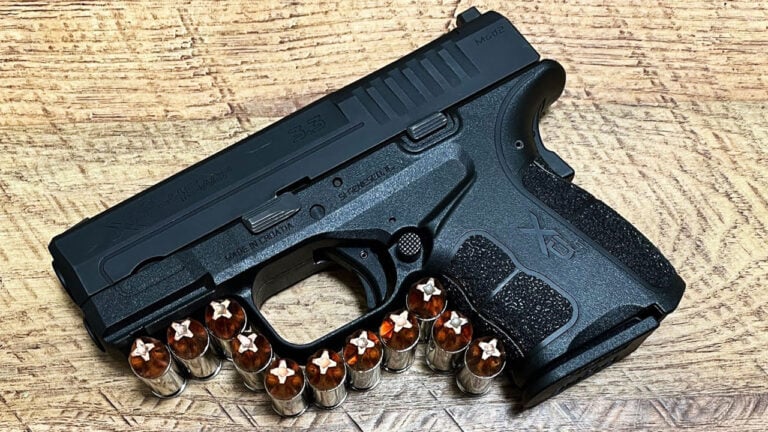
New carriers tend to shop for certainty. The idea that a “bigger” round will solve the problem feels comforting, especially when they’ve seen highlight-reel talk about “knockdown power” or they’ve watched gel tests without understanding what they’re looking at. Then they buy a compact or micro-compact—because it’s easier to conceal—and they pair it with a more recoiling cartridge. That combination is where confidence dies. Smaller guns have less mass and less grip, which means the same cartridge produces more perceived recoil and more muzzle rise. The gun also cycles faster, and the shooter has less time to manage the recoil cycle. The result is predictable: shots spread, follow-ups slow down, and practice becomes unpleasant, which reduces reps, which reduces skill.
Ammo cost and availability quietly amplify the issue. If the chosen caliber costs more per round, a new carrier often practices less. Less practice means less familiarity with trigger control, recoil recovery, and malfunctions that come from grip or magazine issues. You start seeing shooter-induced problems—limp-wrist short-stroking, inconsistent support-hand pressure, failure to return to battery because the grip is weak—and those get blamed on the gun or the ammo. Then the carrier starts changing springs, swapping parts, and chasing “reliability” when the real fix was choosing a manageable setup and putting in honest range time.
The practical consequences that matter in real carry
The cost of picking the “scary” caliber in a small gun shows up in three places: first-shot accuracy, follow-up speed, and confidence under stress. A defensive draw at real distances—3 to 10 yards for most civilian encounters—still requires you to break a clean shot with the sights or dot where it needs to be. If recoil anticipation causes you to dip the muzzle, you’ll hit low. If muzzle rise and grip recovery are slow, your second and third shots drift. That matters because handgun rounds don’t reliably stop problems instantly unless you hit something that shuts the system off, and that’s not something you should plan on. You plan on multiple accurate hits delivered quickly.
There’s also a magazine capacity and cycling reliability angle that new carriers don’t think about until they get burned. In the same size handgun, a 9mm often gives you more rounds than larger calibers, and it typically runs with less slide velocity drama. That doesn’t mean other calibers can’t be reliable, but it does mean 9mm is usually the least finicky path for a new carrier, especially when grip and maintenance habits are still being built. More importantly, more rounds buys you margin when you miss—because everyone misses under stress sometimes—and margin matters.
What the “right” choice looks like for a new carrier
The best caliber for most new carriers is the one that lets you do three things with your actual carry gun and carry ammo: (1) hit fast, (2) hit again fast, and (3) practice enough to stay sharp without dreading it. For a lot of people, that ends up being 9mm in a gun that’s large enough to control but still concealable. If you’re recoil-sensitive, going slightly larger in gun size often helps more than changing caliber, because grip length and weight tame recoil better than wishful thinking. If you’re dead set on a smaller pistol, that’s even more reason to avoid “more recoil,” because tiny guns already ask more of your hands and your technique.
A simple self-test that keeps you honest is this: can you keep five shots inside a fist-size circle at 7 yards at a brisk pace, from a ready position, with your carry ammo? Can you do it again after your heart rate is up from a little movement? If your chosen caliber makes that hard, your caliber is working against you. Fix the problem where it actually lives: controllability and repetition.
The bottom line
The most common handgun caliber mistake new carriers keep making is treating caliber as a shortcut to effectiveness instead of choosing the round—and the gun size—that lets them put accurate hits on demand. Bigger recoil in a smaller pistol doesn’t make you safer. It often makes you less competent, and competence is what wins the day.
If you tell me what you’re carrying (model, barrel length) and what you dislike (snappy recoil, hand pain, slow follow-ups), I’ll recommend a practical caliber/gun-size direction and a simple range drill to confirm you picked right.
Like The Avid Outdoorsman’s content? Subscribe to our newsletter so you never miss an article.
Here’s more from us: