Photo credit: Cornelius Doppes/Shutterstock.com
Bear-defense handgun talk gets heated because the stakes feel real. You’re not picking a “best caliber” for internet points—you’re trying to balance penetration, control, carry comfort, and what you can actually hit with when your heart rate spikes. Add in the fact that “bear” can mean a curious black bear at 15 yards or a pissed-off brown bear at bad-breath distance, and it’s no surprise people argue.
The truth is, cartridges don’t win fights by themselves. Bullets, placement, and how fast you can put more rounds where they matter usually decide the outcome. Some rounds get debated because they’re common and easy to shoot. Others get debated because they hit hard but are hard to run well. Here are the handgun rounds that spark arguments for a reason.
9mm Luger

9mm gets argued about because it’s everywhere, and because most people actually shoot it well. You can carry more rounds, get fast follow-ups, and you’re more likely to have the gun on you when you’re dumping trash or walking the dog at the edge of the woods. That practicality matters, especially in black bear country where most encounters end with the bear leaving.
The pushback is penetration. Standard defensive hollow points are built for people, not thick muscle, heavy bone, and steep angles. When someone says “9mm works,” they’re usually talking about deep-penetrating loads and disciplined shot placement, not magic. When someone says “9mm won’t,” they’re usually picturing a worst-case brown bear scenario where you may need more straight-line drive than a lot of 9mm setups deliver.
.40 S&W

.40 sits in a weird middle ground, and that’s exactly why people fight about it. It throws a heavier bullet than 9mm, often at respectable speed, and it can be loaded for deeper penetration than typical personal-defense .40 ammo. Plenty of shooters also like how it feels in a full-size pistol, especially if they’ve put time in behind it.
The argument against it is control and platform support. In lighter carry guns, .40 can be snappy enough that your split times and accuracy fall apart. And compared to 10mm, it doesn’t have the same ceiling for heavy, hard, deep-driving loads. To some folks, .40 is the “good enough” compromise. To others, it’s the round that gives you more recoil than 9mm without giving you the full payoff that makes 10mm appealing.
.45 ACP

.45 ACP gets dragged into bear-defense debates because it has a loyal following and a long track record on two-legged problems. It’s also comfortable in full-size pistols, and the recoil impulse tends to be more of a push than a snap. If you shoot it well, you can keep hits coming at close range, which is a real advantage when distance disappears fast.
The counterargument is penetration and velocity. Many classic .45 loads are not designed to punch deep through heavy structure, and big hollow points can underperform when bone and dense muscle get involved. The folks who defend .45 for bears usually lean toward hard, tough bullets and emphasize shot placement. The folks who dismiss it point out that .45 doesn’t automatically mean better penetration than smaller, faster rounds with tougher bullets.
10mm Auto

10mm is the poster child for bear-defense arguments because it feels like the “right answer” without being a full-blown revolver magnum. You get higher velocity, heavier bullets than most service cartridges, and loads designed specifically for straight-line penetration. In a duty-size pistol, you can carry a lot of rounds and still run the gun fast enough to make follow-ups count.
The pushback is that not every 10mm load is a true heavy hitter, and not every shooter runs 10mm well under stress. In compact guns, recoil can get sharp, and some people end up slower and less accurate than they are with 9mm or .45. That’s the whole debate in one sentence: 10mm can give you more capability, but only if you can deliver it on demand.
.357 Magnum

.357 Magnum is argued about because it has proven penetration and a reputation for “getting through things.” With the right bullets, it can drive deep, and it’s been carried in the woods for a long time for good reasons. A solid .357 revolver is also mechanically straightforward and not picky about magazine springs or feed geometry.
The argument against it is controllability and capacity. Full-power .357 in a lighter revolver is loud, sharp, and punishing enough that many shooters slow down or start missing when they try to shoot fast. You also have fewer rounds on board, and reloads under stress are not most people’s strong suit. Supporters will tell you .357 punches deep and works. Critics will tell you it’s hard to run quickly, and that speed plus accuracy often beats raw energy.
.44 Magnum
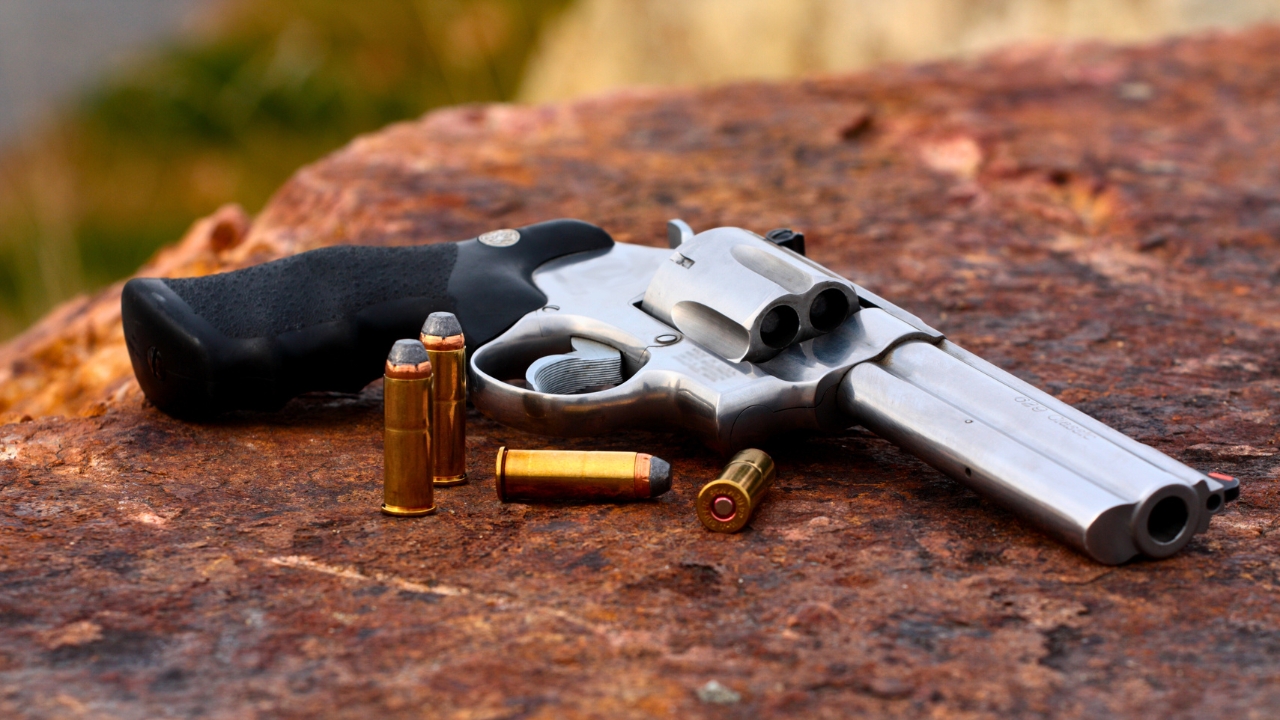
.44 Magnum is the round people name when they want to end the argument with a hammer. It has the power and bullet weight to break heavy bone and keep going, and it’s been a serious backcountry choice for decades. With deep-driving bullets, it offers a level of straight-line authority that makes a lot of shooters feel better in grizzly country.
The other side of the debate is that .44 Mag asks a lot from you. In a packable revolver, recoil is significant, and fast, accurate follow-ups are harder than most folks want to admit. You also deal with more muzzle blast, more flinch risk, and more training cost. That’s why the arguments never end: .44 Magnum has real capability, but it punishes sloppy technique, and many people carry it more than they practice with it.
.41 Magnum

.41 Magnum shows up in bear-defense conversations because it’s a legitimate performer that never became mainstream. Ballistically, it can sit in a sweet spot—more punch than .357, often less brutal than full-house .44, and it can drive deep with the right bullets. People who love it tend to be serious shooters who appreciate how it hits without being quite as abusive as some .44 setups.
The problem is practical support. Ammo can be harder to find, load options are not as common, and fewer people own .41s, so fewer people have firsthand experience. That creates arguments built on limited data and a lot of opinions. If you already run a .41 well, it can be a strong bear-defense tool. If you don’t, it’s a harder path because you may spend more time hunting ammo than practicing with it.
.45 Colt

.45 Colt is a classic that gets argued about because it spans two completely different worlds. In standard-pressure loads, it’s mild and pleasant, and many loads are built for older guns. In stronger modern revolvers, it can be loaded much hotter, pushing heavy bullets with serious penetration potential. That wide spread leads to endless confusion and loud opinions.
Supporters like the heavy-bullet option and the deep, straight drive that a tough .45-caliber projectile can deliver. Critics point out that not everyone is carrying a heavy-frame revolver rated for the stout stuff, and that mild .45 Colt loads are not the same thing as “bear loads.” It’s a cartridge where you really have to know what you’re carrying, because the name on the box doesn’t tell the whole story.
.454 Casull

.454 Casull gets argued about because it brings real power to the table, but it also brings real consequences. It’s capable of driving heavy bullets very fast, and when you’re talking about large bears and ugly angles, that kind of penetration and bone-breaking potential is why people carry it. It’s a cartridge built for serious work.
The debate is whether most people can use it well when it matters. In a relatively portable revolver, recoil and blast are intense, and that can wreck follow-up speed and accuracy. If you can keep your shots disciplined, it’s a strong choice. If you can’t, it becomes a confidence talisman that’s hard to deploy effectively. That’s why .454 arguments get personal: it’s a round that rewards skill and punishes shortcuts.
.480 Ruger

.480 Ruger is one of those cartridges that gets argued about by people who actually spend time thinking through recoil and bullet performance. It throws a big, heavy bullet at more moderate velocities than the mega-magnums, which can translate to deep penetration without quite the same violent recoil spike. For some shooters, that makes it easier to put multiple accurate hits on target.
The counterpoint is availability and platform size. You’re generally carrying a large-frame revolver, ammo can be scarce in normal stores, and many folks don’t have a steady practice pipeline for it. That creates the same argument you hear with other niche big-bore rounds: on paper it makes sense, and in capable hands it works, but it’s harder to live with day to day than more common options.
.500 S&W Magnum

.500 S&W is the nuclear option in handgun form, and that’s why people argue about it. The cartridge is undeniably powerful, and with the right bullet it offers massive penetration potential. If you’re worried about the biggest bears in the worst possible moment, it’s easy to understand why the idea is appealing.
The other side is that very few people can run it fast and clean. The guns are large, recoil is extreme, and the blast is hard on you and hard on practice habits. Carry comfort is also a real issue, because a handgun you leave in camp isn’t protecting you on the trail. .500 debates often come down to this: capability is real, but usability is limited for most shooters, especially when you need quick, accurate follow-ups.
.460 Rowland

.460 Rowland gets argued about because it promises magnum-like performance in a semi-auto format. That means more capacity than a revolver and potentially faster reloads, with a cartridge that can push heavy bullets at higher velocity than standard .45 ACP. For shooters who already run a 1911-style pistol well, that sounds like a solid bridge between “carry gun” and “woods gun.”
The controversy is reliability and practicality. The system depends on proper setup, springs, and ammo, and not every shooter wants a specialty configuration for a role that demands trust. It also increases recoil and stress on parts, and that can change how the pistol handles under rapid fire. When it’s tuned and proven, it can be effective. When it isn’t, it becomes another argument about whether extra power is worth extra complexity.
.45 Super

.45 Super lives in the same argument space as Rowland, but it’s often treated like the “simpler” hot-rod option—though it still isn’t standard. It can push heavier bullets faster than .45 ACP while keeping you in a familiar pistol size, which is attractive if you already carry a .45 and want more penetration-focused performance for the woods.
The debate is about the gray area. Not every pistol is suited for it, not every load is consistent across manufacturers, and it still demands testing and parts awareness. Supporters like the idea of more drive without jumping to 10mm or a revolver. Critics point out that a defensive pistol pushed beyond its normal operating envelope can create reliability questions, and reliability is the whole point in a bear-defense gun.
.327 Federal Magnum

.327 Federal is controversial because it breaks the usual “bigger is better” intuition. It offers high velocity, relatively deep penetration potential with the right bullets, and it can give you an extra round in some small-frame revolvers compared to .357. Recoil can also be more manageable than full-power .357 in similar guns, which matters when you’re trying to shoot quickly and accurately.
The pushback is that it’s still a smaller projectile, and many shooters don’t trust it on large animals when bone and steep angles are on the table. Ammo availability can also be spotty, and fewer people have real-world experience with it in a defensive context. It ends up as a round people argue over because it’s logical on paper in certain ways, but it challenges traditional backcountry instincts.
.38 Special +P

.38 +P gets argued about because it’s common, it’s easy to carry, and it’s what a lot of people actually own. In black bear country, plenty of folks hike with a small revolver because it’s light, it’s familiar, and it’s better than bare hands. That reality drives the conversation whether people like it or not.
The criticism is straightforward: it’s limited, especially if you’re talking about larger bears, awkward angles, and a need for deep penetration. Many .38 defensive loads are built for personal defense, not for punching through heavy structure. People who defend it usually focus on practicality and placement. People who reject it focus on margin for error, because bear-defense is not where you want to run the thinnest margins you can get away with.
Like The Avid Outdoorsman’s content? Subscribe to our newsletter so you never miss an article.
Here’s more from us: