Photo credit: The Jungle Explorer/ Shutterstock.com
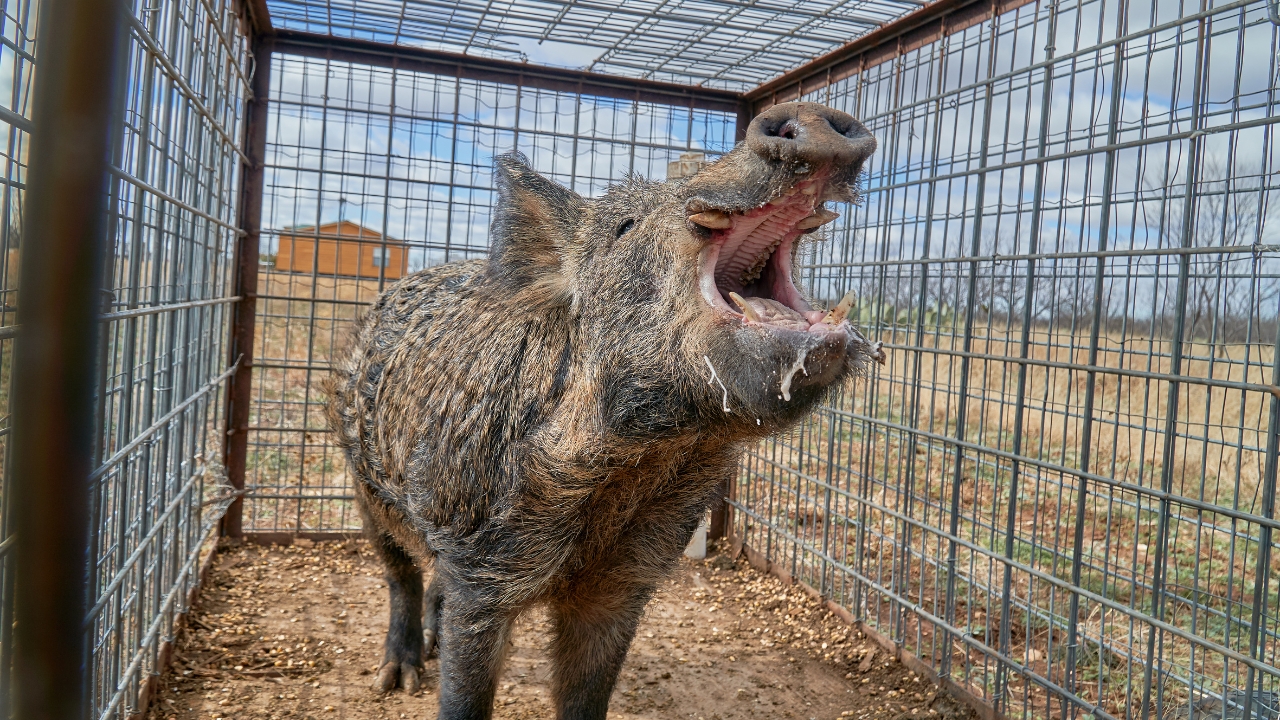
For a long time, feral hogs were treated like somebody else’s problem. If you didn’t live in the deep South, spend time on ranch ground, or know a farmer who had fields rooted up overnight, it was easy to think of them as a regional nuisance and nothing more. That is getting harder to say with a straight face now. In a lot of places, feral hogs have moved well past being an occasional sighting or a rural headache. They are tearing up yards, damaging roadsides, wrecking crops, hammering food plots, fouling water, and showing up close enough to homes that people who never used to think about them are suddenly paying attention.
Part of the problem is that hogs do not need much to get established. Give them cover, water, food, and enough room to move mostly undisturbed, and they will make themselves at home fast. They reproduce quickly, travel well, and adapt to a wide range of country better than most people expect. That is why the places where hogs are becoming hardest to ignore are not always the wildest or most remote. In many cases, they are the in-between places where farmland, timber, creeks, subdivisions, and public ground all overlap. That is where hog damage stops being something you hear about and starts becoming part of everyday life.
Farm country where crops and soft ground make easy feeding
Some of the worst feral hog pressure shows up in agricultural areas, especially where row crops, hay ground, and creek systems all come together. Hogs do not need a perfect setup when fields are doing half the work for them. Corn, peanuts, rice, soybeans, and other crops give them calorie-dense feeding with very little effort, and soft wet ground makes rooting easy. Once hogs start using those places regularly, the damage adds up in a hurry. It is not only the crops they eat outright. It is the way they tear up rows, destroy young plants, leave ruts, and turn productive ground into a mess that takes time and money to fix.
What makes these farm areas so frustrating is that the hogs are rarely confined to one property. They move through drainage ditches, brushy fence lines, creek bottoms, and timber strips, then spill onto neighboring land. A farmer may knock a few down and still wake up to fresh sign the next morning because the problem is bigger than one field. Once that pattern gets established, hogs stop being a wildlife issue and start becoming a constant operating cost. In those parts of the country, they are impossible to ignore because they are hitting the land that pays the bills.
River bottoms and creek systems that let hogs travel unnoticed
If you want to know where feral hogs gain ground without drawing much attention at first, look at river corridors, swamp edges, and winding creek systems with thick cover. These places act like highways for hog movement. They offer shade, water, bedding cover, and a way to move long distances without spending much time exposed. That is why hog populations can spread across a region before some landowners even realize what is happening. By the time the rooting shows up in a pasture or the first sounder hits a food plot, those animals may have already been traveling the drainage for months.
These bottomland areas are especially troublesome because they connect a lot of different land types. A hog can bed in heavy cover along a creek, feed in an ag field at night, cut through a pasture at dawn, and disappear back into thick timber before most people ever see it. That movement pattern makes them hard to pin down and even harder to remove completely. In regions with steady water and connected cover, hogs are not becoming impossible to ignore because they are suddenly visible all the time. They are becoming impossible to ignore because the damage keeps appearing everywhere the water runs.
Suburban edges where development meets brush and low ground
One of the bigger surprises for people who have not lived around hog country is how close these animals will get to neighborhoods once the conditions line up. Subdivisions built near creek bottoms, retention areas, brush lots, golf course edges, or undeveloped tracts can end up dealing with hogs faster than residents ever expected. The setting may look too tidy or too busy for wild pigs, but that does not matter much if the animals still have cover close by and easy access to irrigated grass, landscaping, trash, pet food, or soft damp ground they can root through. In some places, hogs are showing up in parks, greenbelts, and roadside medians close enough to houses that people are catching them on doorbell cameras.
That is where the problem becomes impossible for regular people to shrug off. A rooted-up back corner of a pasture is one thing. Torn sod along a neighborhood trail, damaged fencing near homes, or a sounder crossing the road before daylight hits different. People who never thought of hogs as part of everyday life start realizing they are dealing with a strong, unpredictable animal that can do a lot of damage in a short amount of time. Once that happens, feral hogs stop feeling like a distant rural issue and start feeling like something that moved right into the edge of town.
Ranch country where water, feed, and cover keep them settled in
Ranch land is another place where hogs become hard to ignore because they affect more than one part of the operation at a time. They root up pastures, wallow around stock tanks, chew up roads, tear through fences, raid feed, and create problems around calving areas and other sensitive ground. On a working place, that kind of damage spreads out into everything. A rooted pasture is rough on livestock and equipment. Muddy, contaminated water is bad for stock. Torn fences create extra labor. Even if hog numbers do not look huge, the amount of disruption they cause can make a property feel like it is under constant pressure.
The reason ranch country holds hogs so well is that it usually gives them everything they need without much interruption. There is water, there is feed somewhere, and there is often enough brush, creek cover, or broken terrain to let them bed and move with little disturbance. Large properties also make it easier for hogs to shift around and avoid concentrated pressure. That is why ranchers in hard-hit areas often talk about hogs the way people talk about weather or drought. They are not some occasional wildlife encounter. They are part of the land-management burden whether you want them there or not.
Public land where pressure spreads the problem instead of ending it
A lot of public ground now holds enough hog activity that hunters, hikers, and land managers cannot pretend it is a side issue anymore. Wildlife management areas, river-access land, Corps ground, national forest pockets, and other public tracts often give hogs what they need: cover, water, limited nighttime pressure, and connected travel routes. On top of that, public land tends to border private land in a patchwork that lets hogs move back and forth freely. One tract may get hunted hard while another section gets left alone, and the hogs learn to use those gaps to their advantage.
That creates a frustrating cycle. People see hogs or sign on public land, assume hunting pressure will take care of it, and then wonder why the population keeps hanging around. The answer is that pressure alone rarely solves a hog problem when the habitat stays good and the surrounding ground keeps feeding new movement. In those places, hogs become impossible to ignore because they affect everyone using the land. Hunters lose habitat quality. Ground-nesting wildlife takes a hit. Trails get chewed up. Water sources get muddied. Even people who are not specifically chasing hogs end up dealing with what hogs leave behind.
Places with mild winters and long growing seasons
Some of the worst expansion happens in areas where winters do not hit hard enough to slow hog survival and where forage stays available for long stretches of the year. Mild winters matter because they remove one of the few natural pressures that can check population growth even a little. Long growing seasons matter because they keep food sources coming, whether that is mast, crops, pasture growth, roots, insects, or small animals. In those regions, hogs do not have to scrape by for one short productive window. They can keep finding enough to eat and enough cover to stay comfortable almost year-round.
That is why hog issues tend to go from manageable to overwhelming fast in the wrong climate. A place that gives hogs steady survival conditions will usually give you steady reproduction too, and that is where landowners start feeling buried. You are not dealing with a few stray animals anymore. You are dealing with a population that keeps replacing losses and spreading outward at the same time. Once a region with decent habitat and mild winters gets enough hogs established, the conversation usually shifts away from whether they are present and toward how bad the damage has gotten.
The places most people underestimate first
The truth is, feral hogs usually become hardest to ignore in places that people assumed would stay on the edge of the problem. Not the deepest swamp. Not the most remote ranch. The overlooked places. The creek behind the subdivision. The crop field behind the school bus route. The cattle place just outside town. The public tract people think gets too much pressure to hold anything. Those are the places where hogs catch people flat-footed, because they do not fit the old mental picture of where serious wildlife trouble is supposed to happen.
That is also why hog problems feel like they escalate so quickly. By the time the average person notices them, they have already been using the area, reproducing, and learning the ground. What changes is not the hogs’ willingness to be there. It is the point at which their damage crosses a line people can no longer ignore. Once roadsides are rooted up, pastures are scarred, yards are torn apart, and sightings start happening close to homes or busy roads, the issue becomes real in a hurry. In a lot of regions now, that line is getting crossed in places where people used to think feral hogs would never matter much at all.
Like The Avid Outdoorsman’s content? Subscribe to our newsletter so you never miss an article.
Here’s more from us: