Photo credit: Poppy Pix/Shutterstock.com
The funny thing about “that guy” at the range is you can usually hear him before you see him. It’s the loud certainty, the constant commentary, the little shortcuts that make everybody else tighten up and start watching his muzzle instead of their own sights. Most ranges are full of decent people who just want to get reps in, confirm a zero, or unwind after a long week. So when one person drags the whole vibe into stress and annoyance, it sticks out fast—and it matters, because a public range is a trust exercise. You’re sharing a firing line with strangers, and the only thing separating “normal day” from “ambulance day” is consistent, boring discipline.
If you don’t want to be the range guy everyone avoids, you don’t need to become a monk or a robot. You just need to understand what other shooters are reacting to, and why. A lot of the behaviors that irritate people are the same behaviors that create negligent discharges, cross-lane muzzle sweeps, and dumb malfunctions that get blamed on the gun. The goal isn’t to look cool. The goal is to be predictable, safe, and competent enough that nobody has to babysit you. When you get that part right, everything else—accuracy, speed, confidence—comes a lot easier because you’re not fighting chaos you created yourself.
He treats safety rules like suggestions
The guy everyone avoids almost always has a casual relationship with the rules that keep the line safe. He’ll uncase a firearm with the muzzle wandering, or he’ll turn around to talk while still holding a gun, or he’ll start handling something during a cold range because he “just needed to adjust” a light or optic. None of that is a personality quirk—it’s a failure to respect that people can’t read his intentions. Muzzle discipline isn’t about trusting your own trigger finger; it’s about never forcing strangers to trust you. If you want to be the opposite of that guy, your gun stays pointed downrange or straight into the berm, every time, even when it’s unloaded, even when the action is locked open, even when you’re frustrated. And when the range goes cold, your hands come off the gun, period, because the line has to be simple enough that nobody gets confused about what’s happening.
A lot of new shooters think “I didn’t mean anything by it” is a defense, but it doesn’t work on a firing line. The rules are written for the moment when you’re distracted, cold, rushed, or embarrassed, and that’s exactly when the bad stuff happens. If you’ve ever seen someone shove a pistol back into a soft case while sweeping their own leg, you know how fast comfort turns into hazard. Keep actions open, chambers visibly clear, magazines out, and firearms benched when required, and don’t argue about it like it’s negotiable. The people watching you aren’t being uptight—they’re doing threat assessment in real time, and the “range guy everyone avoids” is the one who makes that necessary.
He has an opinion for every gun, and none of it helps
There’s a certain kind of range guy who shows up to perform expertise instead of earn it. He’s got a hot take about every caliber, every brand, every optic, and every training concept, and he delivers it whether you asked or not. The problem isn’t that he talks guns—most of us do. The problem is that his advice is usually ungrounded, and it’s delivered with confidence that makes newer shooters absorb bad habits. He’ll tell a beginner their pistol “needs” a lighter recoil spring because it felt snappy, without understanding that spring rates interact with slide velocity, magazine timing, and extractor control. He’ll insist somebody’s rifle “won’t shoot” because the barrel is short, while ignoring that poor support, inconsistent shoulder pressure, and a sloppy trigger press will make a 20-inch gun look just as bad at 100 yards.
If you want to avoid becoming that guy, keep your comments tied to conditions and evidence. Ask what ammo they’re running, what distance they’re shooting, whether they’re benched or offhand, whether the gun is lubricated, and whether the optic was torqued properly and re-checked after recoil. If you’re going to share an opinion, frame it like a shooter who has actually tested things: “In my experience, that load prints high at 25,” or “That platform usually likes a little more lube on the rails in cold weather,” or “If you’re getting stovepipes, watch your grip and we’ll also check magazine springs.” People don’t avoid the guy who knows things; they avoid the guy who talks like knowledge is a costume.
He turns a shared range into his personal movie set
The range is a shared resource, and the quickest way to get labeled as “that guy” is to act like your lane is a private stage. This shows up as constant rapid-fire when the range is clearly set up for slower strings, or setting up elaborate drills that spill gear everywhere, or taking forever between strings while other people are waiting for a cold line to check targets. It also shows up when someone ignores basic courtesy—blasting muzzle brake concussion sideways without acknowledging how miserable it is for the person in the next lane, or stepping over someone’s gear, or trying to “race” the guy next to him. None of this makes you look serious. It makes you look like you can’t read a room, and it puts everyone else on edge.
Being a good neighbor at the range is mostly about rhythm and awareness. If you’re running a braked rifle, pick an end lane if you can, or at least give the guy next to you a quick heads-up before you touch off something obnoxious. If you’re doing movement or draws, do it where it’s allowed and do it cleanly, because a sloppy draw stroke with a muzzle drifting outside your lane is exactly how you earn a lifetime nickname. And if the range has rules about rate of fire or target types, treat those rules like the cost of admission, not an obstacle to your freedom. The “range guy everyone avoids” is the one who forces staff to intervene, because he can’t or won’t self-regulate.
He blames the gun for problems he caused
This is where the technical side matters, because a lot of range drama comes from people creating malfunctions and then turning them into a loud indictment of the firearm. A pistol that short-strokes, fails to feed, or stovepipes can absolutely have a mechanical issue, but it can also be the shooter, the magazine, the ammo, or the maintenance. If you’re limp-wristing a compact 9mm—especially with weaker range ammo—the frame can move too much during recoil, which steals energy from the slide. That can reduce slide velocity enough that the gun doesn’t cycle fully, and now you’re getting failures to eject or failures to pick up the next round. That’s not the gun being “trash.” That’s physics, grip, and platform sensitivity meeting in the wrong spot.
The same thing happens with magazines and springs, and it’s boring until it isn’t. If you’re using old mags with tired springs, the follower may not keep up with slide speed, and you’ll see nose-dives, bolt-over-base feeds, or last-round weirdness. If you’re shooting a dry gun in gritty conditions, carbon and unburnt powder can increase friction on rails and in the chamber area, and now extraction gets sticky. If your extractor tension is marginal or your chamber is dirty, the case can cling just enough that the extractor slips or the ejector timing gets inconsistent, and suddenly you’re launching brass into your forehead and calling it “bad design.” The fix starts with honesty: before you lecture the line about how unreliable your pistol is, check the easy stuff—mags, lubrication, ammo consistency, and grip—because most problems live there.
He ignores the boring mechanics that keep guns running
A lot of shooters want gear to be magic, and they treat maintenance like optional homework. Then they show up with a rifle that hasn’t had its action cleaned in forever, a bolt that’s running dry, an optic that’s loosely mounted, and a stack of mixed ammo like it’s all the same. When things go sideways, they get loud instead of methodical. If you want to be the guy people respect, be the guy who troubleshoots like an adult. If a semi-auto rifle starts failing to lock back, you don’t immediately blame the gas system; you consider whether the gun is over-lubed with something that’s thickened in cold weather, whether the buffer spring is dragging, whether the mags are feeding with the right angle, and whether the ammo is underpowered for that setup. If a pistol starts choking, you look at the extractor claw for carbon buildup, you check that the recoil spring isn’t worn out, and you pay attention to whether the failures are happening on a particular magazine.
None of this requires a full armorer bench at the range. It requires habits that prevent small issues from turning into a circus. Keep a simple routine: confirm your screws are torqued and marked, keep your mags numbered so patterns show up, and don’t run a gun bone-dry unless you know that platform truly likes it. If you’re testing a new defensive load, do it realistically: shoot it at 7, 15, and 25 yards, include some faster strings, and pay attention to ejection pattern and slide behavior, because those clues tell you whether the gun is cycling consistently. The range guy everyone avoids is the guy who treats reliability as luck. The guy people trust treats reliability as a process.
He forgets there are humans on both sides of the lane divider
Some of the worst range behavior isn’t dramatic—it’s inconsiderate. The guy who sprays brass into the next lane and laughs when it hits someone’s neck. The guy who steps behind shooters while they’re firing and starts talking close to their ear. The guy who reaches forward during a cold line without making sure everyone knows he’s going downrange. The guy who argues with the range officer like rules are personal insults. You don’t have to be everybody’s buddy, but you do have to be predictable and respectful, because everyone’s managing risk. Even small stuff—like keeping your gear inside your lane, policing your own trash, and not crowding someone’s bench—goes a long way toward making the line feel calm instead of tense.
Communication matters more than ego in this environment. If you’re shooting something loud, give a quick heads-up. If you’re new to a drill, ask staff what’s allowed instead of improvising. If you see a safety problem, you don’t start a shouting match; you get the range officer, because escalation on a firing line is its own hazard. And if somebody offers you a correction in a calm way—“Hey man, your muzzle drifted outside your lane”—you take it and tighten up, because every competent shooter has had a moment where their brain got ahead of their hands. The people who get avoided are the ones who can’t accept feedback without turning it into a performance.
How to be the guy people are glad to share a bench with
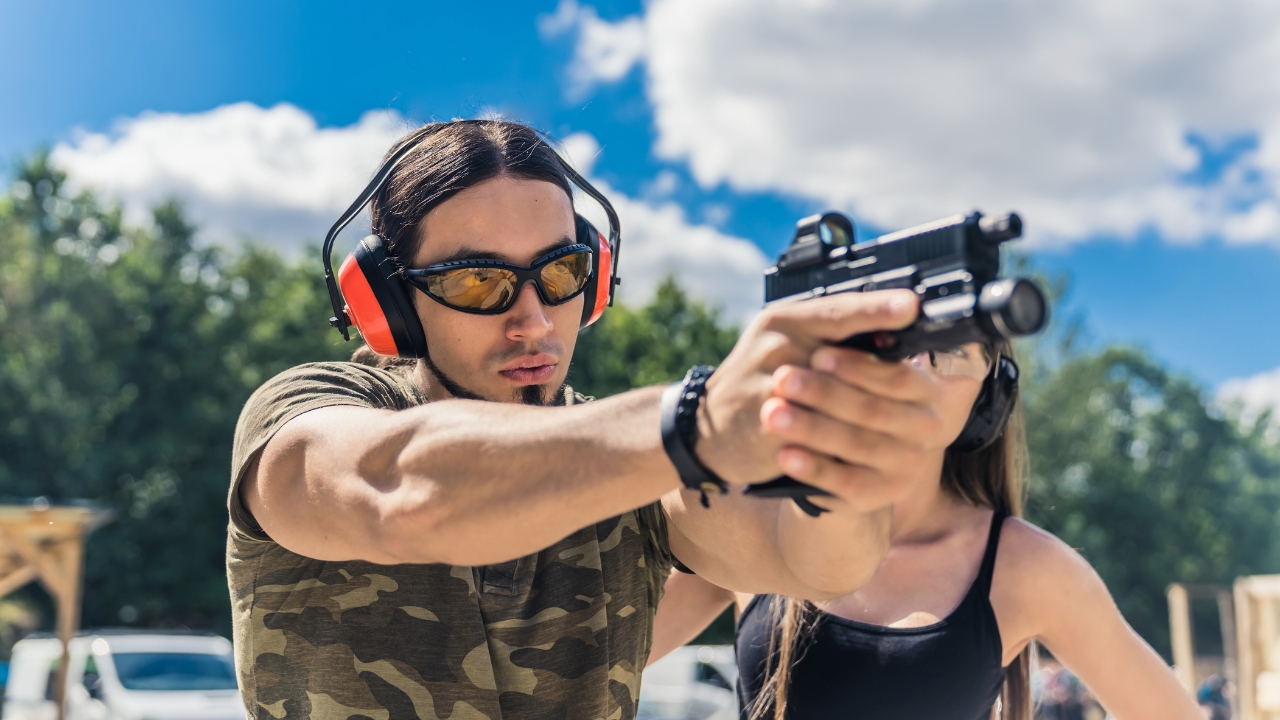
Being the good version of the “range guy” is surprisingly simple: you make everything easy for the people around you. Your muzzle stays where it should, your trigger finger stays indexed until you’re on target, and your gun handling on a cold range is boringly correct. You shoot with intent—whether that’s slow accuracy work at 25 yards, confirmation groups at 100, or controlled pairs at 7—and you don’t force your pace or your noise on everyone else. When something malfunctions, you clear it safely, diagnose it quietly, and learn from it instead of blaming the gun or the ammo like you’re auditioning for a comment section. You don’t need to be the best shooter on the line; you need to be the most predictable.
If you want one mental filter that keeps you out of trouble, use this: “Would a stranger feel safe standing next to me right now?” If the answer is anything but an easy yes, slow down and clean it up. That’s the Josh-level truth of it—competence isn’t loud, and it doesn’t need an audience. The guys who get avoided are the ones who treat the range like a place to prove something. The guys people respect treat it like a place to practice, stay sharp, and go home with all the same holes they arrived with.
Like The Avid Outdoorsman’s content? Subscribe to our newsletter so you never miss an article.
Here’s more from us: