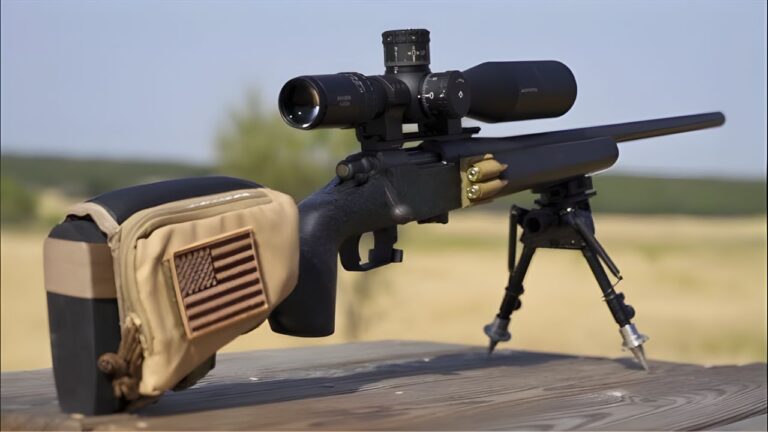
Photo credit: Nordic Rifleman/YouTube
The rifle caliber conversation in 2026 is louder than it needs to be. You’ve got a handful of “default” rounds that dominate shelves, social feeds, and camp talk, and they’re popular for a reason. But if you’ve hunted long enough, you’ve seen the other side of it too: guys buying a caliber because it’s trendy, then fighting recoil, fighting accuracy, or fighting bullet performance they didn’t actually understand at the ranges they really shoot. The truth is, most hunters don’t need a miracle cartridge. They need a round that lets them put a tough bullet in the right place when the wind is biting, the rest is shaky, and the shot comes fast at last light.
The overlooked calibers matter because they solve real problems that show up in the field, not on a marketing chart. Some keep recoil low so you don’t develop a flinch by November. Some punch above their weight on penetration because they push the right bullet shape at sensible speeds. Some are simply efficient, meaning they do useful work without requiring a heavy rifle, a brake, or ear-splitting blast to be tolerable. If you’ve ever missed a buck you “shouldn’t have missed,” or watched a buddy get shaky behind a hard-kicking rifle and start rushing shots, you already know why this matters. The cartridge doesn’t make you a better hunter, but the wrong cartridge can absolutely make you worse.
The overlooked sweet spot: moderate recoil that keeps your shooting honest
A lot of hunters overlook mid-recoil calibers because they think stepping down is “giving up power,” when what they’re really doing is buying control. I’ve watched too many people shoot a hard kicker in September, feel fine, then start anticipating the hit by late October because they never built enough good reps. When you’re cold, layered up, and shooting off sticks in a crosswind, recoil isn’t just comfort. Recoil changes your ability to break a clean shot and see what happened. If you can’t call your shot, you don’t know if you hit high lung, clipped shoulder, or flat-out missed, and that uncertainty is what turns a straightforward recovery into a long night.
This is where cartridges like 7mm-08 and .260-class rounds quietly shine in deer country. They’re not weak, they’re efficient, and they let you practice without dreading the trigger press. Think about a typical shot: 80 to 220 yards, maybe light rain, a steady 10–15 mph wind, and you’re shooting from a pack because the ground is soaked. A controlled-expansion hunting bullet in that mid-caliber lane doesn’t need brute force to work, it needs placement and a bullet that holds together if you touch bone. The reason these rounds matter is simple: more hunters can shoot them well, more often, and that translates to cleaner kills than “more horsepower” ever will.
Classic rounds that never went away, they just got drowned out
Some calibers get overlooked because they’re old enough that nobody feels the need to talk about them anymore. They aren’t new, they aren’t flashy, and they don’t come with a new logo every season, but they keep killing deer and elk because the fundamentals never changed. The 6.5×55 is a perfect example of that kind of cartridge. It’s mild enough that you can shoot it accurately from awkward positions, yet it carries bullets with sectional density that tend to drive straight through ribs and into the boiler room even when the angle isn’t perfect. In the real world, that means a quartering-away shot at 140 yards still reaches the far lung if your bullet is built for the job and you don’t get cute with a fragile design.
The reason these classics matter in 2026 is that bullets have improved around them. You’re not stuck with one style of soft point and one velocity window anymore. You can pick a bonded bullet for shoulder-heavy shots, a monolithic option for penetration and weight retention, or a traditional cup-and-core when you want reliable expansion at modest impact speeds. The overlooked part is that these cartridges are often easier on your rifle and your shooting habits too. Less blast, less recoil, less tendency to loosen mounts if you’re not checking torque, and less chance of developing bad habits when you’re practicing in a T-shirt at the range and then hunting in a parka with numb fingers later.
Short-action thumpers that hit harder than their reputation suggests
A lot of hunters overlook the “bigger bore, moderate speed” options because they’re not flat-shooting darlings, but in thick cover they can be exactly what you want. The .358 Winchester is the kind of cartridge that doesn’t get invited into trendy conversations, yet it can be a hammer on hogs, black bear, and heavy-bodied deer inside realistic ranges. If you’re hunting timber where shots are 30 to 120 yards, you don’t need a laser beam. You need a bullet that drives, breaks the right bone when it has to, and keeps going. Heavy-for-caliber bullets at sensible speeds tend to do that without the dramatic “blow up” behavior you can see when light bullets hit hard shoulder at high velocity.
The reason this lane matters is that it’s forgiving in field conditions. Wind isn’t as big a factor at those distances, and impact velocities stay in a range where controlled-expansion bullets can behave predictably. It also plays well with hunters who shoot from odd angles and imperfect rests, because a cartridge that doesn’t punish you encourages follow-through and accountability. I’ve seen guys run a moderate thumper from a compact rifle in wet brush, keep it clean enough to function, and never think about it again, because the cartridge wasn’t asking them to manage a violent recoil cycle or a blast that turns every practice session into a headache.
The “woods rifle” calibers that make recovery easier, not harder
People love arguing about energy, but the recovery is what you remember at midnight when the blood trail turns thin. Overlooked calibers matter when they help you get consistent exits and predictable blood, especially on deer and hogs where the animal can cover ground fast if the hit isn’t instantly disruptive. This is where rounds like the .35 Remington earned their reputation the hard way. It’s not a long-range tool, and it’s not pretending to be. But inside typical woods distances, a heavier bullet that expands without grenading can leave a clean, usable trail and still break through when the shot is a little forward. That’s not romance, that’s practicality for the guy who hunts creek bottoms, cedar thickets, and brushy edges where you’re crawling and climbing to finish the job.
What gets overlooked is how much bullet behavior matters at the actual impact speed you’re getting. A lot of fast cartridges hit so hard up close that the wrong bullet can over-expand, shed weight, and fail to exit on a shoulder hit, especially on a thick boar. On the other hand, a moderate-speed cartridge with the right bullet can keep expanding and still penetrate because it isn’t trying to do everything through speed alone. If you’re hunting in freezing drizzle and your rifle is getting wet, the “woods rifle” approach also tends to be simpler and more reliable. Less recoil means less tendency to yank shots, and simpler setups mean fewer surprises when your scope mounts loosen because you never checked screws after the first sight-in.
The overlooked practical advantage: availability and accuracy in your specific rifle
Some calibers get overlooked because people assume they’ll be hard to find, and that can be true depending on where you live. But the bigger truth is this: the best caliber for you is the one you can feed consistently and shoot accurately in your rifle, not the one that wins internet arguments. If you can’t find your hunting load in November, or you keep switching ammo because you’re chasing groups that won’t tighten, you’re building inconsistency into your season. That shows up when the shot matters, because your dope is uncertain, your point of impact shifts, and you start second-guessing your hold at the exact moment you should be calm and decisive.
This is where overlooked calibers can actually shine if you commit to a sane plan. Pick one hunting load, confirm it at 100, 200, and whatever your personal maximum is, then stop tinkering. Pay attention to how weather changes your point of impact, because cold can change velocity and it can change how you shoot, especially with gloves and layers. Keep your rifle maintained in a way that matches your environment, because a gritty bolt, a dirty chamber, or moisture in your action can turn a smooth day into a frustrating one when you need a quick follow-up. None of this is glamorous, but it’s exactly why the “overlooked” calibers matter: they often encourage a stable, repeatable setup instead of a constant search for something different.
Why “overlooked” often means “better suited to real hunting distances”
Most hunters don’t shoot animals at 500 yards, and most hunters shouldn’t try. The overlooked calibers matter because they’re built for the middle distances where real hunting lives: 50 to 300 yards, sometimes less, sometimes a little more, but usually inside a range where good fundamentals and good bullet choice beat raw speed. If you’re honest, your hardest shots aren’t long. They’re awkward. They’re fast. They’re in low light with a pounding heart, wind in your face, and a rest that isn’t as solid as you wish it was. In those moments, the caliber that lets you press the trigger cleanly and stay on the gun for a follow-up is a serious advantage.
That’s the part that gets overlooked when people talk about “more.” More recoil, more blast, more speed, more energy. More can be useful, but only if you can use it. If the cartridge makes you tense up, rush the shot, or stop practicing because it’s unpleasant, then it’s costing you performance. The overlooked calibers matter because they tend to keep you in a lane where you can practice regularly, confirm your holds, and trust what your bullet will do when it hits meat and bone at realistic impact speeds. That’s how you end up with shorter tracking jobs, fewer lost animals, and fewer “I don’t know what happened” stories told around the tailgate.
If you tell me what you hunt most, your typical shot distance, and whether you’re carrying a 7-pound mountain rifle or a 9-pound stand gun, I can steer you toward the overlooked lane that fits your real use instead of the one that sounds good on paper.
Like The Avid Outdoorsman’s content? Be sure to follow us.
Here’s more from us: