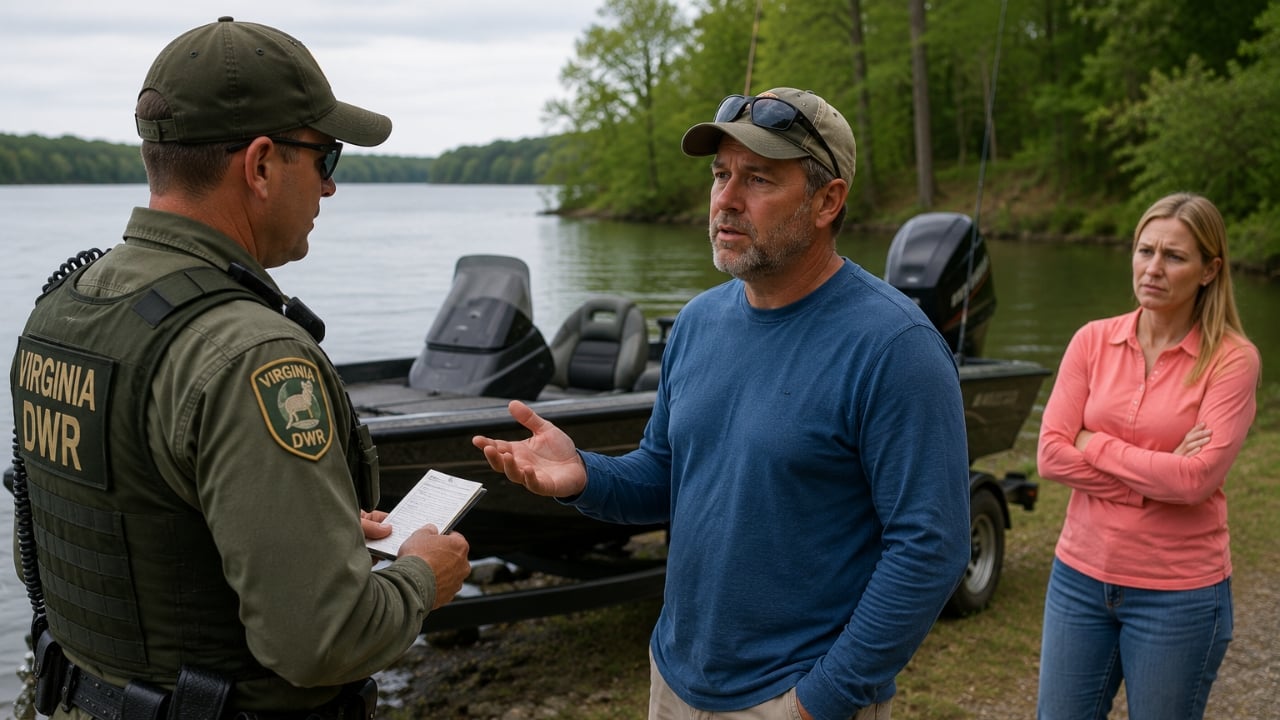
Photo credit: The Avid Outdoorsman
The fisherman said the mistake started with a fishing license, but not in the way people usually expect. According to the Reddit post, his wife had bought a fishing license, and he believed that somehow covered the family while they were fishing together.
Then he got cited.
The original Reddit post can be found here: https://www.reddit.com/r/legaladvice/comments/jg4a2f/fishing_without_license_advise_law_section_2823021/
That is the kind of mistake that can happen when someone treats a fishing trip like a casual family outing instead of a regulated activity. To a lot of people, fishing feels simple. You buy bait, grab rods, find water, and spend the afternoon trying to catch something. But state fishing laws usually do not work on a household basis.
A license generally belongs to the person named on it. It does not usually cover a spouse, adult child, friend, or anyone else holding a rod unless the state has a specific exemption. If one person in the family is licensed and another person is actively fishing without one, the unlicensed person can still be the one who gets the ticket.
That appears to be the lesson the Virginia fisherman learned the hard way. He may not have been trying to dodge the law. He may have genuinely thought the license purchase handled the family’s legal requirement. But once an officer or game warden checked the situation, the key question was not whether someone in the group had a license. It was whether the person fishing had one.
The citation likely felt frustrating because the fix would have been easy before the trip. A one-day or annual license is usually much cheaper and cleaner than dealing with court, fines, or a possible record afterward. But outdoors rules are full of those little details that only feel obvious once someone explains them at the worst possible time.
The fisherman wanted advice on the charge and what it could mean. That is where the situation moved beyond embarrassment. Depending on how the state treats the violation, paying a fine may resolve it, or it may count as admitting guilt. If the citation carries misdemeanor language, the person cited needs to understand the consequence before treating it like a parking ticket.
This is also why families should check license rules person by person before a trip. Youth exemptions, senior exemptions, free fishing days, private pond rules, and short-term licenses can all change the answer. But the assumption that one spouse’s license covers everyone is the kind of shortcut that can turn an easy day on the water into a legal headache.
Commenters told him that his wife’s license likely did not cover him. Several explained that fishing licenses are usually individual, and each adult who is actively fishing needs their own unless a specific exemption applies.
Others said he should read the citation carefully and contact the court listed on it. If the charge was more serious than a small civil fine, he needed to know whether paying it would create a criminal record or other consequence.
Some commenters suggested checking whether Virginia had any option to show proof of buying a license after the fact or ask for leniency. That might not erase the violation, but it could show he corrected the mistake quickly.
A few people warned him not to ignore the ticket just because it seemed minor. A missed deadline or failure to appear can turn a small fishing mistake into a bigger court problem.
The post ended with a lesson that applies to any family fishing trip. One person buying a license does not mean everyone is covered. If you are holding a rod and trying to catch fish, you need to know whether the license in your pocket has your own name on it.
Like The Avid Outdoorsman’s content? Subscribe to our newsletter so you never miss an article.
Here’s more from us: