Photo credit: Robert Sachowski/Unsplash.com
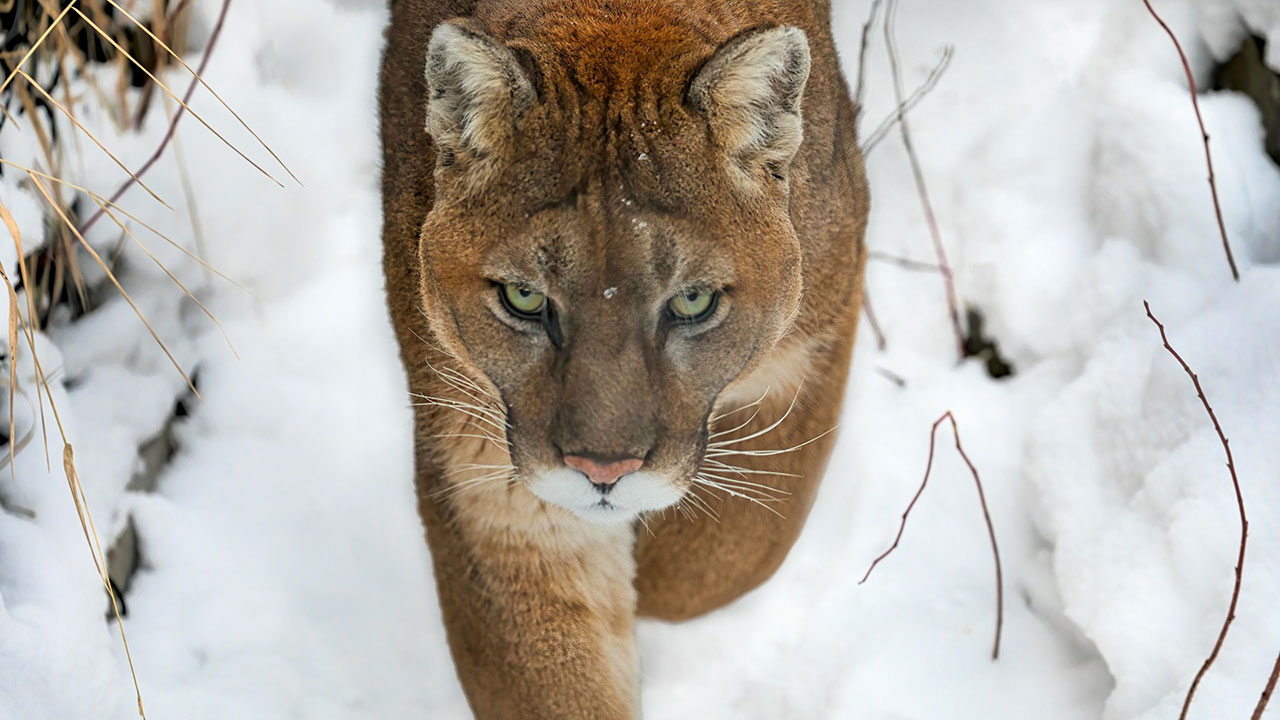
A mountain lion usually does not announce itself the way people expect. Most of the time, if one has passed near a neighborhood, what you get is not some dramatic face-to-face sighting. You get clues. Wildlife agencies keep making the same point in different ways: mountain lions are quiet, elusive, and most often tied to places with prey and cover, which is exactly why they can move near developed areas without many people realizing it. California wildlife officials also note that lions sometimes cut through neighborhoods to reach suitable habitat, while Yosemite says sightings can happen even in developed areas.
That does not mean every strange noise or missing pet points to a lion. It does mean certain patterns deserve more attention than people usually give them. If deer keep bedding close to homes, pets are acting tense at odd hours, a fresh kill shows up in cover near the edge of the neighborhood, or people start reporting brief dawn-or-dusk sightings near greenbelts and brushy transitions, that is when the possibility becomes harder to brush off. Colorado Parks and Wildlife specifically warns that attracting deer can also attract mountain lions, even in urban areas.
Deer keep using the same yards, greenbelts, or open lots
One of the biggest signs is not the lion itself. It is deer. Mountain lions go where prey is dependable, and deer are a major part of that picture. California officials explicitly tell residents to deer-proof their property to avoid attracting a lion’s main food source, and Colorado says attracting deer to your yard can also attract mountain lions, even in urban areas.
That matters because a neighborhood does not have to look wild to become useful to a lion. If deer are bedding behind homes, feeding in landscaped areas, or cutting through the same greenbelts and drainage lines every evening, a lion may eventually work those routes too. A lot of people watch deer in neighborhoods and treat them like harmless scenery. From a predator’s point of view, they can be a reason to stay close.
Pets get jumpy at dawn, dusk, or in one part of the yard
Another sign people overlook is pet behavior. Agencies consistently warn people to keep pets close and supervised in mountain lion habitat, especially in lower light hours. Colorado says to be extra vigilant with pets during mornings and evenings, and California advises securing outdoor pets in sturdy covered shelters at night.
So when a dog suddenly refuses to go into one corner of the yard, gets stiff at the fence line, or keeps staring toward the same patch of brush after dark, that is worth noticing. It does not prove lion activity by itself, but it fits the pattern of an area that feels wrong to an animal long before it looks wrong to a person. Recent CPW reporting also shows how real that risk can get near homes: in late December 2025, a man in Glen Haven found a mountain lion attacking his dog in his yard.
A fresh deer kill or cached carcass turns up near cover
This is one of the clearest warning signs there is. Mount Rainier tells visitors that if they come across what may be a recent animal kill by a mountain lion, they should note the location, take photos if possible, and report it, while also not lingering in the area. That guidance exists for a reason: a lion may still be nearby or may return.
Around neighborhoods, this can look like a deer carcass tucked into brush, dragged toward cover, or partially hidden near a lot edge, ravine, or wooded strip. People sometimes assume any dead deer was hit by a car or scavenged randomly, but when the carcass is positioned in cover or seems deliberately moved, it is a sign worth taking seriously. Even if you never see the lion, the evidence can say enough on its own.
Sightings happen at the edges people trust most
The places where mountain lions surprise people are often not deep wilderness spots. They are the edges: a trail behind the subdivision, the brushy lot near a school, the creek corridor behind back fences, or the open space residents walk every day without thinking much about it. California officials say lions sometimes cut through neighborhoods to get to better habitat, and NPS research in the Santa Monica Mountains has focused for years on how lions survive in fragmented, urbanized landscapes near Los Angeles.
That is why brief sightings near neighborhood edges matter more than people think. One person sees a lion cross a road at dawn. Another spots something tan slipping into brush near a greenbelt at dusk. On their own, each account may sound easy to dismiss. Together, especially in an area with deer and cover, they start looking like a route a lion already knows.
Dense vegetation and quiet cover sit right up against homes
Mountain lions do not want to stand in the middle of a lawn if they can help it. They want cover. California recommends removing dense vegetation around the home to reduce hiding spaces, and Colorado says to eliminate hiding places like bushes and tall grassy areas.
That is one reason certain neighborhoods are more likely to get close lion traffic than others. Homes backed up to thick brush, creek bottoms, steep ravines, or overgrown open-space edges create exactly the kind of concealed approach a lion prefers. If the property line goes straight from patio furniture to heavy cover, the distance between “neighborhood” and “lion country” may be a lot smaller than it looks.
People start noticing activity in developed areas, not just “out there”
One of the biggest mistakes people make is assuming mountain lion signs only matter if they show up deep in wild country. Yosemite explicitly says sightings in the park often document mountain lions on the prowl in developed areas, sometimes even chasing or eating other animals there. That does not mean lions prefer development. It means they are willing to use it when conditions line up.
So if neighbors mention a quick sighting near homes, trail cameras catch something moving along a neighborhood edge, or local officials start reminding residents about pets and deer attractants, that is not overreaction. It is usually a sign that wildlife managers know lions can and do pass closer to people than many residents assume.
The real giveaway is a pattern, not one dramatic moment
Most of the time, the strongest sign a mountain lion has been closer to your neighborhood than you’d guess is that several smaller clues start stacking up at once. Deer linger near homes. Pets act off in the same places or times of day. Cover stays thick around yards and trails. A suspicious kill turns up. Sightings cluster along greenbelts or subdivision edges. None of that by itself proves a lion is camped out in the neighborhood, but together it paints a much harder picture to ignore.
That is really the point. Mountain lions are built to stay hidden, and official guidance reflects that. They do not need to be seen often to be nearby. When prey, cover, pets, and developed edges all overlap, the smarter assumption is not panic. It is awareness. Because by the time a lion gets spotted clearly in a neighborhood, there is a decent chance it has already been closer than most people would have guessed.
Like The Avid Outdoorsman’s content? Subscribe to our newsletter so you never miss an article.
Here’s more from us: