Photo credit: Random Reviews/YouTube
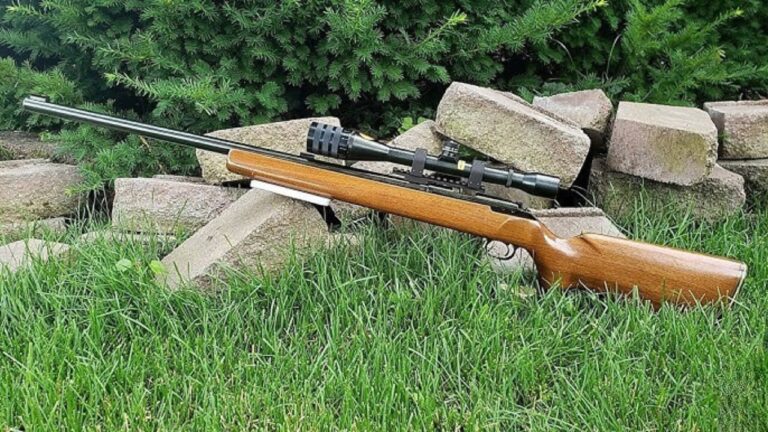
The Winchester Model 70 still carries the kind of reputation most hunting rifles never get close to. Winchester continues to market it as the classic bolt gun with pre-’64-style controlled round feed, a three-position safety, and the kind of traditional wood-and-steel appeal that keeps showing up in deer camps decade after decade. In 2026, Winchester is still expanding the line with more wood-stock variants, and the company is openly leaning into the rifle’s history as it turns 90 years old.
That tells you two things right away. First, the Model 70 is not living on accident. It is still a serious current-production rifle with real support behind it. Second, a lot of what people love about it is tied to what it represents as much as what it does. The problem is that “hunter’s rifle for life” and “easy answer” are not the same thing anymore. The Model 70 still makes sense for plenty of hunters, but today’s rifle market is full of lighter, cheaper, more optics-friendly, and often more accurate options than the gun was competing against when that reputation took hold.
The Model 70 still gets a lot right the old-fashioned way
There is a reason the rifle still has loyal people behind it. The current Model 70 keeps the features that made hunters trust it in the first place: controlled round feed, a claw extractor, controlled ejection, a hinged floorplate, and a three-position safety. Winchester’s current 2026 product materials still push exactly those traits, which means the company understands that the Model 70’s value is still rooted in reliability, familiarity, and real hunting ergonomics rather than chasing whatever trend is hot this year.
And that part still matters in the field. Outdoor Life’s review of the current Featherweight said the rifle remains a “quality flagbearer” for the line and noted that its accuracy is perfectly capable for any hunt you would reasonably take it on, even if it does not play the modern sub-MOA bragging game the way many newer rifles do. That is a big piece of the Model 70 story. It was never supposed to be a lab-built internet rifle. It was built to be carried, fed hard, worked with gloves, and trusted when the shot finally comes together.
The part people gloss over is that it is no longer the obvious buy
This is where the easy-answer idea starts to crack. Outdoor Life’s 2025 mid-priced rifle test included the Winchester Model 70 Featherweight, but the rifle’s main drawback in that test was bluntly listed as mediocre accuracy. Their tested rifle averaged 2.26 inches across 21 five-shot groups, weighed 7 pounds even, and carried a listed price of $1,120. That does not make it a bad hunting rifle. It does mean you are paying real money for tradition, handling, and action style, not for class-leading precision on paper.
That matters because the current market gives hunters more choices than ever. Field & Stream’s 2026 rifle coverage shows how much the category has shifted toward threaded muzzles, lighter synthetic or carbon stocks, sub-MOA guarantees, better out-of-box optics compatibility, and designs aimed at practical long-range field shooting. Even their lightweight-rifle roundup stressed that the market now offers more good-shooting lightweight rifles at more price points than ever before. In other words, the Model 70 is no longer standing alone as the obvious “buy this and you’re done” rifle in the way older hunters sometimes talk about it.
What you are really buying now is a certain kind of hunting rifle
That is the fairest way to judge the Model 70 in 2026. You are not simply buying “the best answer.” You are buying into a certain style of rifle. You are buying a traditional bolt gun with a real hunting feel, classic stock lines, and features that still make sense to hunters who care more about field trust than spreadsheet-style feature counts. Winchester’s own current lineup shows that clearly. The company is leaning hard into walnut, polished finishes, classic stock profiles, and premium presentation on many Model 70 variants, with some 2026 versions priced around the high-$1,800 to low-$2,000 range and beyond.
That makes the rifle appealing, but it also narrows who it is the easy answer for. If you are the kind of hunter who wants a rifle that feels like a real heirloom-grade field gun, the Model 70 still speaks your language. If you want the most efficient feature-per-dollar package, the case gets harder. Outdoor Life’s same mid-priced rifle test gave “best for the money” honors to the Tikka T3X Lite instead of the Model 70, which tells you how reviewers are separating nostalgia-friendly rifles from pure value picks in today’s market.
The Model 70 still makes sense, but you need to know your priorities
If your priorities are controlled-feed reliability, good field handling, classic stock dimensions, and the feel of a real old-school hunting rifle, the Model 70 is still one of the strongest answers on the rack. Outdoor Life specifically praised the Featherweight’s classic feel, good metal-to-wood fit, and authentic pre-’64-style controlled-feed action. That is not small praise in a market full of rifles that may shoot tiny groups but do not feel nearly as natural in the hands.
But if your priorities are maximum precision per dollar, the lightest possible mountain carry, suppressor-ready features, or modern adjustability, the easy answer is probably somewhere else. Field & Stream’s recent “best rifles” and “best lightweight rifles” pieces make it clear that modern buyers can now get rifles with threaded muzzles, carbon stocks, very strong precision, and specialized field features across a wide range of budgets. That does not reduce the Model 70 to a nostalgia piece. It simply means it now sits beside more real competition than the legend sometimes admits.
So is it still the easy answer people think it is?
Not really, at least not in the lazy way people say it. The Winchester Model 70 is still a very legitimate rifle for a lifetime hunter. It still offers the action style, safety design, and field credibility that made it famous. Winchester is still investing in the platform, and current reviewers still treat it as a meaningful rifle rather than a museum piece.
But the easy answer today is not the same as the right answer. The Model 70 is no longer the automatic choice for every hunter who wants one rifle and no regrets. It is the right answer for the hunter who still values traditional fit, controlled-feed confidence, and classic field manners enough to accept that other rifles may offer better raw precision, more modern features, or stronger value on paper. So yes, it can still be a hunter’s rifle for life. You just need to stop pretending it is the simplest choice for everybody.
Like The Avid Outdoorsman’s content? Subscribe to our newsletter so you never miss an article.
Here’s more from us: